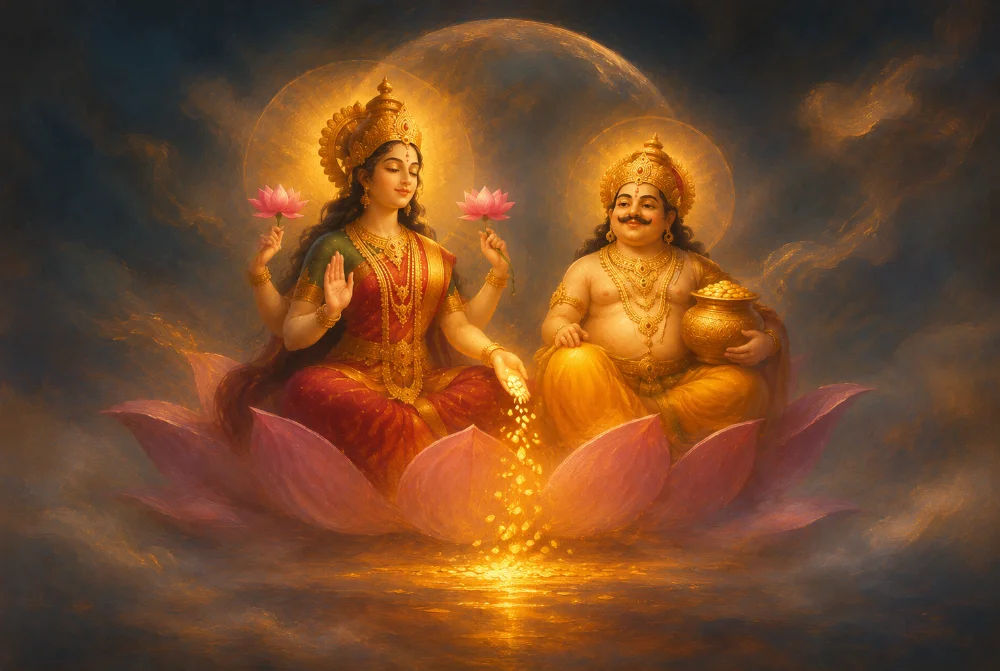
The 9th house in Vedic astrology represents dharma, higher wisdom, beliefs, fortune, father, teachers, and life philosophy. It is a Trikona house associated with grace, blessings, and alignment with purpose. The 12th house represents loss, expenses, detachment, isolation, foreign lands, sleep, and liberation. It is the final house of the Kundali, where material pursuits dissolve and consciousness turns inward.
When the 9th lord is placed in the 12th house, the energy of dharma moves into detachment and inner exploration. This creates a life pattern where purpose is not always expressed through visible achievements. Instead, it unfolds through introspection, surrender, and deeper understanding.
This is a placement where belief systems evolve beyond conventional frameworks. The native often seeks truth through experience, solitude, or spiritual inquiry. In many cases, this placement has a strong connection to moksha-oriented growth. However, the final expression depends on the nature of the planet involved, its additional lordship, and its condition in the chart.
Effects of 9th Lord in the 12th House
When the 9th lord occupies the 12th house, the native’s relationship with dharma becomes inward and subtle. The person may not follow traditional paths of belief. Instead, they develop their own understanding through personal experience.
The 12th house introduces themes of detachment. The individual may gradually move away from rigid belief systems and seek a more fluid or experiential approach to spirituality.
This placement often creates a deep and introspective personality. The person may spend time in reflection, meditation, or exploring inner states of awareness.
From a psychological perspective, the person defines purpose through understanding rather than external validation. Dharma becomes something to be realized internally rather than demonstrated outwardly.
The connection between the 9th and 12th houses creates a pattern where growth happens through letting go. The native learns that clarity often comes when attachment is reduced.
There can be a strong connection to foreign lands. The person may travel, relocate, or find growth in environments away from their place of origin.
There may be involvement in spiritual practices, healing, or service that requires privacy or solitude. The person may prefer working behind the scenes.
The relationship with the father or mentors may involve distance or subtle influence. Guidance may not always be direct but may come through experience or reflection.
There can be expenses related to spiritual pursuits, travel, or personal growth. The native may invest resources in gaining understanding rather than accumulating wealth.
However, there can be a tendency toward confusion in belief systems. The person may struggle to define their philosophy clearly, especially in early life.
There can also be isolation. The native may withdraw from social interaction, which can lead to insight but also loneliness if not balanced.
There may be escapism if the energy is not grounded. The person may avoid practical responsibilities by retreating into thought or imagination.
There can be fluctuations in faith. Periods of clarity may be followed by doubt, leading to deeper questioning.
At times, the native may feel disconnected from conventional paths or societal expectations. However, this often leads to the development of a unique and authentic worldview.
Over time, this placement teaches that dharma is not always external. It can be realized through inner awareness and detachment.
Modifying Factors
The condition of the 9th lord significantly influences outcomes.
An exalted 9th lord in the 12th house enhances spiritual growth, intuition, and inner clarity. The person may develop deep insight and a sense of peace. A debilitated 9th lord can create confusion, lack of direction, or difficulty in maintaining faith.
Combustion can affect clarity in understanding. The person may struggle to integrate experiences into a coherent philosophy.
A retrograde 9th lord internalizes belief systems deeply. The person may revisit ideas repeatedly, creating depth but also mental loops.
Aspects and conjunctions modify results significantly. Benefic influences can stabilize the inner process and support growth, while malefic influences may intensify confusion, isolation, or imbalance. The 12th house becomes a subtle field where multiple forces shape the native’s experiences.
Quick Reference Table
| Ascendant (Lagna) | 9th Lord | Secondary House Ownership | Core Theme / Manifestation |
| Aries | Jupiter | 12th House | Double placement putting Jupiter in its own 12th house; expands spiritual wisdom, charitable acts, and subconscious exploration, finding ultimate dharma in moksha and foreign lands. |
| Taurus | Saturn | 10th House | Yogakaraka placement (Debilitated in Aries); connects career authority and dharma with isolation; builds structural endurance and public status through solitary effort or international ventures despite early delays. |
| Gemini | Saturn | 8th House | Connects hidden karma and deep psychological transformations with spiritual detachment; builds stoic wisdom and profound maturity through solitary introspection and letting go. |
| Cancer | Jupiter | 6th House | Connects ethical duties, daily service, and healing with the subconscious; applies expansive philosophical guidance and charitable action in secluded or foreign environments. |
| Leo | Mars | 4th House | Yogakaraka placement (Debilitated in Cancer); connects domestic foundations and inner peace with spiritual liberation; pursues foreign settlement or deep inner healing with dynamic, albeit fluctuating, courage. |
| Virgo | Venus | 2nd House | Connects accumulated wealth, personal values, and refined speech with detachment; channels financial resources into charitable causes, spiritual retreats, and aesthetic harmony in solitude. |
| Libra | Mercury | 12th House | Double placement putting Mercury in its own 12th house (Exaltation potential); connects spiritual detachment and foreign trade with dharma; masters complex occult philosophies through highly analytical, solitary research. |
| Scorpio | Moon | None (Pure) | Connects divine fortune and higher wisdom directly to the subconscious; spiritual devotion, dream recall, and inner peace fluctuate with natural mood cycles. |
| Sagittarius | Sun | None (Pure) | Connects father figures, royal authority, and higher principles with secluded environments; dissolves personal ego through spiritual introspection and finds leadership in foreign lands. |
| Capricorn | Mercury | 6th House | Connects routine service, analytical problem solving, and workplace duties with isolation; builds practical fortune through behind-the-scenes research, foreign administration, or healing routines. |
| Aquarius | Venus | 4th House | Yogakaraka placement; connects domestic happiness, maternal bonds, and real estate with spiritual detachment; cultivates highly harmonious, diplomatic, and aesthetically refined solitary spaces or foreign residences. |
| Pisces | Mars | 2nd House | Connects accumulated wealth, bold speech, and family values with spiritual liberation; actively champions ethical beliefs and manages financial expenses with decisive, independent initiative in foreign lands. |
For All Ascendants
Aries Ascendant (Mars)
For Aries Ascendant, Jupiter becomes the 9th lord and also rules the 12th house, placed in the 12th house. This creates strong emphasis on spiritual growth and introspection. The person may seek meaning through inner exploration.
Taurus Ascendant (Venus)
For Taurus Ascendant, Saturn becomes the 9th lord and also rules the 10th house, placed in the 12th house. Saturn creates disciplined and structured introspection. The person may develop maturity through solitude.
Gemini Ascendant (Mercury)
For Gemini Ascendant, Saturn becomes the 9th lord and also rules the 8th house, placed in the 12th house. Saturn creates serious and transformative inner process. The person may develop depth through challenges.
Cancer Ascendant (Moon)
For Cancer Ascendant, Jupiter becomes the 9th lord and also rules the 6th house, placed in the 12th house. Jupiter creates thoughtful and service-oriented introspection. The person may grow through helping others.
Leo Ascendant (Sun)
For Leo Ascendant, Mars becomes the 9th lord and also rules the 4th house, placed in the 12th house. Mars creates active and internalized pursuit of purpose. The person may seek meaning through action and reflection.
Virgo Ascendant (Mercury)
For Virgo Ascendant, Venus becomes the 9th lord and also rules the 2nd house, placed in the 12th house. Venus creates refined and emotional introspection. The person may seek harmony through detachment.
Libra Ascendant (Venus)
For Libra Ascendant, Mercury becomes the 9th lord and also rules the 12th house, placed in the 12th house. This creates strong emphasis on analytical and introspective belief system. The person may explore ideas deeply.
Scorpio Ascendant (Mars)
For Scorpio Ascendant, Moon becomes the 9th lord and sits in the 12th house. Moon creates emotional sensitivity and depth. The person may experience fluctuations but develops intuition.
Sagittarius Ascendant (Jupiter)
For Sagittarius Ascendant, Sun becomes the 9th lord and is placed in the 12th house. Sun creates strong will in internal transformation. The person may develop confidence through introspection.
Capricorn Ascendant (Saturn)
For Capricorn Ascendant, Mercury becomes the 9th lord and also rules the 6th house, placed in the 12th house. Mercury creates thoughtful and service-oriented introspection. The person may grow through learning.
Aquarius Ascendant (Saturn)
For Aquarius Ascendant, Venus becomes the 9th lord and also rules the 4th house, placed in the 12th house. Venus creates refined and harmonious inner life. The person may seek balance through detachment.
Pisces Ascendant (Jupiter)
For Pisces Ascendant, Mars becomes the 9th lord and also rules the 2nd house, placed in the 12th house. Mars creates dynamic and assertive inner process. The person may pursue growth through action and reflection.
Conclusion
The placement of the 9th lord in the 12th house creates a life where dharma, detachment, and inner growth are deeply interconnected. The native learns to understand purpose through introspection and surrender.
This placement offers strong potential for spiritual insight, emotional depth, and unique perspective. However, it also requires balance to avoid confusion, isolation, or escapism.
When aligned, this placement produces individuals who are introspective, perceptive, and capable of developing a meaningful inner life. The journey ultimately revolves around integrating dharma with awareness, detachment, and deeper understanding.