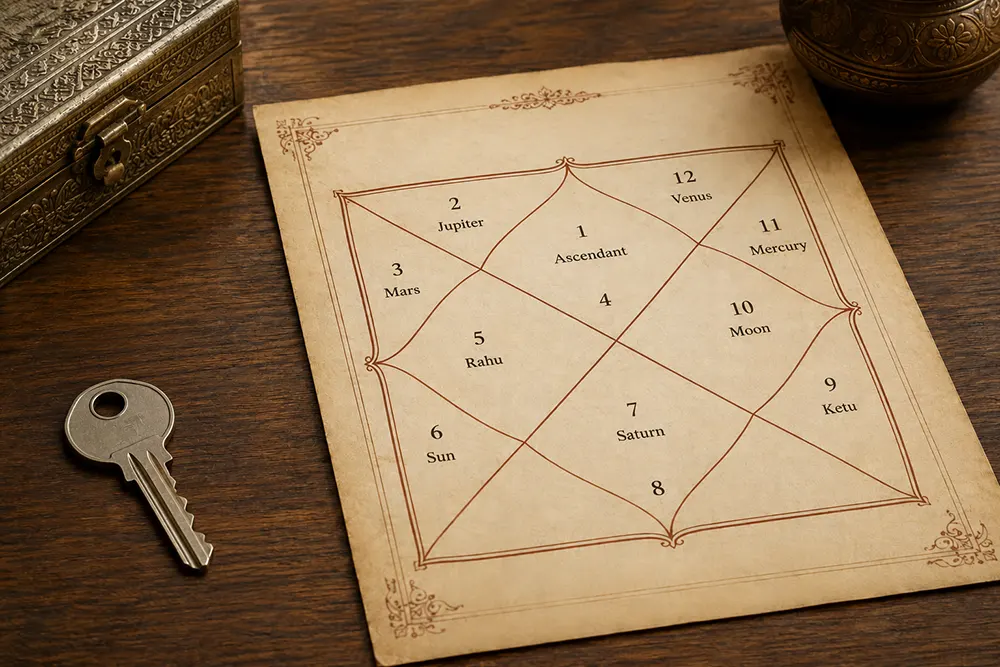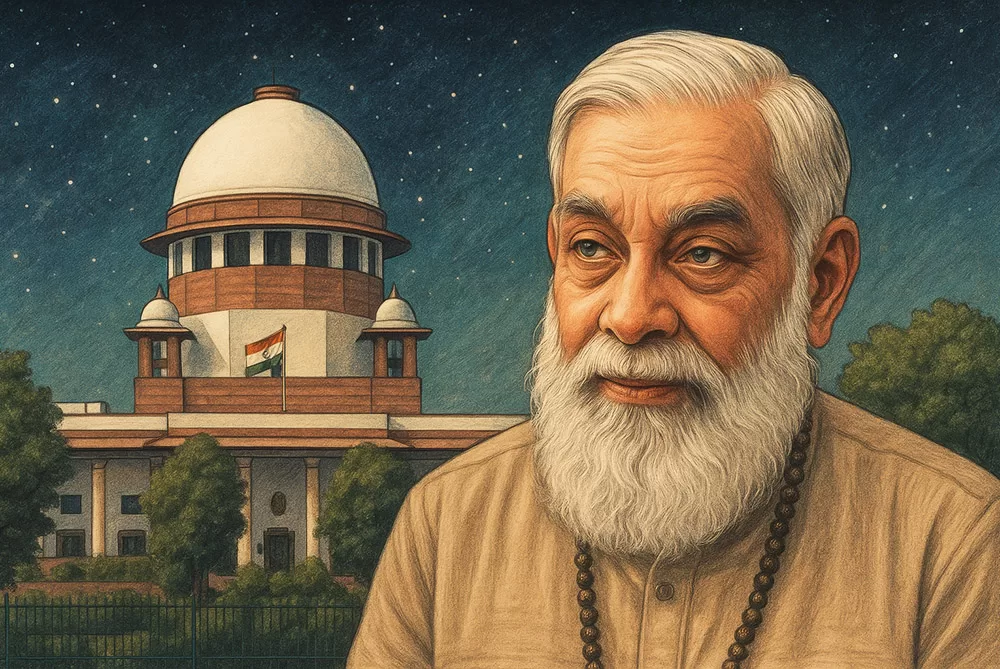

In the early 2000s, a silent but decisive battle unfolded in the courtrooms of India. At stake was not just a subject or syllabus, but the dignity of a timeless tradition – Indian astrology. What began as a legal challenge soon turned into a larger philosophical debate: Is astrology a legitimate science, or mere superstition? As modern rationalists moved to strike astrology from India’s academic framework, K. N. Rao, one of the country’s most respected astrologers, stepped up – not with emotion, but with evidence. This is the story of the landmark court battle that saved Indian astrology.
The Spark: UGC Introduces Astrology in Academia
In 2001, the University Grants Commission (UGC) introduced a new proposal: Indian universities could begin offering degree and research programs in Vedic Astrology (Jyotir Vigyan). It was a bold move. For decades, astrology had lived on the fringes of public discourse: practiced privately, respected culturally, but dismissed intellectually. The UGC’s decision aimed to restore its academic standing.
But not everyone was pleased. A group of scientists and rationalist activists filed a Public Interest Litigation (PIL) in the Andhra Pradesh High Court, challenging the decision. They argued that astrology had no scientific basis and that introducing it into university education violated the spirit of secular, rational education. The case escalated quickly, soon reaching the Supreme Court of India.
Astrology on Trial
At the heart of the case was a philosophical and cultural question:
Can astrology be considered a science?
Is there space for ancient Indian knowledge systems in the modern educational framework?
The petitioners labeled astrology as superstition. They claimed public funds should not be spent on promoting what they saw as unprovable beliefs. For them, the UGC’s move was a step backward: an endorsement of irrationality.
But for many Indians, especially those connected with spiritual traditions and ancient sciences, the attack on astrology felt like an attack on heritage. Among them was K. N. Rao, a soft-spoken yet highly influential astrologer who had spent decades bringing discipline and structure to astrological research in India.
K. N. Rao Steps In
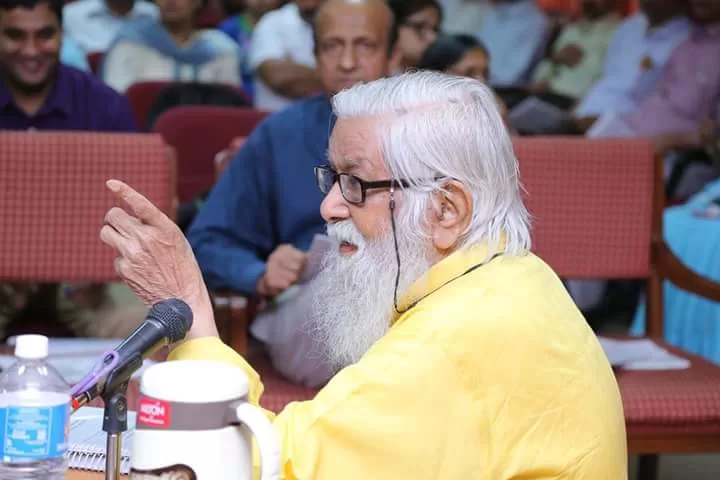
K. N. Rao, then the guiding force behind Bharatiya Vidya Bhavan’s School of Astrology in New Delhi, stepped in; not as a protestor, but as a quiet warrior for truth. Having served as a senior civil servant and then dedicating his life to astrology, Rao was known for his research-oriented approach and integrity.
He supported the defense by submitting statistical research, real-life case studies, and analytical models. Rao argued that astrology, when properly practiced, was not superstition but a system of cosmic correlations, much like modern probability-based sciences.
His contributions were not emotional appeals, but reasoned arguments backed by data; covering birth charts, timing of events, and predictive accuracy. He emphasized that the dismissal of astrology came largely from ignorance, not from any real study or testing of the subject.
More Than Just a Court Case
The legal case soon turned into something deeper. It became a cultural debate: between Western definitions of science and Indian epistemology, between linear logic and holistic pattern recognition, between colonial hangovers and cultural revival.
For Rao and others defending astrology, the goal wasn’t to prove astrology as science in the modern Western sense; but to establish its value, consistency, and predictive capacity. Astrology, they argued, wasn’t magic – it was a structured field based on centuries of observation, mathematics, and astronomical calculations.
This courtroom moment was historic: for the first time, Indian astrology had a voice in the country’s highest court, not just in temples or textbooks.
The Supreme Court Verdict
In 2004, after years of legal hearings, the Supreme Court of India dismissed the petition against astrology. The bench led by Chief Justice S. Rajendra Babu declared that:
“Astrology is a subject which is being taught for over 4,000 years… Whether it is science or not is not for courts to decide.”
The Court ruled that it was not within the judiciary’s domain to evaluate the scientific merit of a subject. That responsibility lies with scholars, universities, and educational regulators like the UGC.
This decision was a turning point. It allowed Indian universities to officially offer astrology courses, creating a space for formal learning, research, and legitimacy. For the first time since colonial times, astrology was no longer just a household tradition – it had re-entered the academic fold.
Why This Victory Matters
This wasn’t just a win for astrologers. It was a victory for every Indian who believes in the richness of our ancient knowledge systems. In a country where astrology has helped guide everything from marriages to elections, its marginalization was never due to irrelevance; but due to lack of institutional support and intellectual validation.
K. N. Rao’s role in this victory is immeasurable. Without publicity or self-promotion, he fought for a tradition he believed in. Through data, casework, and calm reasoning, he brought dignity back to Jyotish. His stand protected astrology not only from legal dismissal, but from intellectual erasure.
A Personal Reflection
As an astrologer today, I often look back at this chapter with deep gratitude. Had it not been for K. N. Rao and the team that stood with him, astrology might have remained in the shadows; practiced in silence, but never respected in public.
It is because of this battle that many of us today can learn, practice, and teach astrology with pride. We can speak of charts, dashas, yogas, and karmic patterns; not just as inherited wisdom, but as a discipline that holds space in the world of research and reason.
Let us remember that astrology didn’t just survive because of belief; it endured because of people like K. N. Rao, who protected it when it was most vulnerable.
Conclusion: Gratitude for a Legacy
Today, Indian astrology is being rediscovered by youth, researchers, and spiritual seekers around the world. There’s a quiet revival taking place, and at its foundation lies the courage of one man who chose to defend an ancient science in a modern courtroom.
K. N. Rao didn’t just win a legal battle. He preserved a legacy.
For that, Indian astrology will forever be in his debt.