
Every year, as Diwali approaches, homes begin to sparkle with fresh decorations, markets fill with gold and silver, and families prepare to welcome prosperity into their lives. The first day of these celebrations is Dhanteras, an auspicious occasion when people purchase precious metals, new utensils and other valuables, believing that they bring good fortune into the household.
But have you ever wondered why we celebrate Dhanteras? Why is buying gold considered auspicious on this particular day? And what does a festival associated with wealth have to do with the divine physician, the god of death and a devoted farmer?
The answers lie in some fascinating stories from Hindu mythology.
Dhanteras marks the beginning of the five days of Diwali and is celebrated to invite prosperity, well-being and health into our homes. The word comes from Dhan, meaning wealth, and Teras, referring to the thirteenth day of the lunar cycle. Traditionally known as Dhanatrayodashi, the festival falls on the Trayodashi Tithi of Krishna Paksha in the month of Kartika.
While buying gold, silver and new utensils has become its most recognisable custom, the roots of Dhanteras go much deeper. Its mythology brings together three essential aspects of human life: health, prosperity and the desire to protect our loved ones.
Let’s explore the stories behind this beautiful festival.
The Emergence of Lord Dhanvantari: The Wealth of Good Health
One of the most significant stories associated with Dhanteras takes us back to the great Samudra Manthan, the churning of the cosmic ocean.
According to the Bhagavata Purana, the Devas and Asuras joined forces to churn the ocean of milk in search of Amrit, the nectar of immortality. Using Mount Mandara as the churning rod and Vasuki, the serpent king, as the rope, they set the cosmic ocean into motion. What followed was the emergence of several extraordinary treasures, divine beings and celestial objects.
Among these was Lord Dhanvantari, who emerged from the ocean carrying a vessel filled with Amrit. Revered as the divine physician and an incarnation of Lord Vishnu, Dhanvantari is regarded as the presiding deity of Ayurveda, the ancient Indian science of life and healing.
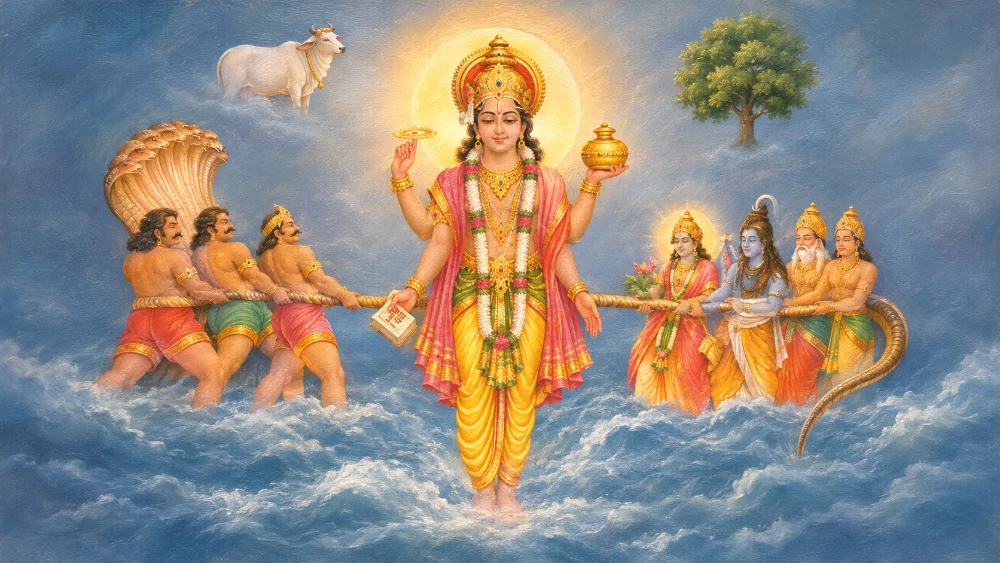
His appearance carries a particularly beautiful significance. While the Devas and Asuras sought immortality through Amrit, Dhanvantari’s association with Ayurveda represents another dimension of the same aspiration: preserving life, maintaining health and understanding the principles that sustain the human body.
This is why Lord Dhanvantari is worshipped on Dhanteras. The festival reminds us that good health is perhaps the most fundamental form of wealth. Gold and silver may bring material comfort, but without health and longevity, their value becomes limited.
In fact, Dhanteras is also celebrated as Dhanvantari Jayanti, and the occasion has traditionally been associated with honouring Ayurveda and its healing traditions.
The Clever Bride and Lord Yama: A Story of Life Over Death
There is another fascinating story behind Dhanteras, one that explains the tradition of lighting a special lamp for Yama, the god of death.
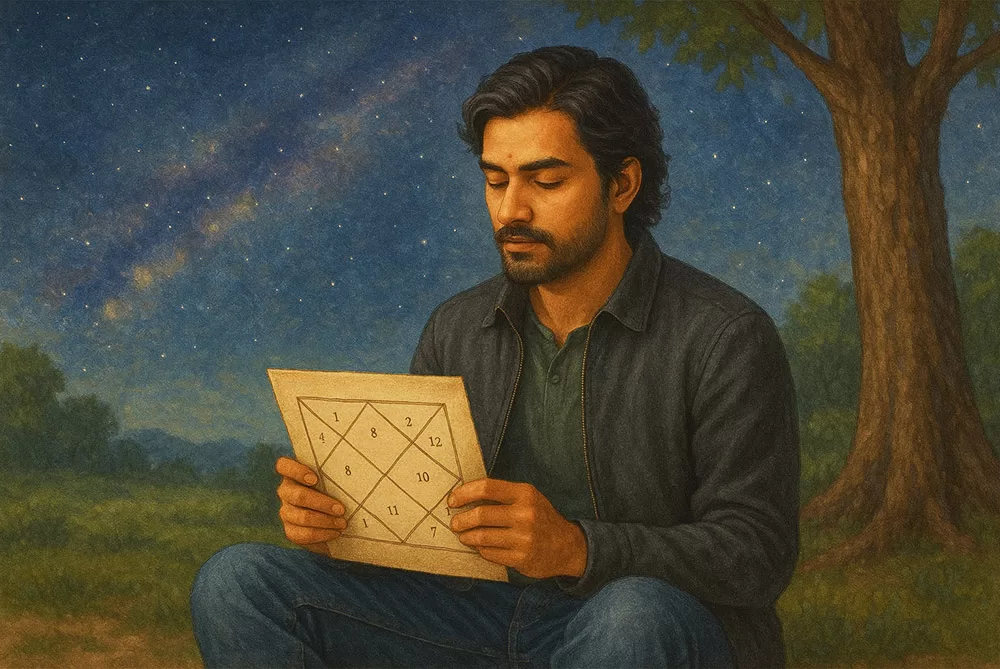
Long ago, King Hima had a son whose horoscope predicted an untimely death. According to the astrologer’s prediction, the young prince would die from a snakebite on the fourth day after his marriage.
When the prince got married, his bride eventually learned about this prophecy. Determined to protect her husband, she decided that she would not allow him to fall asleep on the destined night.
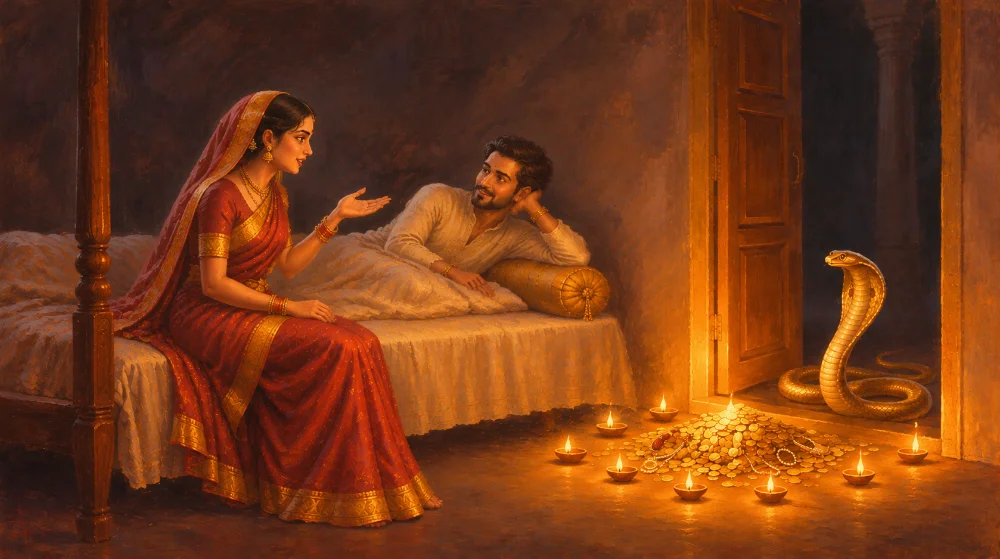
As the night approached, she collected all the gold and silver ornaments in the house and piled them near the entrance of their bedroom. She then lit numerous oil lamps, illuminating the entire passage. Throughout the night, she kept her husband awake by singing songs, narrating stories and engaging him in conversation.
When Yama arrived in the form of a serpent to claim the prince’s life, he encountered the dazzling light of the lamps and the brilliance of the precious ornaments. Unable to enter the chamber, he climbed onto the heap of gold and silver and remained there, listening to the bride’s songs and stories.
Eventually, the night passed. With the arrival of dawn, Yama departed without taking the prince’s life.
The young prince was saved.
This story is traditionally associated with the practice of lighting a lamp for Yama, known as Yama Deepam or Yamadeepdaan. On Dhanteras, families light an oil lamp, often facing south, to seek protection from untimely death and pray for the health and longevity of their loved ones.
Beyond its ritual significance, the story carries an interesting message. It portrays devotion, presence of mind and determination as forces that can stand against even the most frightening predictions of destiny. The bride does not surrender to the prophecy; instead, she responds with awareness and action.
Goddess Lakshmi and the Devoted Farmer: The Meaning of Welcoming Prosperity
While the stories of Dhanvantari and Yama explain the association of Dhanteras with health and longevity, another popular legend connects the festival with Goddess Lakshmi and the tradition of welcoming prosperity into our homes.
According to this traditional story, Lord Vishnu once accompanied Goddess Lakshmi on a visit to Earth. Before their journey, Vishnu asked Lakshmi not to look towards the south.
However, as they travelled, Lakshmi became captivated by the beauty of mustard flowers and sugarcane fields. Unable to resist their charm, she turned towards the south, breaking her promise.
Displeased by her disobedience, Lord Vishnu asked her to serve the poor farmer who owned the field for twelve years as penance.
During her stay, the farmer’s circumstances changed remarkably. His fields flourished, his harvest became abundant and his household gradually prospered. What had once been a humble existence transformed into a life of comfort and abundance.
When the twelve years were over, Vishnu returned to take Lakshmi back. But the farmer, having experienced her blessings, was unwilling to let her leave. He pleaded with her to remain in his home.
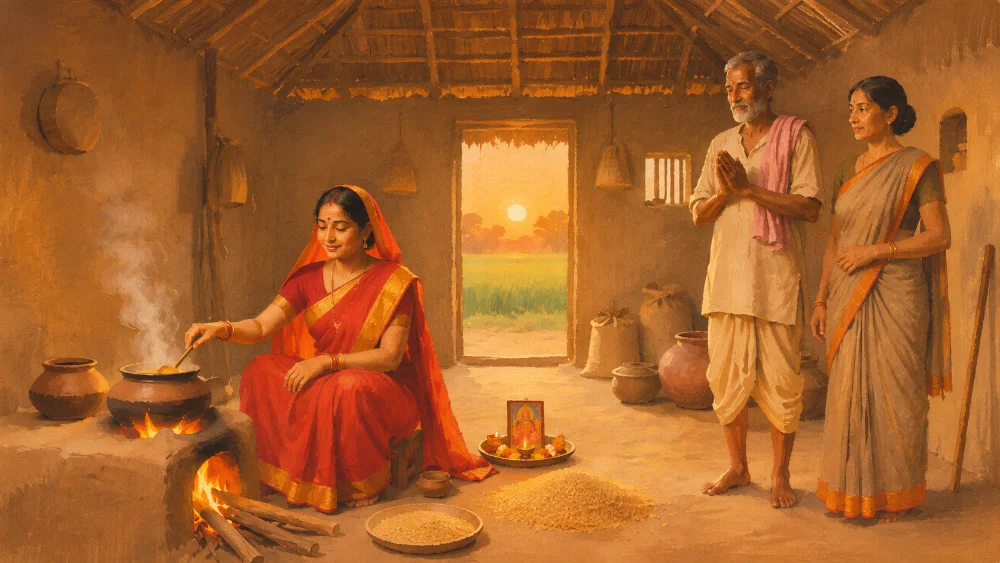
Goddess Lakshmi explained that she could not stay permanently, but promised to visit him every year on the night before Diwali, provided he kept his home clean and illuminated a lamp to welcome her.
The farmer followed her instructions, and the tradition continued.
This popular legend offers a beautiful explanation for why cleaning homes, decorating entrances and lighting lamps are such important parts of Diwali preparations. These customs symbolise welcoming Goddess Lakshmi and inviting prosperity into our lives.
It also carries a subtle message: prosperity is not simply something we acquire; it is something we must learn to welcome, preserve and respect.
Why Do We Buy Gold, Silver and New Utensils on Dhanteras?
One of the most recognisable traditions of Dhanteras is purchasing gold, silver, jewellery or new household utensils. Markets across India become particularly vibrant as families shop for precious metals and other valuables.
But why is this considered auspicious?
The tradition is closely connected with the mythology of Samudra Manthan. Lord Dhanvantari emerged carrying a vessel of Amrit, and purchasing a new metal vessel is popularly associated with this symbolism. It represents welcoming abundance, nourishment and good fortune into the household.
Gold and silver, meanwhile, have long been regarded as symbols of prosperity, purity and auspiciousness. Their purchase on Dhanteras is seen as a symbolic beginning to a prosperous year.
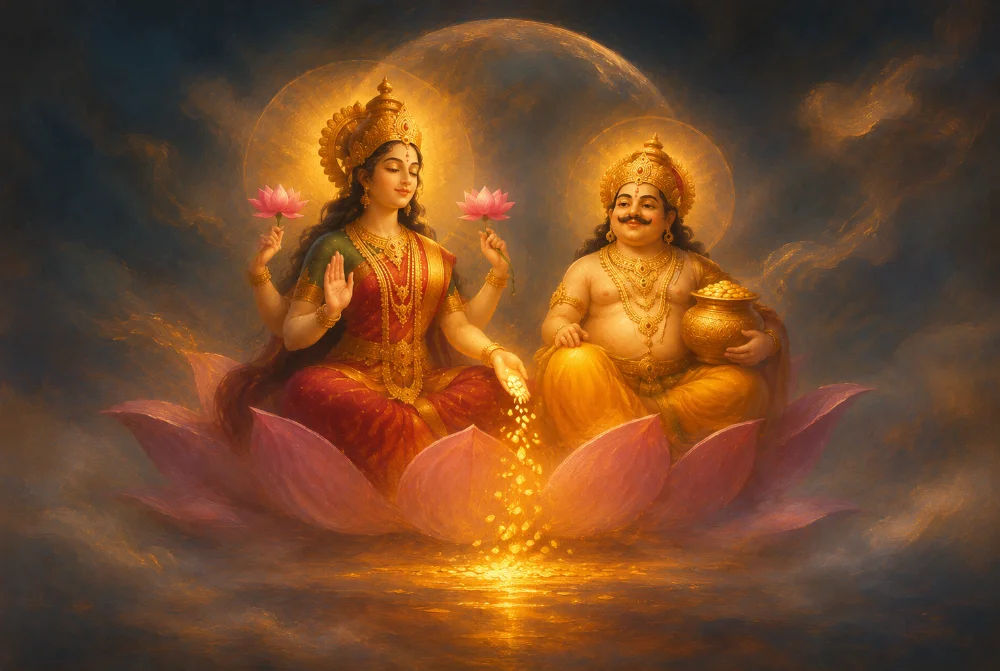
There is also an association with Lord Kubera, the divine treasurer and guardian of wealth. Alongside Goddess Lakshmi, he is worshipped in many households to seek financial stability, abundance and the preservation of wealth.
However, buying expensive jewellery is not a religious requirement. Even purchasing a small utensil or a modest metal object is considered auspicious in many traditions.
The underlying idea is not the amount of wealth one spends, but the intention of welcoming prosperity into the home.
Dhanteras in Jain Tradition: The Wealth of Meditation
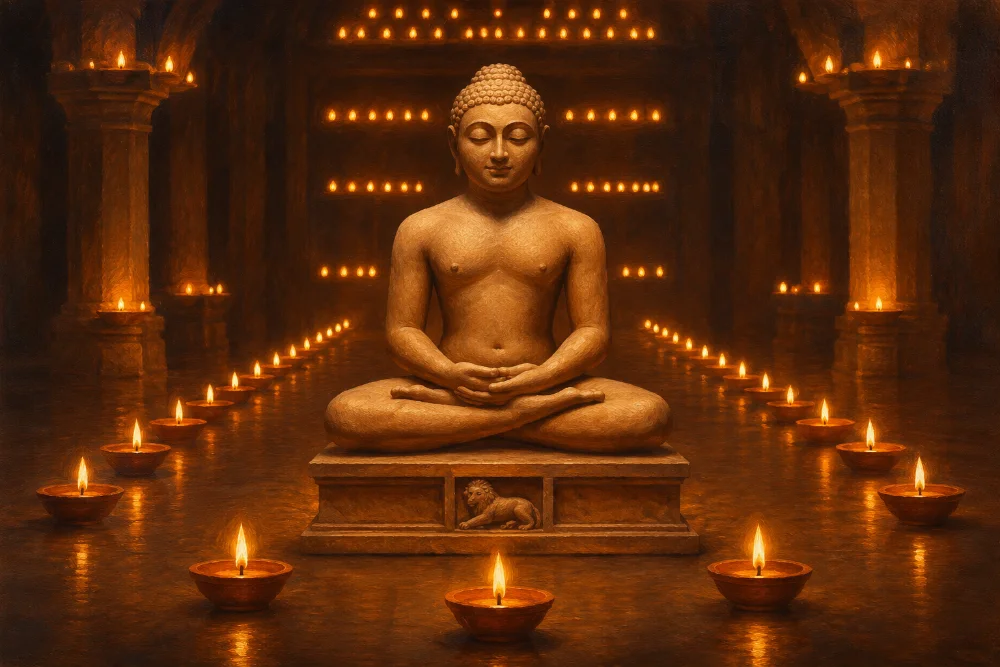
Dhanteras also carries an interesting spiritual association in Jain tradition. In certain Jain communities, the occasion is referred to as Dhyan Teras, drawing attention to Dhyana, meaning meditation or deep contemplation.
The significance comes from the Jain tradition surrounding Lord Mahavira, the 24th Tirthankara. According to Jain accounts, Mahavira spent his final period in deep meditation and ultimately attained Nirvana at Pavapuri on the night of Diwali. This makes the Diwali period particularly significant in Jain religious observance, as it commemorates the liberation of a Tirthankara.
The association with meditation offers a different perspective on the idea of wealth. While Dhanteras is widely celebrated through the worship of Goddess Lakshmi, the purchase of precious metals and prayers for material prosperity, the Jain philosophical outlook places greater emphasis on spiritual discipline, self-realisation and liberation from worldly attachments.
It presents an interesting contrast: material wealth may enrich our external circumstances, but spiritual wisdom transforms our understanding of existence itself. In this sense, the idea of wealth extends beyond possessions to include the richness of consciousness and the freedom that comes through self-realisation.
Although the terminology and specific observances vary among Jain communities, this association adds another meaningful dimension to the festival.
The Deeper Significance of Dhanteras
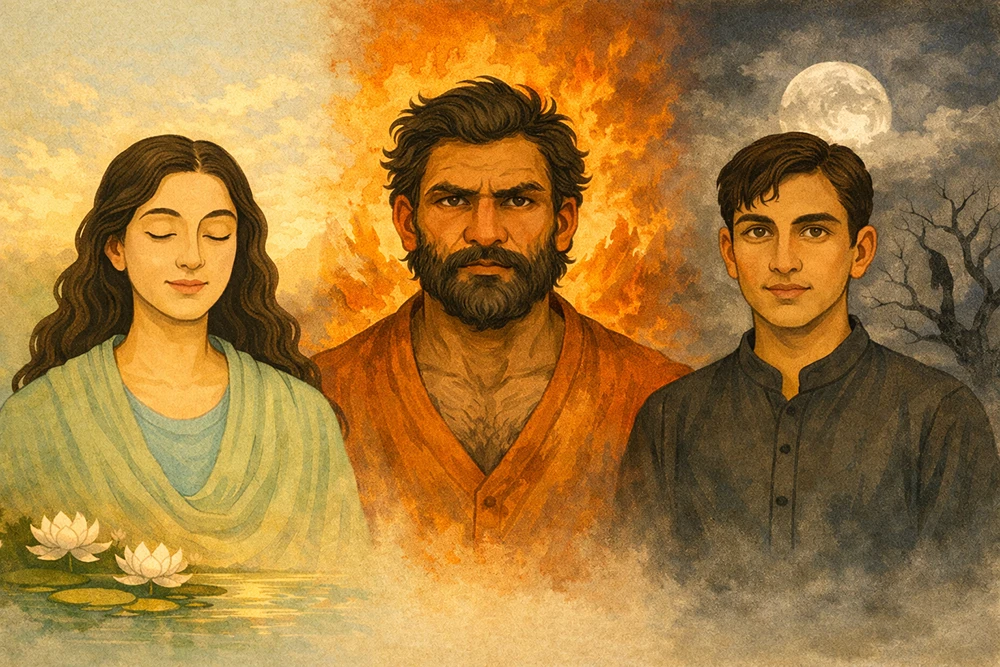
The stories associated with Dhanteras bring together three seemingly different ideas: the pursuit of health, the desire for prosperity and the protection of life.
Lord Dhanvantari reminds us that health and longevity are among life’s greatest treasures. Goddess Lakshmi represents abundance, fortune and the resources that make life comfortable. The story of Yama reminds us of the fragility of human life and the importance of cherishing our loved ones.
Together, these traditions offer a broader understanding of wealth.
Wealth is not merely gold, silver, money or possessions. It is also the health to enjoy life, the wisdom to make meaningful choices, the relationships that give life its warmth and the resources to live with dignity.
Perhaps this is the most beautiful aspect of Dhanteras. A festival that is commonly associated with shopping and material prosperity actually begins with the remembrance of the divine physician and the importance of preserving life.
As we light lamps and welcome prosperity into our homes, Dhanteras invites us to reflect on what we truly consider valuable.
After all, the greatest wealth is not simply what we possess, but what makes life worth living.