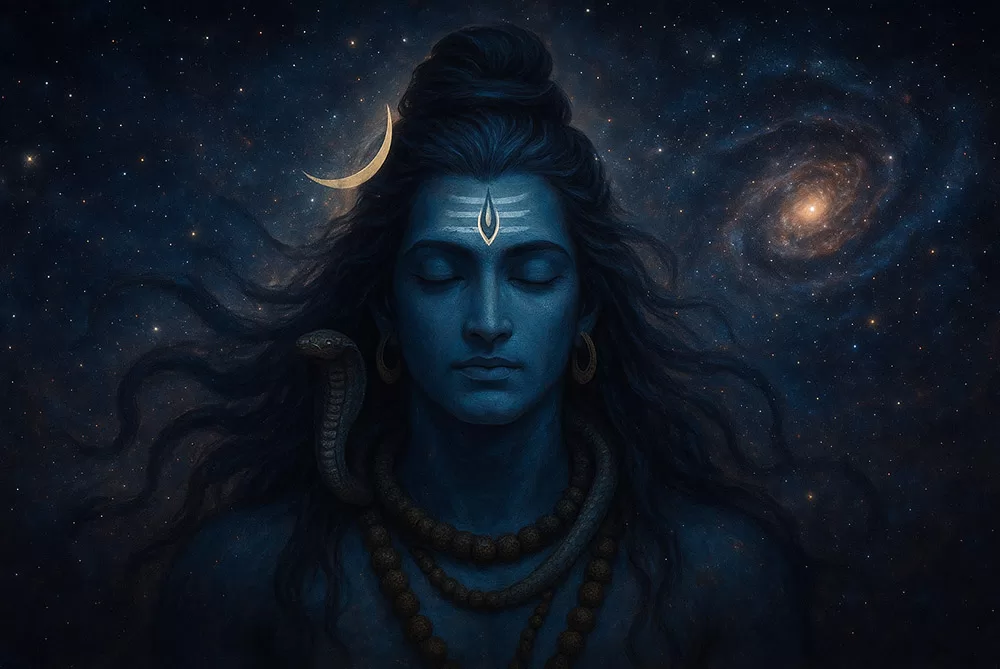

Rudrashtakam is an eight-verse hymn (ashtakam) in praise of Lord Shiva (Rudra) composed by Goswami Tulsidas. It opens with the famous line “Namami Shamishan” and has been a beloved prayer in the bhakti tradition for centuries. The hymn praises Shiva’s paradoxical nature – terrifying and gentle, formless and manifest, destroyer of ignorance and bestower of liberation – and points the devotee toward surrender and inner stillness.
Origin and historical context
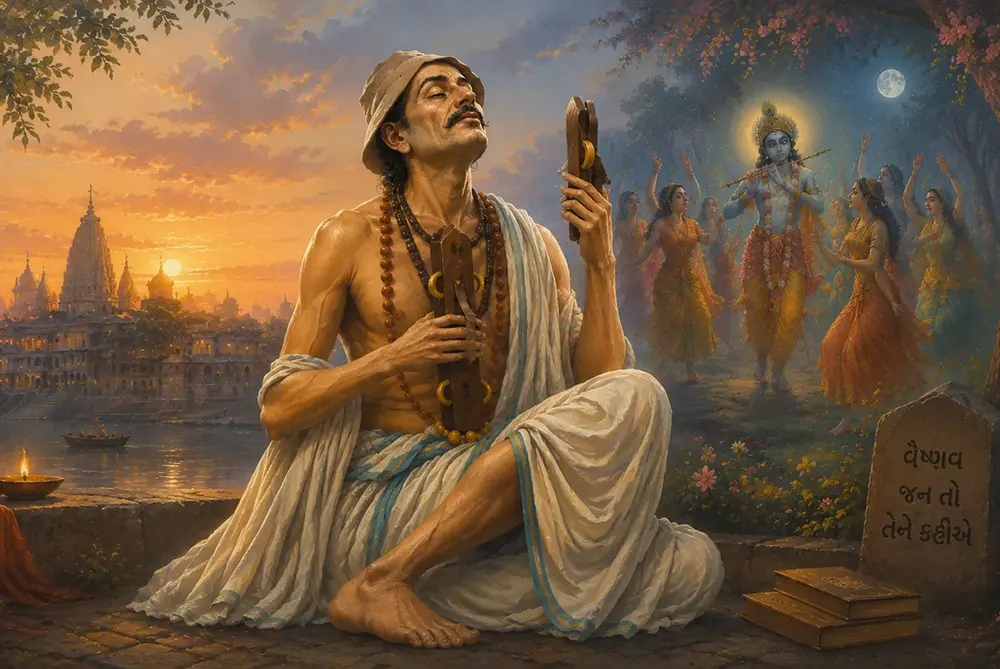
Tulsidas (c. 16th century), the author of the Ramcharitmanas, composed Rudrashtakam as a compact and potent stotra to honour Shiva. Though Tulsidas is primarily associated with Rama bhakti, Rudrashtakam shows his deep reverence for Shiva as the transcendental reality and the remover of bondage. The hymn appears in later recensions and is commonly chanted during Shiva puja, on Mahashivaratri, and whenever devotees seek protection, purification, or liberation.
Structure and style
Rudrashtakam is concise: eight stanzas, each four lines long, written in Sanskrit with simple but evocative imagery. Its language blends metaphysical description (Shiva as nirākāra, the formless), cosmic roles (Mahākāla, Giriśa), and tactile devotional images (matted hair, crescent moon, snake round the neck). This mixture lets the hymn operate on two levels at once: philosophical and devotional; so that chanting it both calms the mind and points it toward the absolute.
Signification of “Namami Shamishan”
The opening phrase carries the full attitude of devotion and recognition implicit in the hymn. Namāmi means “I bow” or “I offer salutations.” Śamīśān (often written Shamīshān or Śamīśān) is an epithet of Shiva; it can be read as “the Lord (īśān) who is the serene, auspicious abode (śam)” or, more generally, “the peaceful sovereign”. Together, Namāmi Śamīśān sets the tone: the devotee bows to Shiva, who is both the quiet essence (nirvāṇa-rūpa) and the active, compassionate protector of the world.
Deeper meaning and themes
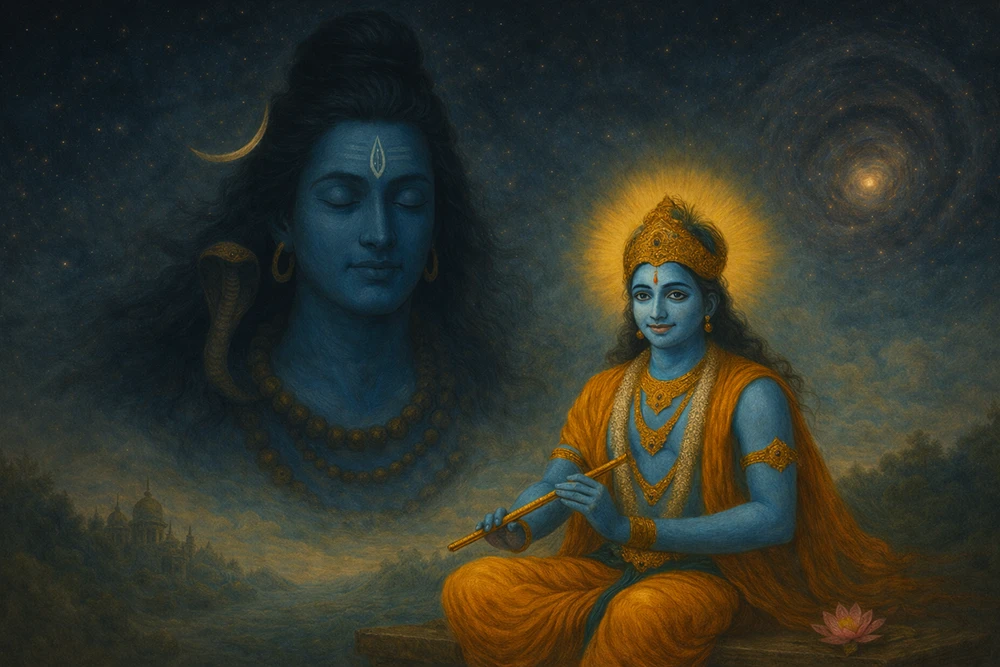
One of the hymn’s central insights is the unity of seeming opposites. Shiva is described as nirvāṇa-rūpa (the form of liberation) and equally as karāla (terrible) – the destroyer of ego and illusion. He is nirākāra (formless) yet appears in the world with attributes like matted hair, the crescent moon, blue throat and a garland of skulls. This paradox is not contradiction but a teaching: ultimate reality transcends attributes, and yet it compassionately takes forms to guide beings back to freedom.
A second theme is transcendence of the three gunas and the play of name-and-form (nāma-rūpa). The hymn repeatedly affirms Shiva’s being beyond qualities (nirguṇa), beyond mental constructions (nirvikalpa), and beyond attachment (nirīha). That language points the listener to a state of witness-consciousness (sakshi), not merely conceptual belief.
A final devotional theme is surrender. Though the hymn describes cosmic power, it ends in humility: the devotee recognizes dependence on Shiva’s grace to cross the ocean of saṃsāra.
The text (Devanagari), transliteration and line-by-line translation
Below each stanza I give a simple transliteration followed by a line-by-line meaning. The translations aim to be literal enough for study while keeping devotional tone.
Stanza 1
नमामीशमीशान निर्वाणरूपं विभुं व्यापकं ब्रह्मवेदस्वरूपम् । निजं निर्गुणं निर्विकल्पं निरीहं चिदाकाशमाकाशवासं भजेऽहम् ॥१॥
transliteration: namāmi śamīśān nirvāṇa-rūpam vibhum vyāpakaṁ brahma-veda-svarūpam nijaṁ nirguṇaṁ nirvikalpaṁ nirīhaṁ cid-ākāśam ākāśa-vāsaṁ bhaje ‘ham
translation (line-by-line): I bow to Śamīśān, whose form is nirvāṇa (the liberative state). I worship the all-pervading (vibhu), the vast one who is the very form of Brahman and the Vedas. He is his own, without qualities (nirguṇa), beyond conceptual distinctions (nirvikalpa), free from desire (nirīha). I revere the consciousness-space (chid-ākāśa) who dwells in infinite space.
Stanza 2
निराकारमोङ्करमूलं तुरीयं गिराज्ञानगोतीतमीशं गिरीशम् । करालं महाकालकालं कृपालं गुणागारसंसारपारं नतोऽहम् ॥२॥
transliteration: nirākāra om-kāra-mūlam turīyam girājñāna-gotīta-mīśaṁ girīśam karālaṁ mahākāla-kālaṁ kṛpālaṁ guṇāgāra-saṃsāra-pāraṁ nato ‘ham
translation: Formless, whose root is the syllable Om and the fourth (turīya) beyond waking, dreaming and deep sleep. He is the lord (giriśa) beyond even the knowledge of the mountains (symbolic of higher wisdom). Formidable, the great-time (Mahākāla) who is time’s end, yet compassionate. He is the treasure-house of virtues who carries devotees across the ocean of worldly existence — to him I bow.
Stanza 3
तुषाराद्रिसंकाशगौरं गभिरं मनोभूतकोटिप्रभाश्री शरीरम् । स्फुरन्मौलिकल्लोलिनी चारुगङ्गा लसद्भालबालेन्दु कण्ठे भुजङ्गा ॥३॥
transliteration: tuśārādri-saṅkāśa-gauraṁ gabhiraṁ manobhūta-koṭi-prabhā-śrī śarīram sphuran mauli-kallolinī cāru-gaṅgā lasad-bhāla-bāleṃdu kaṇṭhe bhujaṅgā
translation: He shines like the snow-clad mountain, pale and profound, whose body is luminous like the power of millions of minds made manifest. From his matted hair flows the lovely Ganges in shimmering waves, and on his forehead a crescent moon shines; around his throat coils the serpent.
Stanza 4
चलत्कुण्डलं भ्रूसुनेत्रं विशालं प्रसन्नाननं नीलकण्ठं दयालम् । मृगाधीशचर्माम्बरं मुण्डमालं प्रियं शङ्करं सर्वनाथं भजामि ॥४॥
transliteration: calat-kuṇḍalaṁ bhrū-sunetraṁ vishālaṁ prasannānanaṁ nīla-kaṇṭhaṁ dayālam mṛgādhīśa-carma-ambaraṁ muṇḍamālaṁ priyaṁ śaṅkaraṁ sarvanāthaṁ bhajāmi
translation: Earrings sway, his brows and eyes are wide and benign; he has an open, serene face, the blue-throated one, compassionate. He wears the skin of a deer as a garment and a garland of skulls; beloved Śaṅkara, lord of all, I worship you.
Stanza 5
पाशपद्भुजंगावच्छित्तगण्डं विरूपं निजशरीरमभवम् । हृदयाद्भवन्ति मम सिद्धयः प्रभो पाही मां शरणागतम् ॥५॥
transliteration: pāśapa-dhujaṅga-avacchitta-gaṇḍaṁ virūpaṁ nija-śarīram abhavam hṛdayād bhavanti mama siddhayaḥ prabho pāhī māṁ śaraṇāgatam
translation: Rudra tore the noose and serpent that marked his body; his form was strange yet his own. From the heart arise my spiritual attainments; O Lord, protect me who have taken refuge.
Stanza 6
भवानीपतिमखिलभूतनाथं भजाम्यनुग्रहं परं परम् । गृहपमौलीकनदार्भकृत्स्नं भवतु मम शरणं शरणम् ॥६॥
transliteration: bhavānī-patim akhila-bhūta-nāthaṁ bhajāmy anugrahaṁ param param gṛha-pam aulīka-anda-arbhakṛtsnaṁ bhavatu mama śaraṇaṁ śaraṇam
translation: I worship the husband of Bhavānī, the lord of all beings; I seek the supreme grace. May my home be under the protection of his matted locks and loving care; may he be my refuge.
Stanza 7
यदभूतो भवितुं प्रत्यहं त्वं कृपया रामभद्रकराकृतिं । विपुलमुक्तिप्रसादकृत्वा कुरु मे भगवन्तु सुखं प्रभो ॥७॥
transliteration: yad abhūto bhavituṁ pratyahaṁ tvaṁ kṛpayā rāmabhadra-kara-ākṛtiṁ vipulam ukti-prasāda-kṛtvā kuru me bhagavantu sukhaṁ prabho
translation: Whatever becomes and whatever may become each day, by your mercy shaped in the form of Rama’s grace, with abundant liberating favor, O Lord, grant me bliss.
Stanza 8
चराचरमिदं यत्सर्वं त्वत्प्रभात् स्फुरत् पाहि मां प्रभो दैवतधर्मदर्शितम् । नमामीशमीशानं नमामीशमीशानं नमो नमो नमश्च शंभो हर ॥८॥
transliteration: carācaram idaṁ yat sarvaṁ tvat-prabhāt sphurat pāhi māṁ prabho daivat-dharma-darśitam namāmi śamīśānaṁ namāmi śamīśānaṁ namo namo namaś ca śambho hara
translation: All this moving and non-moving that shines by your splendour – protect me, O Lord, who know of duty to the divine. I bow to Śamīśān, I bow again and again – salutations, salutations; O Śambhu, remover (of suffering), hail.
How to use this hymn in practice
Rudrashtakam can be recited as a daily short practice, during Shiva vrata, or on Mahashivaratri. Chanting with attention to meaning; contemplatively reflecting on the paradoxes described – deepens the practice. Some find that repeating the first line as a short mantra (Namami Śamīśān) is calming; others prefer the full eight verses once or three times.
Closing reflection
Rudrashtakam is an invitation: to recognize the divine that is beyond attributes and yet present in forms that guide and protect. Its poetic reversals teach that liberation is not a distant doctrine but an intimate presence available through devotion, humility and inner witness.