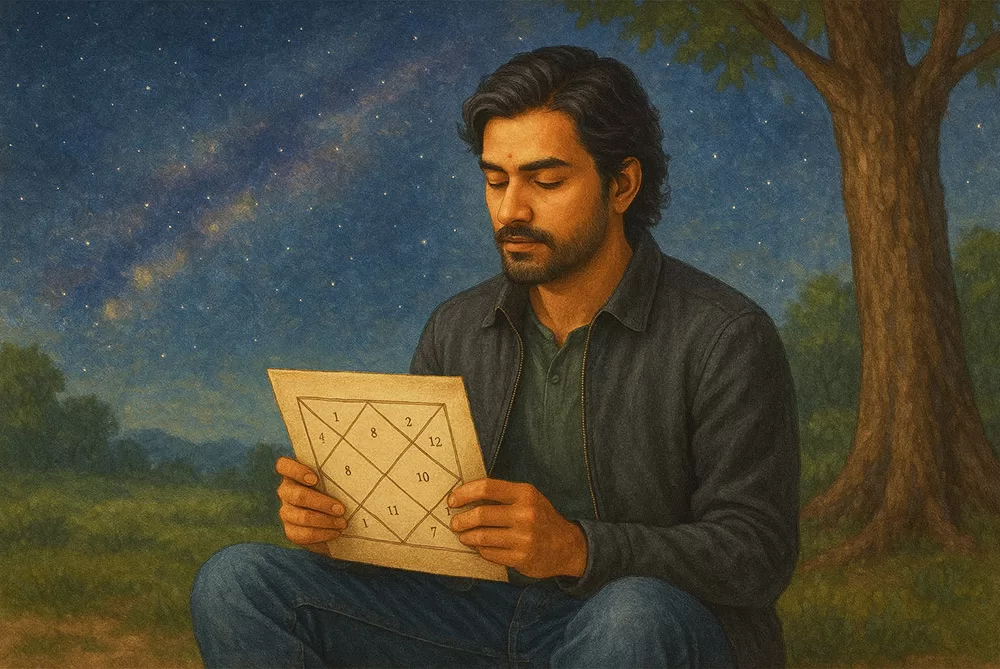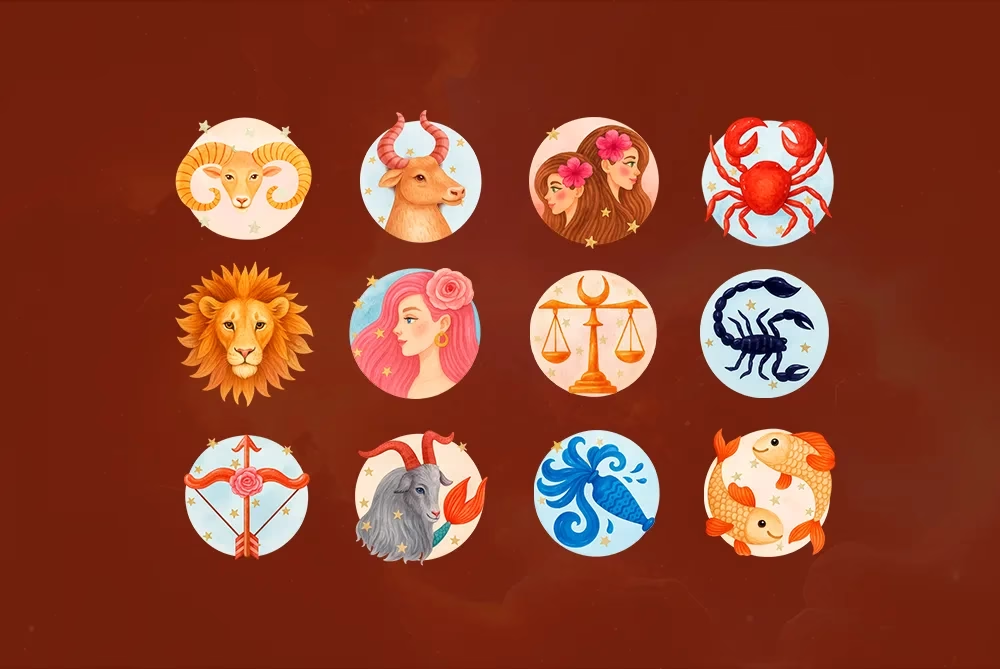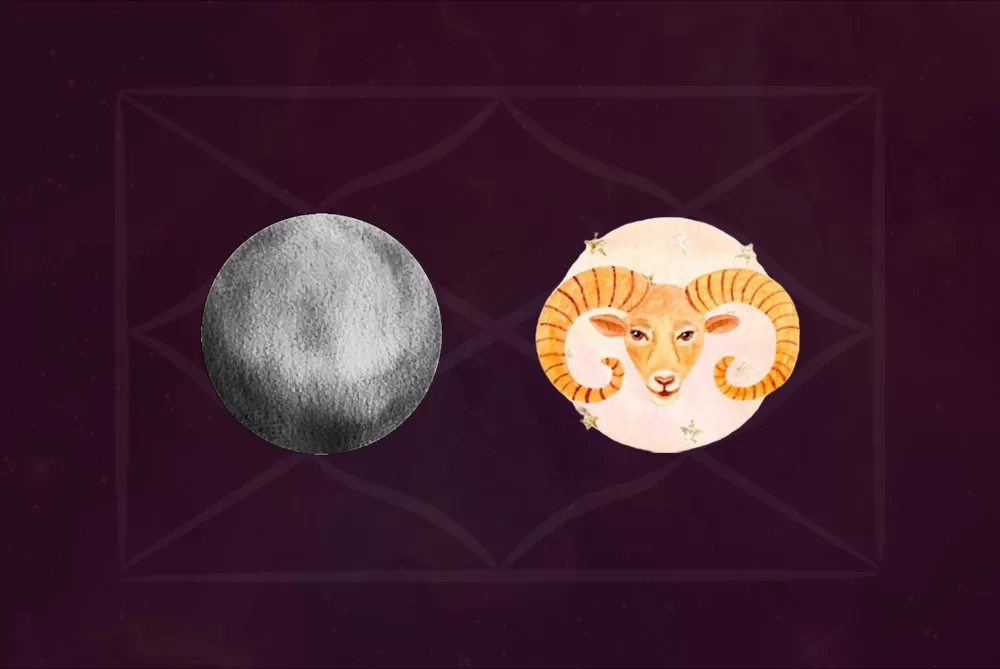

For Aries Ascendant, Ketu represents detachment, past-life mastery, spiritual depth, and inner withdrawal working through the fiery and action-oriented energy of Mars. Aries is bold, direct, and driven, while Ketu is inward, subtle, and non-material. This creates an interesting contrast. Ketu does not seek worldly success like Rahu. Instead, it reduces attachment in the areas it occupies and pushes the native toward inner realization and karmic completion.
For Aries Ascendants, Ketu’s results depend heavily on Mars, the Lagna lord. When Mars is strong, Ketu gives clarity, courage, and spiritual insight. When Mars is weak, Ketu can create confusion, lack of direction, or impulsive detachment. Ketu shows where the native already has past-life experience and therefore feels less interested, yet still operates with instinctive intelligence. Let’s explore how Ketu behaves in each of the twelve houses for Aries Ascendant.
Ketu in the 1st House
Ketu in the Ascendant creates a personality that feels inwardly detached despite appearing bold externally. The native may struggle with self-identity or feel disconnected from their own desires. There is a natural inclination toward spirituality, introspection, or minimalism. While Aries usually pushes forward aggressively, Ketu softens this energy, making the person less ego-driven over time. Early life may bring confusion about direction, but with maturity, the native becomes deeply self-aware. This placement often produces individuals who are fearless yet detached from outcomes, making them powerful but inwardly calm.
Ketu in the 2nd House
In the 2nd house, Ketu creates detachment from family, wealth, and material accumulation. The native may not feel deeply connected to family traditions or may experience distance in early family life. Speech can be sharp, minimal, or spiritually inclined. Financially, the person may earn well but not feel attached to money. There can be fluctuations in wealth if discipline is lacking. However, this placement also gives wisdom in handling resources and a natural ability to speak truth without filters. Over time, the native learns to balance detachment with responsibility in financial and family matters.
Ketu in the 3rd House
Ketu in the 3rd house reduces the need for validation through effort or communication. The native may not feel inclined to prove themselves constantly. However, this does not reduce capability. In fact, it gives quiet courage and internal strength. Relationships with siblings may feel distant or karmic. The person prefers meaningful communication over superficial interaction. This placement supports spiritual writing, research, and independent work. The native acts without seeking recognition, which often leads to success without attachment. It teaches action without ego, which aligns well with spiritual growth.
Ketu in the 4th House
Ketu in the 4th house creates emotional detachment from home, mother, and inner security. The native may feel disconnected from their roots or may not find complete peace in domestic life. There can be frequent relocations or a lack of emotional satisfaction despite material comfort. However, this placement pushes the person inward, encouraging them to find peace within rather than externally. It is a strong placement for spiritual growth, especially through meditation or solitude. The native eventually learns that true stability is internal, not dependent on external conditions.
Ketu in the 5th House
In the 5th house, Ketu brings detachment in matters of love, creativity, and children. The native may not be overly expressive emotionally or may experience unusual patterns in romantic life. There can be a lack of interest in traditional romance or a tendency toward spiritual love rather than emotional attachment. Creativity becomes introspective and philosophical rather than expressive. Children may come with karmic lessons or responsibilities. However, Ketu here gives deep intelligence, intuitive thinking, and past-life knowledge. It is an excellent placement for spiritual learning and higher wisdom.
Ketu in the 6th House
Ketu in the 6th house is considered a strong placement. It gives the ability to overcome enemies, obstacles, and challenges without much effort. The native may not fear competition and often wins through detachment and strategy. Health issues may arise but are usually manageable. The person works efficiently but without attachment to outcomes. This placement is excellent for healing professions, spiritual service, or problem-solving roles. Ketu here removes fear of struggle, making the native calm even in difficult situations. It supports growth through service and humility.
Ketu in the 7th House
Ketu in the 7th house brings detachment in relationships and marriage. The native may feel disconnected from partners or may attract spiritually inclined or emotionally distant individuals. There can be dissatisfaction in relationships if expectations are material or emotional. However, when understood correctly, this placement supports spiritual partnerships rather than purely worldly ones. In business, the native may prefer working independently. Ketu here teaches that relationships are not for attachment but for growth and understanding. Emotional maturity becomes essential for balance.
Ketu in the 8th House
Ketu in the 8th house is a deeply spiritual and transformative placement. It gives natural understanding of hidden knowledge, occult sciences, and life’s mysteries. The native may go through sudden changes, but handles them with inner strength. There is strong intuition and interest in psychology, astrology, or healing. This placement reduces fear of death or loss, making the person more accepting of life’s uncertainties. Financial matters related to inheritance or joint resources may be unpredictable. Overall, Ketu here promotes deep inner transformation and spiritual awakening.
Ketu in the 9th House
Ketu in the 9th house creates detachment from traditional beliefs, religion, or structured philosophies. The native prefers personal experience over blind faith. They may question authority, teachers, or religious systems. This can lead to confusion early in life, but eventually results in a unique and deeply personal spiritual path. The person may travel or explore different philosophies but remains detached from rigid systems. Ketu here gives wisdom from past lives, making the native naturally philosophical. True growth comes when they balance independence with guidance.
Ketu in the 10th House
Ketu in the 10th house creates detachment from career, status, and public recognition. The native may work hard but feel unfulfilled by achievements. There can be sudden changes in career direction or lack of interest in authority. However, this placement also removes ego from professional life, allowing the person to work without attachment. It is suitable for spiritual professions, research, or behind-the-scenes roles. When balanced, the native achieves success without being consumed by it. Ketu here teaches that true purpose is beyond status and recognition.
Ketu in the 11th House
Ketu in the 11th house reduces attachment to gains, social networks, and desires. The native may have fewer friends or feel disconnected from large social circles. Financial gains may come, but satisfaction remains low. This placement shifts focus from material desires to inner fulfillment. The person prefers meaningful connections over superficial networking. It also gives the ability to detach from outcomes, which can be powerful in achieving long-term goals. Ketu here teaches that desires are endless, but peace comes from letting go.
Ketu in the 12th House
Ketu in the 12th house is one of the most spiritual placements. It enhances detachment, introspection, and connection with higher consciousness. The native may feel drawn toward solitude, meditation, or spiritual practices from an early age. There can be a natural disinterest in material life and a strong pull toward liberation. Foreign lands, isolation, or retreat-like environments may play a role in life. This placement supports moksha and deep inner awakening. When balanced, it brings peace, wisdom, and freedom from worldly illusions.
Conclusion
For Aries Ascendant, Ketu represents the inward journey that balances Mars’s outward drive. While Aries pushes forward with action and ambition, Ketu pulls the native toward detachment, reflection, and spiritual growth. It shows areas where worldly involvement feels incomplete, not because of lack, but because of past-life mastery.
When understood consciously, Ketu becomes a guide rather than a source of confusion. It teaches the Aries native to act without attachment, lead without ego, and achieve without losing inner peace. The journey of Ketu is not about loss, but about liberation.
Curious to know how Ketu is influencing your life?
Ask Astrologer | Book Astrology Consultation | Get Kundali Report