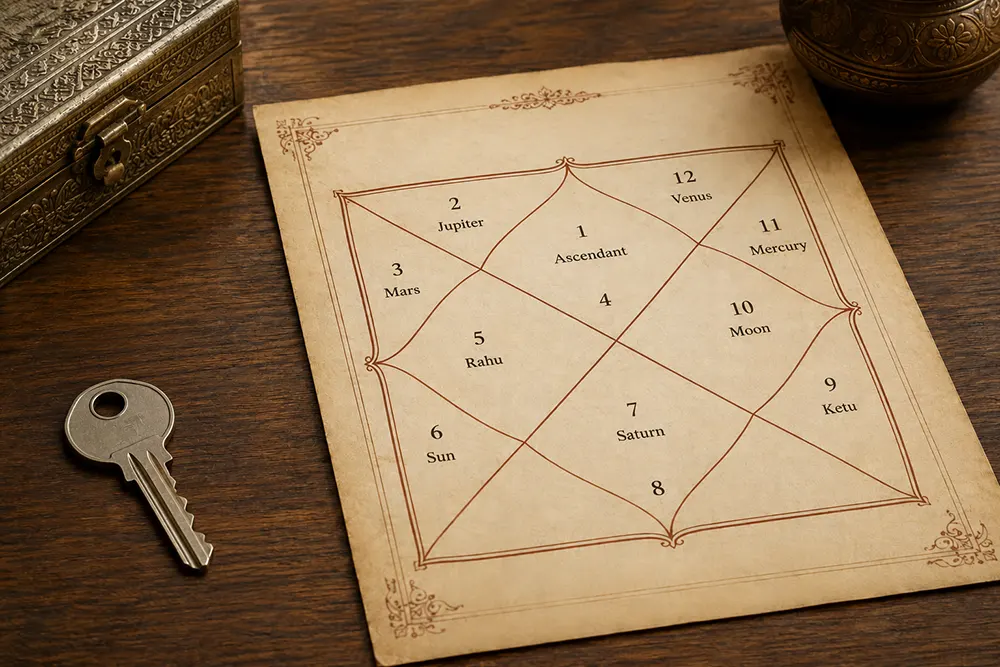

For Taurus Ascendant, Ketu represents detachment, past-life mastery, and inner withdrawal working through Venus’s grounded, sensual, and material-oriented energy. Taurus is ruled by Venus and seeks stability, comfort, beauty, and accumulation. Ketu, on the other hand, dissolves attachment and reduces interest in the material domain it occupies. This creates a subtle inner conflict where the native desires stability and pleasure, yet simultaneously feels detached from it.
Ketu does not deny results completely. Instead, it creates a sense of incompleteness or disinterest in areas where there may already be past-life experience. The results of Ketu depend strongly on Venus, the Ascendant lord. When Venus is strong, Ketu brings refined detachment, artistic depth, and spiritual grounding. When Venus is weak, Ketu can create confusion, dissatisfaction, or lack of direction. Let us explore how Ketu behaves in each house for Taurus Ascendant.
Ketu in 1st House for Taurus Ascendant
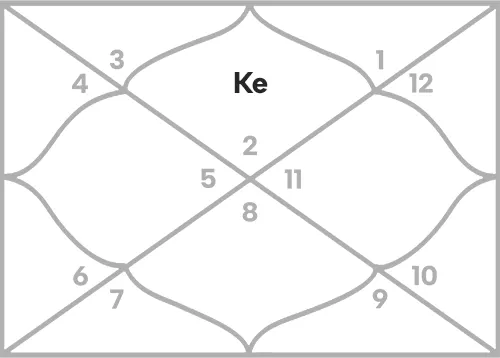
When Ketu is placed in the 1st house for a Taurus Ascendant, it occupies Taurus. While many traditions consider Ketu debilitated in Taurus, opinions differ among classical authorities. The 1st house governs personality, physical appearance, health, confidence, behaviour, and the overall direction of life. Ketu represents detachment, past-life mastery, spiritual wisdom, and inner awakening. Its placement in the Ascendant makes the native introspective, humble, and less concerned with external recognition than others may expect from a Taurus Ascendant. They often appear calm, composed, and grounded, yet internally they may experience uncertainty regarding identity or purpose, particularly during the early years of life. Rather than aggressively pursuing fame or status, they naturally question whether material success alone can bring fulfilment. If Ketu is afflicted, low self-confidence, indecisiveness, self-isolation, or difficulty expressing personal desires may become significant life lessons.
The 1st house shapes the native’s personality and approach to life, and Ketu here gives natural independence of thought and the ability to remain detached from public opinion. The native often possesses excellent intuition, keen observation, and the ability to understand people beyond surface appearances. They are drawn towards spirituality, philosophy, meditation, healing, research, astrology, psychology, or professions requiring deep concentration and analytical ability. Success generally comes when they stop seeking external validation and instead focus on meaningful work aligned with their inner values. Ketu casts its aspects on the 5th, 7th, and 9th houses, influencing intelligence, creativity, romance, children, marriage, business partnerships, higher education, philosophy, and spiritual beliefs. These influences encourage unconventional learning, spiritually significant relationships, and the gradual development of personal wisdom through direct experience rather than blind acceptance of tradition.
Venus, the Ascendant lord, represents harmony, beauty, comfort, and worldly enjoyment, while Ketu signifies renunciation, self-awareness, detachment, and liberation. These contrasting energies encourage the native to balance material responsibilities with inner contentment. Health is generally satisfactory, though attention should be given to the throat, thyroid, neck, nervous system, digestive sensitivity, anxiety, or stress arising from emotional withdrawal if Ketu is afflicted. The native should avoid neglecting their individuality or believing that detachment means avoiding responsibility. Developing healthy self-confidence, expressing emotions honestly, and maintaining meaningful relationships greatly strengthen the positive effects of this placement. Regular meditation, self-reflection, and service to others help channel Ketu’s spiritual energy constructively. The strength of Venus, Ketu, the 1st house, and the operating Dasha should always be considered before making detailed predictions regarding personality, health, or life direction. Overall, Ketu in the 1st house for Taurus Ascendant creates a humble, intuitive, and spiritually evolving individual who gradually discovers that true confidence arises not from external recognition but from self-awareness, inner stability, and living in alignment with one’s authentic nature.
Ketu in 2nd House for Taurus Ascendant
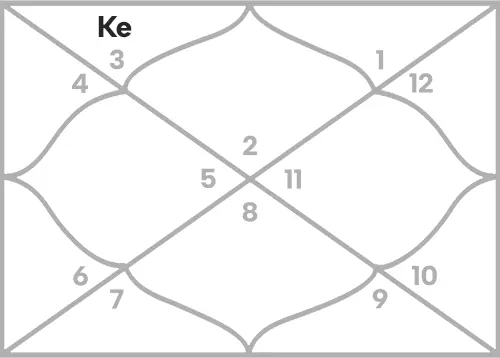
When Ketu is placed in the 2nd house for a Taurus Ascendant, it occupies Gemini, a sign ruled by Mercury. The 2nd house governs accumulated wealth, savings, family, speech, food habits, and personal values. Ketu represents detachment, spiritual wisdom, past-life mastery, and simplification. Its placement in the 2nd house reduces attachment to material possessions and encourages the native to discover values beyond wealth and social status. The native often has an unusual relationship with money and family traditions, preferring independence over rigid customs. They may appear reserved in speech, choosing words carefully rather than speaking excessively. Although material success is certainly possible, it rarely becomes the central purpose of life. If Ketu is afflicted, misunderstandings within the family, inconsistent financial habits, or difficulty expressing emotions through speech may become important lessons.
The 2nd house governs wealth, savings, family, speech, food habits, and accumulated assets. Ketu here often gives the ability to earn wealth without becoming overly attached to it. The native may succeed in research, consulting, education, writing, technology, astrology, finance, healing, psychology, or professions requiring analytical thinking and specialised knowledge. Their speech is generally concise, thoughtful, and sometimes philosophical, though it may appear blunt or emotionally detached to others. Financial fluctuations are possible, particularly when the native neglects long-term planning or loses interest in material pursuits. Relationships within the family may involve emotional distance or unconventional circumstances, although the complete horoscope should always be examined before making specific judgments. Ketu casts its aspects on the 6th, 8th, and 10th houses, strengthening problem-solving ability, research, transformation, career, service, and the capacity to overcome obstacles through wisdom and detachment rather than confrontation.
Venus, the Ascendant lord, represents harmony, beauty, comfort, and material prosperity, while Ketu signifies renunciation, self-awareness, and spiritual growth. These contrasting energies encourage the native to balance financial responsibility with inner fulfilment. Health is generally satisfactory, though attention should be given to the throat, teeth, thyroid, digestive system, eating habits, nutritional deficiencies, or stress arising from emotional suppression if Ketu is afflicted. The native should avoid neglecting financial planning simply because they feel detached from material wealth. Developing disciplined saving habits, communicating openly with family members, and maintaining gratitude for material resources greatly strengthen the positive effects of this placement. Regular spiritual practice and mindful speech also help channel Ketu’s energy constructively. The strength of Mercury, Venus, Ketu, the 2nd house, and the operating Dasha should always be considered before making detailed predictions regarding wealth, family, or speech. Overall, Ketu in the 2nd house for Taurus Ascendant creates a thoughtful, financially capable, and spiritually aware individual who gradually learns that lasting prosperity comes not from endless accumulation but from wise resource management, meaningful values, and inner contentment.
Ketu in 3rd House for Taurus Ascendant
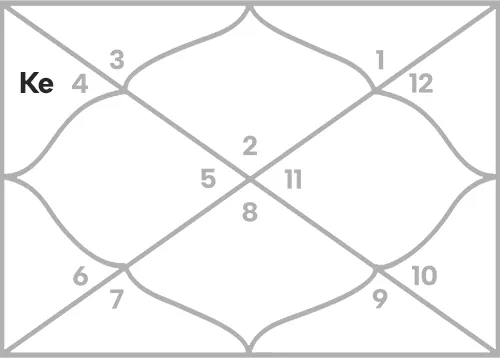
When Ketu is placed in the 3rd house for a Taurus Ascendant, it occupies Cancer, a sign ruled by the Moon. The 3rd house is an Upachaya house, and Ketu here often gives favourable results by reducing ego while strengthening inner courage and self-reliance. This house governs communication, courage, self-effort, younger siblings, practical skills, writing, media, networking, and short-distance travel. Ketu represents detachment, spiritual wisdom, past-life mastery, and inner confidence. Its placement in the 3rd house makes the native naturally independent and less concerned with seeking recognition for their efforts. They prefer meaningful action over constant self-promotion and often possess quiet confidence that grows stronger with experience. Rather than competing for attention, they allow their work to speak for itself. If Ketu is afflicted, hesitation in communication, emotional withdrawal, or difficulty maintaining close relationships with siblings may become important life lessons.
The 3rd house governs communication, writing, entrepreneurship, media, younger siblings, practical skills, and personal initiative. Ketu here supports success in research, writing, counselling, spirituality, education, astrology, psychology, technology, consulting, investigative work, healing, or professions requiring concentration and independent thinking. The native communicates thoughtfully and often prefers depth over quantity in conversations. They may enjoy spiritual writing, philosophical discussions, or specialised subjects that require careful analysis. Relationships with younger siblings can involve distance, unusual circumstances, or karmic responsibilities, although the complete horoscope should always be examined before making specific judgments. Frequent travel may occur for learning or professional purposes, but the native generally values purposeful journeys over unnecessary movement. Ketu casts its aspects on the 7th, 9th, and 11th houses, influencing marriage, partnerships, higher education, philosophy, financial gains, friendships, and long-term ambitions. These influences encourage the native to build relationships and success through authenticity rather than social approval.
Venus, the Ascendant lord, represents harmony, beauty, diplomacy, and balanced living, while Ketu signifies detachment, self-awareness, intuition, and spiritual evolution. Together, they encourage the native to balance practical communication with inner wisdom. Health is generally favourable, though attention should be given to the shoulders, lungs, chest, nervous system, anxiety caused by emotional suppression, or stress-related conditions if Ketu is afflicted. The native should avoid isolating themselves emotionally or assuming that complete independence is always beneficial. Developing open communication, maintaining healthy relationships with siblings and colleagues, and sharing knowledge generously greatly strengthen the positive effects of this placement. Meditation, reflective writing, and disciplined self-improvement further enhance Ketu’s spiritual qualities. The strength of the Moon, Venus, Ketu, the 3rd house, and the operating Dasha should always be considered before making detailed predictions regarding communication, siblings, or career. Overall, Ketu in the 3rd house for Taurus Ascendant creates a courageous, thoughtful, and self-reliant individual who achieves success through purposeful action, quiet determination, and inner confidence, ultimately discovering that true strength comes from acting with sincerity rather than seeking external validation.
Ketu in 4th House for Taurus Ascendant
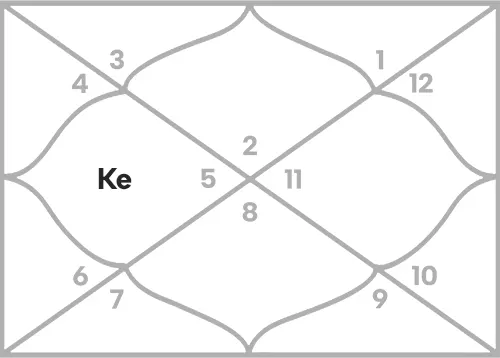
When Ketu is placed in the 4th house for a Taurus Ascendant, it occupies Leo, a sign ruled by the Sun. The 4th house governs mother, home, property, vehicles, education, emotional security, domestic happiness, and inner peace. Ketu represents detachment, spiritual wisdom, past-life mastery, and inner awakening. Its placement in the 4th house reduces emotional dependence on external comforts and encourages the native to seek lasting peace from within. During the early years, they may experience emotional distance from the home environment, frequent relocations, or a feeling of not fully belonging, even when surrounded by family. Material comforts alone rarely satisfy them, and they gradually realise that genuine happiness cannot be purchased or possessed. If Ketu is afflicted, emotional isolation, dissatisfaction with domestic life, or difficulty expressing affection may become important lessons in emotional maturity.
The 4th house governs home, property, land, vehicles, mother, education, and emotional well-being. Ketu here often gives an unconventional relationship with property or homeland. The native may relocate frequently, live in foreign places, or prefer a simple lifestyle over excessive luxury. They often excel in research, education, healing, counselling, spirituality, astrology, psychology, architecture, environmental work, or professions requiring independent thought and deep concentration. The relationship with the mother may involve distance, sacrifice, or karmic lessons, although the complete horoscope should always be examined before making specific judgments. Educational pursuits may also follow an unconventional path, leading the native towards specialised or spiritual knowledge rather than purely academic achievement. Ketu casts its aspects on the 8th, 10th, and 12th houses, strengthening research, transformation, career, spiritual growth, foreign connections, and the ability to work effectively behind the scenes. These influences encourage the native to build success by combining practical effort with inner wisdom.
Venus, the Ascendant lord, represents harmony, beauty, comfort, and material enjoyment, while Ketu signifies detachment, self-awareness, simplicity, and liberation. These contrasting energies teach the native to enjoy worldly comforts without becoming emotionally dependent on them. Health is generally satisfactory, though attention should be given to the heart, chest, lungs, digestion, emotional stress, anxiety, or sleep disturbances if Ketu is afflicted. The native should avoid withdrawing emotionally from loved ones or believing that detachment requires isolation. Developing gratitude, maintaining close family relationships, and cultivating inner peace through meditation and self-reflection greatly strengthen the positive effects of this placement. The strength of the Sun, Venus, Ketu, the 4th house, and the operating Dasha should always be considered before making detailed predictions regarding property, family life, or emotional well-being. Overall, Ketu in the 4th house for Taurus Ascendant creates an introspective, emotionally resilient, and spiritually evolving individual who gradually discovers that true security is not found in possessions or external comfort but in inner contentment, self-awareness, and lasting emotional balance.
Ketu in 5th House for Taurus Ascendant
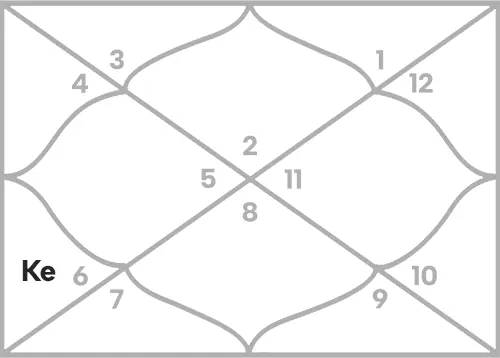
When Ketu is placed in the 5th house for a Taurus Ascendant, it occupies Virgo, a sign ruled by Mercury. The 5th house governs intelligence, creativity, higher education, romance, children, speculative gains, mantra, and Purva Punya. Ketu represents detachment, spiritual wisdom, past-life mastery, and intuitive knowledge. Its placement in the 5th house gives the native a sharp, analytical, and deeply intuitive mind. They often possess knowledge or abilities that seem natural, as though carried forward from previous lifetimes. Rather than seeking attention through creativity or romance, they prefer meaningful intellectual or spiritual pursuits. Emotional expression may appear restrained, and the native often approaches love with caution or detachment. If Ketu is afflicted, emotional distance, disappointment in romantic relationships, or uncertainty regarding personal happiness may become important lessons before greater maturity develops.
The 5th house governs education, creativity, romance, children, speculative investments, mantra, and past-life merit. Ketu here supports success in research, astrology, psychology, philosophy, education, data analysis, technology, medicine, spiritual studies, writing, counselling, or any profession requiring deep concentration and analytical ability. The native excels at solving complex problems and often prefers independent intellectual work over highly social environments. Romantic relationships may be unconventional or involve karmic lessons that encourage emotional growth. Matters relating to children may require greater responsibility or follow an unusual course, although the complete horoscope and relevant divisional charts should always be examined before making specific judgments. Speculative investments should be approached conservatively, as the native’s intuitive judgment is strongest when supported by careful analysis rather than impulsive decisions. Ketu casts its aspects on the 9th, 11th, and Ascendant, strengthening higher learning, spiritual wisdom, financial gains, meaningful friendships, self-awareness, and the gradual development of a balanced personality.
Venus, the Ascendant lord, represents harmony, love, creativity, and worldly enjoyment, while Ketu signifies detachment, intuition, spiritual evolution, and liberation. Together, they encourage the native to balance intellectual brilliance with emotional openness. Health is generally satisfactory, though attention should be given to the digestive system, intestines, nervous tension, hormonal balance, anxiety caused by overthinking, or stress-related disorders if Ketu is afflicted. The native should avoid suppressing emotions or believing that emotional independence requires emotional distance. Cultivating heartfelt relationships, expressing creativity freely, and combining intuition with practical wisdom greatly strengthen the positive effects of this placement. Regular meditation, mantra practice, and disciplined study further enhance Ketu’s spiritual qualities. The strength of Mercury, Venus, Ketu, the 5th house, and the operating Dasha should always be considered before making detailed predictions regarding education, romance, children, or speculative gains. Overall, Ketu in the 5th house for Taurus Ascendant creates an intelligent, intuitive, and spiritually insightful individual who possesses remarkable analytical ability and inner wisdom, ultimately discovering that true fulfilment comes from balancing knowledge with compassion, emotional connection, and purposeful creativity.
Ketu in 6th House for Taurus Ascendant
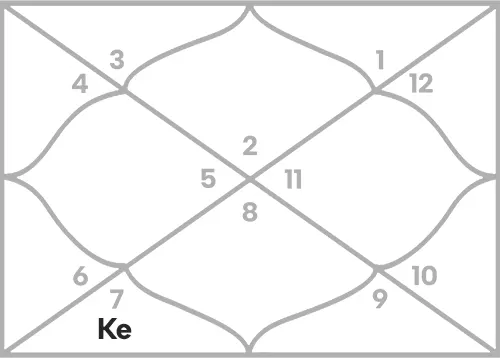
When Ketu is placed in the 6th house for a Taurus Ascendant, it occupies Libra, a sign ruled by Venus, the Ascendant lord. The 6th house is an Upachaya house where Ketu generally gives favourable results, particularly in overcoming challenges and developing inner strength. This house governs service, employment, health, debts, litigation, competition, enemies, and daily responsibilities. Ketu represents detachment, spiritual wisdom, past-life mastery, and precise analytical ability. Its placement in the 6th house enables the native to face obstacles with remarkable calmness and objectivity. Rather than reacting emotionally to conflict, they prefer practical solutions and strategic action. The native is rarely intimidated by competition and often succeeds because they remain focused on the task rather than the outcome. If Ketu is afflicted, however, emotional withdrawal, neglect of health, or indifference towards important responsibilities may occasionally create difficulties.
The 6th house governs employment, service, diseases, debts, litigation, competition, and enemies. Ketu here supports success in professions requiring diagnosis, investigation, research, healing, counselling, medicine, psychology, law, auditing, astrology, cybersecurity, intelligence work, social service, administration, or any field involving analysis and problem-solving. The native possesses a natural ability to identify weaknesses and resolve complex situations with precision. Competitors and adversaries often fail to disturb them because they rarely engage in unnecessary conflict. Legal disputes, debts, or workplace challenges are generally managed effectively through patience, discipline, and practical judgment. Ketu also supports work in charitable organisations, hospitals, or spiritual institutions where selfless service becomes a source of personal fulfilment. Ketu casts its aspects on the 10th, 12th, and 2nd houses, strengthening career, spiritual growth, foreign connections, disciplined financial management, and the ability to build professional success through quiet competence rather than public recognition.
Venus, the Ascendant lord, represents harmony, refinement, diplomacy, and balanced living, while Ketu signifies detachment, intuition, simplicity, and liberation. Together, they help the native balance worldly responsibilities with inner peace. Health is generally favourable because Ketu performs well in the 6th house, though attention should be given to the kidneys, lower back, reproductive system, blood sugar, digestive health, allergies, or stress-related disorders if Ketu is afflicted. The native should avoid becoming indifferent towards physical well-being simply because they can tolerate discomfort. Maintaining regular exercise, disciplined routines, balanced nutrition, and a spirit of selfless service greatly strengthen the positive effects of this placement. The strength of Venus, Ketu, the 6th house, and the operating Dasha should always be considered before making detailed predictions regarding health, employment, litigation, or competition. Overall, Ketu in the 6th house for Taurus Ascendant is one of the most favourable placements, blessing the native with resilience, strategic intelligence, and the quiet ability to overcome obstacles through discipline, humility, and detached action, ultimately transforming every challenge into an opportunity for growth, service, and inner mastery.
Ketu in 7th House for Taurus Ascendant
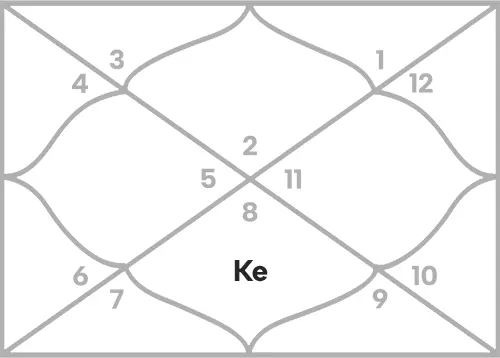
When Ketu is placed in the 7th house for a Taurus Ascendant, it occupies Scorpio, a sign ruled by Mars. The 7th house governs marriage, business partnerships, contracts, trade, and public relationships. Ketu represents detachment, spiritual wisdom, past-life karma, and inner awakening. Its placement in the 7th house shifts the native’s focus away from seeking complete fulfilment through relationships and encourages deeper self-understanding. Marriage and partnerships often become important karmic areas of growth rather than merely sources of comfort or security. The native may appear independent in relationships or feel that emotional fulfilment requires something beyond external companionship. They often attract partners who are spiritually inclined, unconventional, emotionally reserved, or carry significant karmic connections. If Ketu is afflicted, misunderstandings, emotional distance, dissatisfaction, or periods of separation may occur before greater maturity develops.
The 7th house governs marriage, business partnerships, trade, legal agreements, and public dealings. Ketu here supports professions where independent judgment, specialised expertise, or consulting abilities are valued. The native may succeed in research, counselling, astrology, psychology, healing, law, finance, technology, consulting, or entrepreneurial ventures where they retain considerable autonomy. Business partnerships can succeed when built on trust, transparency, and clearly defined responsibilities, though the native often feels more comfortable maintaining personal independence. Marriage may involve spiritual growth, unusual circumstances, or important karmic lessons, although the complete horoscope and Navamsa should always be examined before making specific judgments regarding married life or the spouse. Ketu casts its aspects on the 11th, Ascendant, and 3rd houses, strengthening self-awareness, communication, courage, financial gains, meaningful friendships, and the ability to pursue long-term goals without excessive dependence on external validation.
Venus, the Ascendant lord, represents love, harmony, diplomacy, and balanced relationships, while Ketu signifies detachment, intuition, self-awareness, and liberation. Their contrasting energies encourage the native to balance emotional commitment with healthy independence. Health is generally satisfactory, though attention should be given to the reproductive system, kidneys, urinary tract, hormonal balance, stress arising from relationship difficulties, anxiety, or emotional withdrawal if Ketu is afflicted. The native should avoid suppressing emotions or assuming that detachment means avoiding intimacy. Honest communication, mutual respect, emotional openness, and shared spiritual values greatly strengthen the positive effects of this placement. Regular self-reflection and meditation also help transform relationship challenges into personal growth. The strength of Mars, Venus, Ketu, the 7th house, the Navamsa, and the operating Dasha should always be considered before making detailed predictions regarding marriage or business partnerships. Overall, Ketu in the 7th house for Taurus Ascendant creates an independent, thoughtful, and spiritually evolving individual who gradually discovers that the deepest relationships are built not upon attachment or possession but upon understanding, mutual growth, and authentic connection.
Ketu in 8th House for Taurus Ascendant
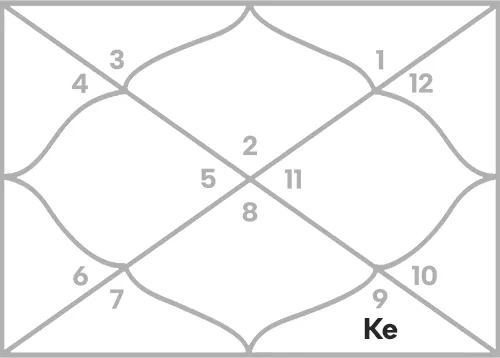
When Ketu is placed in the 8th house for a Taurus Ascendant, it occupies Sagittarius, a sign ruled by Jupiter. The 8th house governs longevity, transformation, inheritance, joint finances, hidden knowledge, occult sciences, research, sudden events, and spiritual evolution. Ketu represents detachment, intuition, past-life wisdom, and liberation. This is one of Ketu’s strongest placements because the 8th house naturally resonates with its subtle, mystical, and transformative nature. The native possesses exceptional intuition and a natural attraction towards life’s deeper mysteries. They are often drawn to Jyotish, psychology, healing, philosophy, meditation, tantra, or other forms of esoteric knowledge. Rather than fearing uncertainty, they gradually develop the ability to accept change as an essential part of personal growth. If Ketu is afflicted, emotional withdrawal, secrecy, anxiety about the unknown, or difficulty trusting others may temporarily interfere with emotional stability.
The 8th house governs inheritance, joint finances, insurance, taxation, research, hidden wealth, chronic illnesses, transformation, and occult sciences. Ketu here gives remarkable ability in research, investigation, healing, counselling, astrology, psychology, medicine, forensic sciences, auditing, archaeology, philosophy, or any field requiring deep analysis and concentration. The native often understands complex subjects intuitively and possesses insights that cannot always be explained through logic alone. Financial matters involving inheritance, insurance, pensions, or the spouse’s resources may involve unexpected developments, although the complete horoscope should always be examined before making specific judgments. This placement also supports profound spiritual transformation through life’s challenges, allowing the native to emerge wiser after every major turning point. Ketu casts its aspects on the 12th, 2nd, and 4th houses, strengthening spiritual growth, disciplined financial values, emotional independence, property matters, family wisdom, and the capacity to find inner peace despite external uncertainty.
Venus, the Ascendant lord, represents harmony, beauty, comfort, and material enjoyment, while Ketu signifies detachment, intuition, self-awareness, and liberation. These contrasting energies encourage the native to enjoy worldly responsibilities without becoming overly attached to them. Health generally supports longevity, though attention should be given to the reproductive system, hips, liver, chronic ailments, hormonal balance, anxiety, digestive sensitivity, or hidden health conditions if Ketu is afflicted. The native should avoid excessive secrecy, emotional isolation, or neglecting practical responsibilities in pursuit of spiritual interests. Regular meditation, honest communication, disciplined financial planning, and continuous self-reflection greatly strengthen the positive effects of this placement. The strength of Jupiter, Venus, Ketu, the 8th house, and the operating Dasha should always be considered before making detailed predictions regarding inheritance, longevity, or spiritual development. Overall, Ketu in the 8th house for Taurus Ascendant is one of the most spiritually powerful placements, blessing the native with profound intuition, resilience, transformative wisdom, and the ability to uncover life’s deepest truths, ultimately discovering that lasting freedom arises through self-awareness, acceptance, and inner transformation.
Ketu in 9th House for Taurus Ascendant
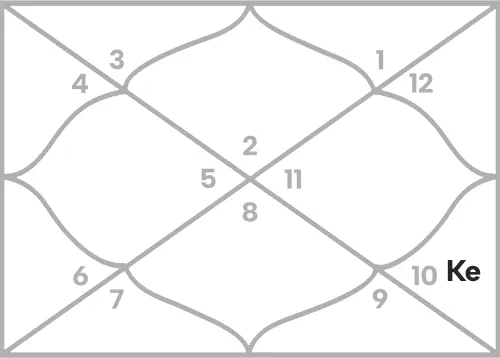
When Ketu is placed in the 9th house for a Taurus Ascendant, it occupies Capricorn, a sign ruled by Saturn. The 9th house governs Dharma, higher education, philosophy, religion, father, gurus, long-distance travel, publishing, law, and fortune. Ketu represents detachment, spiritual wisdom, past-life mastery, and intuitive understanding. Its placement in the 9th house reduces attachment to conventional belief systems and encourages the native to seek truth through direct experience rather than unquestioned tradition. The native possesses a naturally philosophical mind and often questions accepted ideas before embracing them. Early life may involve confusion regarding religion, higher education, or personal beliefs, but these experiences gradually lead to a mature and authentic spiritual outlook. If Ketu is afflicted, excessive scepticism, difficulty trusting mentors, or rejection of valuable guidance may delay personal and spiritual growth.
The 9th house governs higher education, Dharma, father, teachers, long-distance travel, philosophy, religion, publishing, and fortune. Ketu here supports success in research, philosophy, astrology, psychology, education, law, counselling, spiritual teaching, writing, international studies, or professions requiring independent thought and deep analysis. The native often develops expertise through self-study and personal experience rather than formal instruction alone. Foreign travel and exposure to different cultures frequently broaden their understanding of life and contribute to spiritual evolution. Relationships with the father or gurus may involve distance, unconventional circumstances, or important karmic lessons, although the complete horoscope should always be examined before making specific judgments. Ketu casts its aspects on the Ascendant, 3rd, and 5th houses, strengthening self-awareness, communication, courage, intelligence, education, creativity, and intuitive decision-making. These influences help the native combine practical effort with higher wisdom.
Venus, the Ascendant lord, represents harmony, beauty, comfort, and balanced living, while Ketu signifies detachment, intuition, self-awareness, and liberation. Saturn, the ruler of Capricorn and the Yoga Karaka for Taurus Ascendant, also plays a significant role in shaping the results of this placement. When Saturn is strong, Ketu’s independent thinking becomes disciplined and constructive, allowing the native to develop genuine wisdom without rejecting valuable traditions. Health is generally satisfactory, though attention should be given to the hips, knees, liver, bones, joints, stress arising from excessive introspection, or digestive sensitivity if Ketu is afflicted. The native should avoid dismissing all authority or believing that personal experience alone provides every answer. Respecting worthy teachers while preserving independent judgment greatly strengthens the positive effects of this placement. Regular spiritual practice, disciplined study, and humility in the pursuit of knowledge further enhance Ketu’s blessings. The strength of Saturn, Venus, Ketu, the 9th house, and the operating Dasha should always be considered before making detailed predictions regarding higher education, fortune, or spiritual development. Overall, Ketu in the 9th house for Taurus Ascendant creates a deeply philosophical, intuitive, and spiritually evolving individual who gradually discovers that true wisdom lies in balancing independent inquiry with discipline, humility, and sincere reverence for higher knowledge.
Ketu in 10th House for Taurus Ascendant
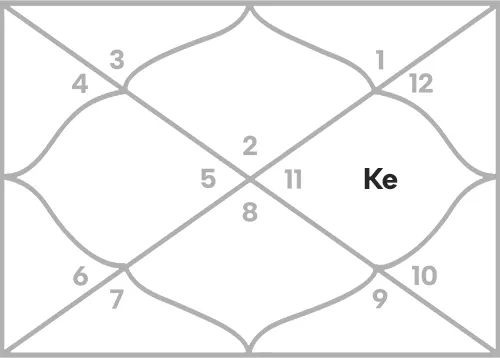
When Ketu is placed in the 10th house for a Taurus Ascendant, it occupies Aquarius, a sign ruled by Saturn. The 10th house governs career, profession, authority, leadership, public reputation, social status, and Karma. Ketu represents detachment, spiritual wisdom, past-life mastery, and inner fulfilment. Its placement in the 10th house reduces attachment to public recognition and worldly achievements, encouraging the native to seek purpose beyond status and authority. Although they may work diligently and achieve significant professional success, they often feel that external accomplishments alone cannot provide lasting satisfaction. The native is generally humble, independent, and more interested in meaningful work than public applause. If Ketu is afflicted, uncertainty regarding career direction, lack of professional motivation, or sudden career changes may occur before the native discovers work that aligns with their deeper purpose.
The 10th house governs profession, leadership, government, public image, reputation, and career achievements. Ketu here supports success in research, education, counselling, psychology, healing, astrology, spirituality, information technology, scientific research, consulting, auditing, investigation, charitable organisations, or professions performed behind the scenes where expertise matters more than visibility. The native often excels in specialised fields requiring concentration, independence, and analytical thinking. They usually prefer autonomy over positions of power and are more comfortable solving complex problems than seeking authority. Career changes or shifts in professional priorities are possible, particularly during important Dashas, as the native gradually moves towards work that provides genuine fulfilment. Ketu casts its aspects on the 2nd, 4th, and 6th houses, strengthening disciplined financial management, emotional independence, property matters, service, employment, and the ability to overcome professional obstacles through wisdom rather than competition.
Venus, the Ascendant lord, represents harmony, beauty, refinement, and material enjoyment, while Ketu signifies detachment, intuition, self-awareness, and liberation. Saturn, the ruler of Aquarius and the Yoga Karaka for Taurus Ascendant, plays a significant role in determining how constructively this placement manifests. When Saturn is strong, Ketu’s detachment becomes purposeful rather than aimless, allowing the native to achieve professional excellence without becoming attached to recognition. Health is generally satisfactory, though attention should be given to the knees, bones, joints, circulation, nervous tension, stress arising from professional uncertainty, or chronic fatigue if Ketu is afflicted. The native should avoid withdrawing from responsibilities simply because they feel detached from worldly success. Performing duties with sincerity while remaining free from excessive attachment to results greatly strengthens the positive effects of this placement. Regular meditation, selfless service, and continuous self-improvement further enhance Ketu’s spiritual qualities. The strength of Saturn, Venus, Ketu, the 10th house, and the operating Dasha should always be considered before making detailed predictions regarding career or public reputation. Overall, Ketu in the 10th house for Taurus Ascendant creates a humble, capable, and spiritually evolving individual who gradually discovers that true professional success is measured not by fame or authority but by meaningful contribution, integrity, and the ability to perform one’s Karma without attachment to recognition.
Ketu in 11th House for Taurus Ascendant
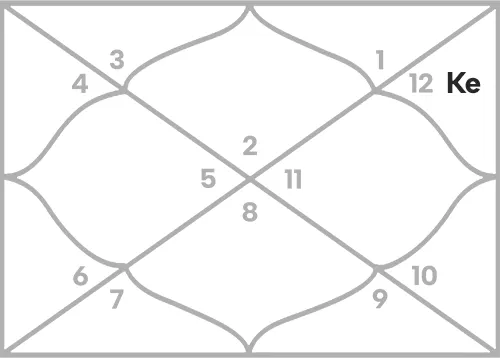
When Ketu is placed in the 11th house for a Taurus Ascendant, it occupies Pisces, a sign ruled by Jupiter. The 11th house is an Upachaya house that governs financial gains, income, fulfilment of desires, elder siblings, friendships, organisations, social influence, and long-term ambitions. Ketu represents detachment, spiritual wisdom, past-life mastery, and inner contentment. Its placement in the 11th house reduces attachment to material gains and social recognition, encouraging the native to pursue meaningful goals rather than endless accumulation. Although financial opportunities are certainly possible, the native often realises that wealth alone cannot provide lasting happiness. They usually prefer a small circle of genuine friends over large social networks and value quality of relationships more than popularity. If Ketu is afflicted, feelings of isolation, dissatisfaction despite success, or difficulty maintaining friendships may become important lessons before emotional maturity develops.
The 11th house governs income, profits, ambitions, elder siblings, organisations, social circles, and fulfilment of desires. Ketu here supports success in research, education, counselling, healing, spirituality, technology, consulting, scientific work, charitable organisations, or specialised professions where knowledge and expertise matter more than public recognition. Financial gains often come unexpectedly or through past efforts, but the native generally remains detached from excessive material ambition. Friendships tend to be meaningful, spiritually significant, or based on shared values rather than convenience. Relationships with elder siblings may involve distance, unusual circumstances, or karmic lessons, although the complete horoscope should always be examined before making specific judgments. Ketu casts its aspects on the 3rd, 5th, and 7th houses, strengthening communication, creativity, education, intuitive intelligence, marriage, business partnerships, and independent thinking. These aspects encourage the native to pursue success through authenticity rather than social approval.
Venus, the Ascendant lord, represents harmony, beauty, comfort, and material prosperity, while Ketu signifies detachment, intuition, self-awareness, and liberation. Jupiter, the ruler of Pisces, also influences how this placement manifests through wisdom and higher understanding. When Jupiter and Venus are strong, the native learns to enjoy prosperity without becoming attached to it, creating a healthy balance between worldly responsibilities and spiritual fulfilment. Health is generally satisfactory, though attention should be given to the feet, circulation, hormonal balance, anxiety arising from emotional withdrawal, digestive sensitivity, or stress-related disorders if Ketu is afflicted. The native should avoid withdrawing completely from society or believing that detachment requires isolation. Maintaining meaningful friendships, serving worthy causes, and practising gratitude for both material and spiritual blessings greatly strengthen the positive effects of this placement. The strength of Jupiter, Venus, Ketu, the 11th house, and the operating Dasha should always be considered before making detailed predictions regarding income, friendships, or fulfilment of desires. Overall, Ketu in the 11th house for Taurus Ascendant creates a thoughtful, content, and spiritually evolving individual who gradually discovers that lasting prosperity is not measured by the number of possessions or achievements but by inner peace, meaningful relationships, and freedom from endless desire.
Ketu in 12th House for Taurus Ascendant
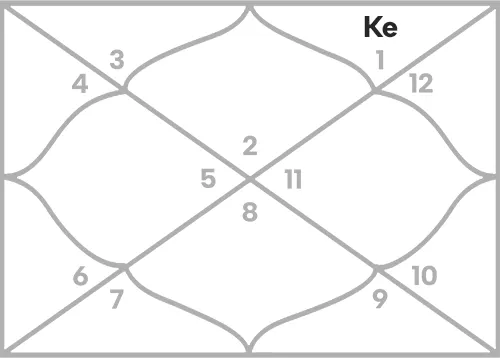
When Ketu is placed in the 12th house for a Taurus Ascendant, it occupies Aries, a sign ruled by Mars. The 12th house governs foreign lands, expenditure, isolation, meditation, charitable institutions, sleep, hidden activities, spiritual retreats, and Moksha. Ketu naturally resonates with the spiritual nature of the 12th house, making this one of its most favourable placements for inner growth and liberation. The native possesses a deep desire to understand the true nature of life and often feels naturally drawn towards meditation, spirituality, self-inquiry, or mystical experiences. Material achievements alone rarely satisfy them, and with maturity they gradually discover greater fulfilment through inner peace rather than external success. Solitude often becomes a source of strength rather than loneliness. If Ketu is afflicted, however, excessive isolation, escapism, confusion regarding life direction, or difficulty engaging with practical responsibilities may become important lessons before spiritual maturity develops.
The 12th house governs foreign residence, expenditure, charitable work, hospitals, spiritual retreats, research, hidden activities, sleep, subconscious patterns, and liberation. Ketu here supports success in spirituality, healing, counselling, psychology, astrology, meditation, research, charitable organisations, hospitals, monasteries, multinational organisations, or professions performed quietly behind the scenes. Foreign countries or spiritually significant places may play an important role in the native’s life, either through residence, work, or pilgrimage. Expenditure is often directed towards travel, education, charity, healing, or spiritual practices, and such spending usually contributes to long-term growth rather than mere loss. The native possesses strong intuition, vivid dreams, and an exceptional capacity for introspection. Ketu casts its aspects on the 4th, 6th, and 8th houses, strengthening emotional independence, service, problem-solving ability, research, healing, spiritual transformation, and the capacity to overcome fear through wisdom and detachment.
Venus, the Ascendant lord, represents harmony, beauty, comfort, and material enjoyment, while Ketu signifies detachment, intuition, self-awareness, and liberation. Mars, the ruler of Aries, influences how courage and disciplined action support the native’s spiritual journey. When Venus and Mars are well placed, the native successfully balances worldly responsibilities with inner evolution instead of abandoning one for the other. Health is generally satisfactory, though attention should be given to sleep quality, feet, nervous tension, hidden health conditions, anxiety, immune function, or stress-related disorders if Ketu is afflicted. The native should avoid confusing detachment with escapism or neglecting practical duties in pursuit of spirituality. Maintaining disciplined routines, practising regular meditation, engaging in selfless service, and fulfilling worldly responsibilities with sincerity greatly strengthen the positive effects of this placement. The strength of Mars, Venus, Ketu, the 12th house, and the operating Dasha should always be considered before making detailed predictions regarding foreign residence, expenditure, or spiritual progress. Overall, Ketu in the 12th house for Taurus Ascendant is one of the most spiritually elevated placements, blessing the native with profound intuition, inner peace, compassion, and the potential for genuine self-realisation, ultimately guiding them towards freedom from worldly illusions while remaining grounded in wisdom, service, and conscious living.
Conclusion
For Taurus Ascendant, Ketu creates a journey of detachment within a sign that seeks stability and comfort. It challenges the native to move beyond material attachment and discover deeper meaning. While Taurus builds and accumulates, Ketu dissolves and refines. This interplay creates growth through contrast.
When understood consciously, Ketu becomes a guide that leads the Taurus native toward inner peace, simplicity, and spiritual depth. It teaches that true stability is not found in possessions or external comfort, but in inner awareness and detachment.
Curious to know how Ketu is influencing your life?
Ask Astrologer | Book Astrology Consultation | Get Kundali Report
Planets in All Houses for Taurus Ascendant

Sun in All Houses for Taurus Ascendant
Moon in All Houses for Taurus Ascendant
Mars in All Houses for Taurus Ascendant
Mercury in All Houses for Taurus Ascendant
Jupiter in All Houses for Taurus Ascendant
Venus in All Houses for Taurus Ascendant
Saturn in All Houses for Taurus Ascendant
Rahu in All Houses for Taurus Ascendant
Ketu in All Houses for Taurus Ascendant