For Virgo Ascendant, Ketu represents detachment, past-life mastery, and inner withdrawal working through Mercury’s analytical, detail-oriented, and practical nature. Virgo seeks order, precision, logic, and control, while Ketu dissolves structure, reduces attachment, and encourages surrender. This creates a subtle tension. The native may appear organized and rational externally, yet internally feel detached from over-analysis, perfectionism, or routine.
Ketu does not remove results completely. Instead, it reduces emotional investment in the house it occupies and redirects focus toward inner awareness. Its results depend largely on Mercury, the Ascendant lord. When Mercury is strong, Ketu brings deep insight, intuitive intelligence, and spiritual clarity. When Mercury is weak, it can create confusion, anxiety, or scattered thinking. Let us explore how Ketu behaves in each house for Virgo Ascendant.
Ketu in 1st House for Virgo Ascendant

For Virgo Ascendant, Ketu in the 1st house occupies Virgo, a sign ruled by Mercury. The 1st house represents the physical constitution, appearance, personality, temperament, self-identity, and overall approach to life. Ketu is associated with detachment, introspection, renunciation, past-life tendencies, and the pursuit of understanding beyond ordinary material concerns. Its placement in the Ascendant can create a personality that is observant, self-contained, analytical, and inwardly detached from the need for recognition. Virgo naturally seeks precision, order, and improvement, while Ketu can weaken attachment to the very standards through which Virgo attempts to establish control. This combination may produce a person who notices minute details yet remains uncertain about what ultimately deserves attention. The native may be highly self-aware but find it difficult to define a stable personal identity through conventional labels, social expectations, or external achievements. At times, the person may appear reserved, understated, or indifferent to outcomes, even while engaging in considerable internal analysis. Ketu can also encourage an interest in research, specialised knowledge, philosophy, astrology, or spiritual inquiry, particularly where observation and discrimination are essential. However, detachment should not automatically be interpreted as wisdom, nor does Ketu in the 1st house necessarily indicate low confidence or an unclear identity. Mercury, as the Ascendant lord and dispositor of Ketu in Virgo, is crucial in determining how this placement manifests. A strong and well-supported Mercury can help the native organise thoughts, communicate clearly, and use analytical abilities constructively. If Mercury is afflicted, self-criticism, indecision, excessive mental activity, or difficulty expressing personal needs may become more prominent. The overall strength of the Ascendant, its lord, and Ketu’s associations must be considered before drawing conclusions about personality or well-being.
Ketu in the 1st house can influence how the native approaches relationships, professional responsibilities, and personal ambitions. The person may prefer observing a situation before participating and may be less interested in conventional displays of status or self-promotion. This can support independent thinking, careful research, and the ability to recognise details that others overlook. The native may also question established assumptions about success, identity, and the purpose of achievement, sometimes changing direction after discovering that an earlier ambition no longer feels meaningful. However, excessive detachment can make it difficult to communicate personal preferences or sustain commitment when circumstances become complicated. Ketu’s 7th aspect falls on Pisces, the 7th house of marriage, partnerships, clients, and public dealings. This creates a connection between self-understanding and relationships, potentially encouraging the native to examine expectations surrounding intimacy, cooperation, and independence. The person may seek meaningful relationships while also requiring space for private reflection. At times, there may be uncertainty about what is wanted from a partnership, but Ketu alone does not establish marital dissatisfaction, separation, or difficulty finding a spouse. Jupiter, the 7th lord, and Venus as the natural significator of relationships are important in assessing these matters. Ketu’s 5th and 9th aspects are recognised in several traditions of Jyotish, although their use varies by lineage. Under this approach, Ketu in Virgo aspects Capricorn, the 5th house of intelligence, creativity, education, children, and mantra, and Taurus, the 9th house of Dharma, higher knowledge, teachers, and fortune. These connections can reinforce introspection, specialised learning, and interest in philosophical or spiritual subjects. Saturn, as the 5th lord, and Venus, as the 9th lord, are important for understanding these areas. The native may benefit from combining independent inquiry with structured study, allowing insight to develop through both careful reasoning and sustained practice.
The constructive expression of Ketu in the 1st house lies in developing self-understanding without becoming detached from the practical demands of life. The native may gradually learn that identity does not need to be established through constant self-analysis, perfection, or the approval of others. Virgo’s analytical capacity can be especially valuable when used to examine assumptions, improve skills, and distinguish relevant details from unnecessary concerns. Ketu’s influence may encourage the person to look beyond surface appearances and question whether familiar ambitions genuinely align with personal values. This can support research, contemplative study, and spiritual development, provided detachment does not become an excuse to avoid decisions or responsibilities. A well-supported Mercury helps translate observation into clear judgement and practical action, while the condition of the Moon can add context to the native’s emotional responses. The person should be mindful of becoming excessively critical of personal shortcomings or dismissing ordinary achievements because they seem ultimately insignificant. Likewise, intuition can be a useful complement to analysis, but important decisions benefit from evidence, reflection, and a realistic assessment of consequences. In relationships, expressing needs directly and remaining emotionally present can prevent independence from turning into distance. In professional life, the native may thrive when allowed to investigate, refine, solve problems, or work with specialised knowledge, though career outcomes depend on Mercury, the 10th house, and other relevant factors. The condition of Ketu’s dispositor, its conjunctions and aspects, and the operating Dasha will influence how its themes unfold. Ketu in the 1st house does not automatically produce spiritual attainment, confusion about identity, or indifference towards worldly success. Ultimately, this placement encourages the native to move beyond an overly rigid definition of the self while retaining the discernment and practical intelligence associated with Virgo. Its central lesson is to balance analysis with inner awareness, detachment with participation, and the pursuit of perfection with acceptance of human imperfection.
Ketu in 2nd House for Virgo Ascendant
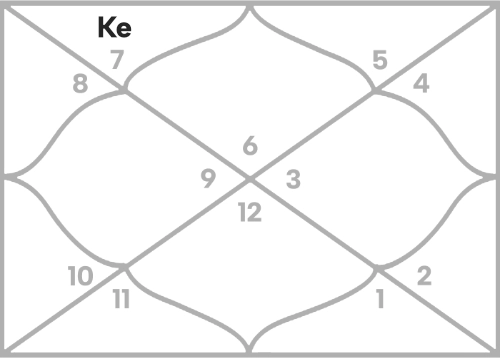
For Virgo Ascendant, Ketu in the 2nd house occupies Libra, a sign ruled by Venus. The 2nd house signifies accumulated wealth, family, speech, food habits, inherited values, and the resources that sustain one’s livelihood. Ketu is associated with detachment, inward reflection, separation from conventional expectations, and the tendency to question attachments that others consider essential. Its placement in the 2nd house can create an unusual relationship with wealth, family traditions, and material security. The native may value financial independence but feel relatively indifferent towards accumulating possessions purely for status or social approval. Alternatively, the person may pursue financial stability diligently while finding that money alone does not provide a sense of fulfilment. Family customs and inherited beliefs may be examined critically, and the native may develop values that differ from those of their family environment. However, Ketu in the 2nd house does not automatically indicate family separation, poverty, or a lack of interest in loved ones. Libra adds themes of balance, diplomacy, relationships, and social harmony, potentially giving the native a measured or selective approach to speech. The person may communicate concisely, prefer listening to speaking, or choose words carefully rather than expressing every thought. At times, this restraint may be interpreted by others as emotional distance, particularly when personal feelings are not communicated openly. For Virgo Ascendant, Venus rules both the 2nd house of wealth and the 9th house of fortune, making it a significant functional benefic. As the dispositor of Ketu in Libra, Venus plays a central role in determining how the placement affects finances, family relationships, speech, and values. A strong and well-supported Venus can help the native maintain financial stability and harmonious relationships while remaining free from excessive material attachment. If Venus is afflicted, questions involving money, family expectations, or personal priorities may require greater attention.
Ketu in the 2nd house can influence the native’s approach to earning, saving, family responsibilities, and communication. Financial accumulation may not always be the primary source of motivation, and the person may prefer spending resources on meaningful experiences, education, research, or personal interests rather than acquiring possessions for display. This can encourage a sensible distinction between genuine needs and socially driven desires. However, detachment from wealth should not become neglect of financial planning. The native may occasionally overlook savings, postpone financial decisions, or assume that material matters will resolve themselves without consistent effort. The 2nd house is also a Maraka house, but Ketu’s presence here alone is not sufficient to draw conclusions about longevity. Financial outcomes must be assessed through Venus, the 2nd lord, Mercury as the Ascendant lord, the 11th house of gains, and the overall wealth combinations in the Kundali. The 2nd house also signifies family lineage and the values transmitted through early upbringing. Ketu may indicate a sense of difference from family customs or a tendency to question inherited expectations, but it does not necessarily mean that the native experiences a troubled childhood or lacks family support. Rahu’s placement opposite Ketu is also relevant, as the nodal axis connects the 2nd and 8th houses in this configuration. With Rahu in Aries in the 8th house, attention may shift towards transformation, shared resources, confidential matters, or understanding the deeper structures behind financial and family arrangements. This axis can highlight the need to balance personal resources with joint obligations. Ketu’s traditional 7th aspect falls on Aries, the 8th house, reinforcing the connection between accumulated wealth and shared assets. Its 5th and 9th aspects are recognised in several Jyotish traditions, although their use varies by lineage. Under this approach, Ketu also aspects Aquarius, the 6th house, and Gemini, the 10th house, linking its influence with employment, service, professional responsibilities, and public reputation. Saturn, as the 6th lord, and Mercury, as the 10th lord, help determine how these connections operate.
The constructive expression of Ketu in the 2nd house lies in developing a balanced relationship with wealth, family identity, and the power of speech. The native may gradually recognise that financial security is valuable without being the sole measure of success, and that family traditions can be respected without being followed unquestioningly. This perspective can support independent judgement, careful spending, and a preference for values grounded in personal understanding rather than social pressure. However, healthy detachment requires conscious responsibility. Maintaining a budget, building savings, meeting family obligations, and planning for future needs can provide stability without creating excessive attachment to money. In communication, concise speech can be a strength when paired with clarity and consideration, but excessive silence or emotional withdrawal may lead to misunderstandings. The native should make an effort to express appreciation, concerns, and expectations rather than assuming that others will understand them without explanation. Family disagreements over money, tradition, or lifestyle can be approached through respectful conversation and clear boundaries. Venus’s condition is particularly important because it governs both the 2nd and 9th houses, linking financial values with Dharma, fortune, and ethical judgement. Mercury also contributes to practical reasoning and decision-making, while the Moon can provide additional context for emotional responses and family connections. The strength of the 2nd and 11th houses, planetary associations, and the operating Dasha will influence the actual results. Ketu in the 2nd house does not automatically produce financial instability, family estrangement, or unusual speech. Ultimately, this placement encourages the native to distinguish genuine security from attachment to possessions and inherited expectations. Its central lesson is to manage resources responsibly, communicate with awareness, and preserve meaningful relationships without allowing wealth or tradition to define one’s entire identity.
Ketu in 3rd House for Virgo Ascendant
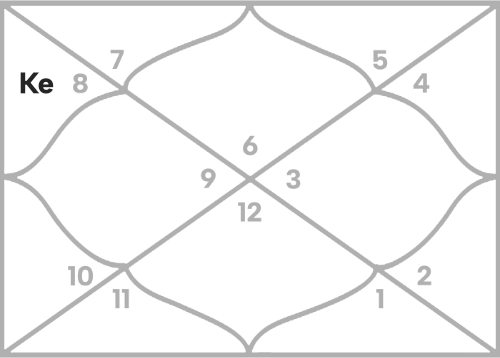
For Virgo Ascendant, Ketu in the 3rd house occupies Scorpio, a sign ruled by Mars. The 3rd house signifies courage, initiative, communication, writing, practical skills, younger siblings, short journeys, and efforts undertaken through personal determination. It is also an Upachaya house, where the results of sustained effort can develop with experience. Ketu is associated with detachment, inward focus, independence, and a tendency to act without seeking constant recognition. Its placement in the 3rd house can reduce the native’s interest in proving themselves through frequent communication, social competition, or outward displays of courage. The person may possess considerable determination but prefer to apply it selectively, concentrating on tasks that have a clear purpose rather than pursuing every available opportunity. Scorpio adds depth, secrecy, investigation, and a desire to understand what lies beneath the surface. This combination can support research, analytical writing, specialised study, and work that requires concentration away from constant external interaction. The native may prefer meaningful conversations over casual exchanges and may communicate more effectively when discussing subjects they have studied thoroughly. However, Ketu’s detachment can sometimes make the person reluctant to explain their intentions, seek assistance, or communicate ideas that could benefit from wider discussion. For Virgo Ascendant, Mars rules both the 3rd and 8th houses, making it a functional malefic and the dispositor of Ketu in Scorpio. Mars’s condition is therefore crucial in determining how courage, initiative, and investigative ability are expressed. A strong and well-supported Mars can help channel Ketu’s inward focus into decisive action, technical competence, and disciplined research. If Mars is afflicted, hesitation, abrupt communication, concealed frustration, or inconsistent effort may become more prominent. Ketu in the 3rd house is often regarded as a potentially constructive placement because the house is an Upachaya, but the actual results depend on the complete Kundali rather than the placement alone.
Ketu in the 3rd house can influence the native’s relationship with siblings, communication, and professional initiative. Relationships with younger siblings may be marked by differences in temperament, independent lifestyles, or periods of limited communication, although Ketu does not automatically indicate separation or conflict. The quality of these relationships depends on Mars, relevant planetary influences, and the broader family significations in the Kundali. The native may prefer to maintain independence rather than participate in frequent discussions or social activities that feel unproductive. This can be advantageous in research, writing, investigation, programming, technical work, and other pursuits that require sustained concentration. Ketu may also encourage an unconventional approach to learning practical skills, with the person preferring direct experimentation or independent study over constant instruction. However, independence should not become an unwillingness to collaborate or communicate important information. Rahu’s placement opposite Ketu is also relevant, creating an axis between the 3rd and 9th houses when Ketu occupies Scorpio. With Rahu in Taurus in the 9th house, there may be a contrast between personal experience and established teachings, or between independent investigation and the desire to develop a broader philosophy. This can encourage the native to test ideas rather than accepting them unquestioningly, provided scepticism is balanced with openness to learning. Ketu’s traditional 7th aspect falls on Taurus, the 9th house of Dharma, higher education, teachers, father, and long-distance journeys. Its 5th and 9th aspects are recognised in several Jyotish traditions, although their use varies by lineage. Under this approach, Ketu also aspects Pisces, the 7th house, and Cancer, the 11th house. These connections link communication and initiative with partnerships, social networks, gains, and long-term ambitions. Jupiter, the 7th lord, and the Moon, the 11th lord, are important when assessing these areas, while Venus as the 9th lord helps determine how the native approaches higher learning and belief systems.
The constructive expression of Ketu in the 3rd house lies in developing purposeful action without depending on external approval. The native may learn to trust their abilities, work independently, and direct effort towards tasks that have lasting value. Rather than feeling compelled to prove competence through constant activity, the person can become more selective about where time and energy are invested. This can be particularly useful in research, writing, specialised technical work, or other fields where depth and concentration matter more than continuous visibility. However, Ketu’s detachment should not become passivity or an excuse to avoid necessary effort. The 3rd house also represents the courage to initiate action, communicate needs, and develop practical capabilities through repetition. The native benefits from setting clear objectives and following through consistently, even when recognition is limited. In relationships with siblings, colleagues, and collaborators, straightforward communication can prevent silence from being mistaken for indifference. The person should also recognise that asking for help or sharing ideas does not diminish independence; cooperation can strengthen the results of individual effort. Mars’s condition is central to understanding how effectively the native translates inner resolve into action, while Mercury, as the Ascendant and 10th lord, contributes to analytical judgement, communication, and professional direction. The strength of the 3rd and 9th houses, planetary associations, and the operating Dasha will influence how these themes unfold. Ketu in the 3rd house does not automatically produce exceptional courage, sibling distance, or success in solitary professions. Ultimately, this placement encourages the native to move beyond the need for constant validation and use personal effort with greater discrimination. Its central lesson is to combine independence with purposeful action, silence with clear communication, and inner courage with the willingness to engage when engagement is necessary.
Ketu in 4th House for Virgo Ascendant

For Virgo Ascendant, Ketu in the 4th house occupies Sagittarius, a sign ruled by Jupiter. The 4th house signifies mother, home, property, vehicles, formal education, emotional foundations, and domestic happiness. Ketu is associated with detachment, introspection, renunciation, and the questioning of attachments that ordinarily provide a sense of identity or security. Its placement in the 4th house can create an inwardly independent temperament and an unusual relationship with home, family traditions, and emotional belonging. The native may feel different from the family environment in which they were raised or may find that familiar surroundings do not always provide the expected sense of fulfilment. Sagittarius adds themes of philosophy, higher knowledge, beliefs, and the search for meaning, potentially encouraging the person to look beyond material comforts when evaluating what makes a home satisfying. Even when property, education, or domestic facilities are adequate, the native may seek a deeper sense of belonging that cannot be established through external arrangements alone. However, Ketu in the 4th house does not automatically indicate an unhappy childhood, separation from the mother, or instability in domestic life. For Virgo Ascendant, Jupiter rules both the 4th house of home and emotional foundations and the 7th house of marriage and partnerships. As the dispositor of Ketu in Sagittarius, Jupiter is central to determining how this placement operates. Jupiter is a natural benefic, but its 7th-house lordship also gives it Maraka significance, so its functional role must be considered carefully. A strong and well-supported Jupiter can help the native develop philosophical maturity, maintain meaningful family connections, and approach domestic responsibilities with perspective. If Jupiter is afflicted, dissatisfaction with living circumstances or differences in beliefs within the family may require greater attention. The Moon, as the natural significator of the mind and mother, also contributes to assessing emotional well-being and maternal relationships.
Ketu in the 4th house can influence the native’s relationship with property, education, residence, and family life. The person may prefer a simple or private living environment and may feel less attached to ancestral customs, familiar locations, or possessions that others regard as essential. In some cases, changes in residence or an unconventional domestic arrangement may become part of life, but these outcomes cannot be inferred from Ketu alone. The 4th house also represents formal education, and Ketu may encourage an independent learning style or an interest in philosophical and specialised subjects. Sagittarius can intensify curiosity about religious traditions, ethics, and the deeper meaning of experience, although the quality of education and intellectual development depends on Jupiter, Mercury, and the relevant houses. Rahu’s placement opposite Ketu is important because the nodal axis connects the 4th and 10th houses in this configuration. With Rahu in Gemini in the 10th house, professional ambition and public recognition may pull the native’s attention away from domestic comfort, creating a need to balance career responsibilities with private life. The person may seek achievement outside the home while gradually reconsidering what genuine security means. Ketu’s traditional 7th aspect falls on Gemini, the 10th house of profession, authority, and public reputation. Its 5th and 9th aspects are recognised in several Jyotish traditions, although their use varies by lineage. Under this approach, Ketu also aspects Aries, the 8th house of transformation and shared resources, and Leo, the 12th house of expenditure, foreign lands, isolation, and spiritual retreat. These connections can reinforce an interest in introspection or simplify the native’s relationship with material possessions, but they do not independently promise spiritual attainment, property loss, or career detachment. Mercury, as the Ascendant and 10th lord, is important for understanding the balance between professional demands and personal life, while Jupiter remains central to domestic matters and the quality of emotional foundations.
The constructive expression of Ketu in the 4th house lies in developing inner stability without depending entirely on familiar surroundings, material possessions, or fixed domestic routines. The native may gradually discover that a sense of belonging can be cultivated through self-understanding, meaningful relationships, and a flexible approach to changing circumstances. Ketu’s influence can support introspection, spiritual study, meditation, and a preference for simplicity, particularly when these practices are grounded in everyday responsibility. However, detachment should not become emotional withdrawal or a reason to neglect relationships with family members. The native may need to make a conscious effort to express affection, remain involved in domestic decisions, and communicate emotional needs rather than assuming that practical support alone is sufficient. If there is a sense of distance from the mother or family environment, the actual relationship should be assessed through the Moon, Jupiter, the 4th house, and their associations rather than attributed solely to Ketu. Similarly, property and residential decisions benefit from careful planning, even when the native feels little attachment to ownership or conventional ideas of home. A strong Jupiter can help transform philosophical detachment into wisdom, while Mercury can support practical judgement and the management of daily responsibilities. The person should also recognise that simplicity is most constructive when chosen consciously, not when it becomes a way of avoiding difficult emotions or commitments. The condition of Jupiter, the Moon, Mercury, and the 4th and 10th houses, together with planetary associations and the operating Dasha, will influence how these themes unfold. Ketu in the 4th house does not automatically produce domestic instability, emotional dissatisfaction, or separation from one’s roots. Ultimately, this placement encourages the native to discover a more inwardly grounded form of security. Its central lesson is to appreciate home without becoming dependent on it as the sole source of peace, and to cultivate inner contentment while remaining present in family and everyday life.
Ketu in 5th House for Virgo Ascendant
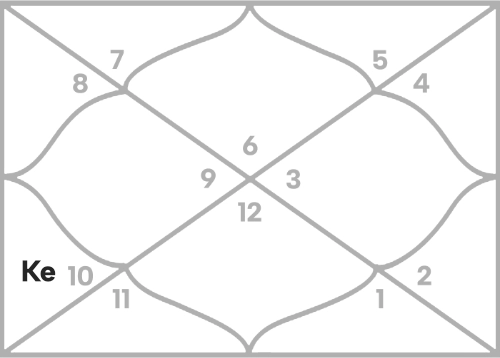
For Virgo Ascendant, Ketu in the 5th house occupies Capricorn, a sign ruled by Saturn. The 5th house signifies intelligence, education, creativity, romance, children, mantra, speculation, and Purva Punya. Ketu is associated with detachment, introspection, specialised perception, and a tendency to look beyond conventional forms of recognition. Its placement in the 5th house can make the native less interested in proving intellectual superiority or seeking validation through creative achievements. The person may possess considerable analytical ability yet prefer to investigate subjects privately rather than display knowledge for public approval. Capricorn adds discipline, practicality, and a measured approach to achievement, potentially supporting sustained research, technical study, and intellectual work that requires patience. The native may favour thoughtful, carefully structured creative expression over spontaneous displays of emotion, and may be drawn towards philosophy, astrology, mathematics, or other specialised fields that reward concentration and independent inquiry. However, Ketu’s detachment can sometimes make it difficult to appreciate one’s own abilities or remain motivated when recognition is limited. The person may abandon a creative pursuit once its deeper questions have been explored, or feel that conventional accomplishments offer less satisfaction than expected. For Virgo Ascendant, Saturn rules both the 5th house and the 6th house of employment, service, competition, and obstacles. As the dispositor of Ketu in Capricorn, Saturn is central to determining how this placement affects intelligence, creativity, romance, and children. A strong and well-supported Saturn can help turn Ketu’s inward focus into disciplined study, technical competence, and sustained intellectual effort. If Saturn is afflicted, the native may become excessively reserved, self-critical, or reluctant to share ideas and creative work. Ketu in the 5th house does not automatically indicate diminished intelligence, romantic detachment, or difficulties involving children. Its results depend on Saturn’s condition, Jupiter as the natural significator of children and wisdom, and the overall configuration of the Kundali.
Ketu in the 5th house can shape the native’s approach to romance, learning, creative expression, and speculative activities. In relationships, the person may prefer meaningful intellectual or spiritual connection over outward displays of affection, and may be selective about expressing romantic interest. Conventional romantic expectations may feel restrictive, or the native may need considerable time to understand what emotional fulfilment means personally. These tendencies do not necessarily indicate relationship dissatisfaction or an inability to sustain commitment. The condition of Venus, the 7th lord Jupiter, and the 5th house must be considered before judging romantic outcomes. In matters concerning children, Ketu may encourage a less conventional approach to parenting or education, with the native placing importance on independence, discipline, or individual development. Children may prompt reflection on attachment, responsibility, and expectations, but Ketu alone does not establish difficulties with conception, childbirth, or a child’s well-being. Jupiter and the 5th lord Saturn are particularly important when assessing these matters. Rahu’s placement opposite Ketu also deserves attention, as the nodal axis connects the 5th and 11th houses in this configuration. With Rahu in Cancer in the 11th house, there may be a contrast between inward intellectual or creative satisfaction and the desire for external gains, recognition, or social approval. The native may need to balance private fulfilment with the practical benefits of sharing ideas and participating in collective pursuits. Ketu’s traditional 7th aspect falls on Cancer, the 11th house of gains, social networks, friendships, and long-term ambitions. Its 5th and 9th aspects are recognised in several traditions of Jyotish, although their use varies by lineage. Under this approach, Ketu also aspects Taurus, the 9th house of higher learning and Dharma, and Virgo, the 1st house of personality and self-direction. These connections may reinforce independent thinking, philosophical inquiry, and a preference for knowledge that develops through personal investigation. Venus, Mercury, and the Moon are relevant in assessing how these themes connect with fortune, identity, and gains.
The constructive expression of Ketu in the 5th house lies in developing intellectual and creative depth without becoming indifferent to the value of sharing one’s abilities. The native may have a natural inclination towards research, specialised learning, mantra practice, or spiritual inquiry, particularly when Saturn supports sustained concentration and methodical study. Ketu’s inward orientation can help the person investigate complex subjects without being distracted by the need for constant praise. However, detachment should not become a reason to suppress creativity, avoid emotional expression, or dismiss achievements as meaningless. Intellectual ability becomes more useful when it is developed consistently and applied to practical questions. The native may benefit from completing creative projects, discussing ideas with trusted people, and recognising that appreciation does not necessarily imply attachment to recognition. In romance, emotional openness and clear communication can help bridge the gap between inward reflection and a partner’s need for affection. In parenting, allowing children to develop their own interests while providing reliable guidance can help balance independence with responsibility. The person should also exercise caution with speculation and gambling, since the 5th house signifies speculative activity but Ketu does not guarantee profitable intuition or protection from losses. Decisions involving financial risk should be based on evidence, realistic limits, and careful judgement rather than assumptions about instinct or past-life knowledge. Saturn’s condition, Jupiter’s strength, the 5th house, and relevant planetary associations, together with the operating Dasha, will influence how these themes manifest. Ketu in the 5th house does not independently guarantee exceptional intuition, spiritual attainment, romantic difficulties, or specific outcomes involving children. Ultimately, this placement encourages the native to pursue knowledge for its depth rather than its prestige and to express creativity without becoming dependent on external approval. Its central lesson is to balance inward insight with outward participation, intellectual detachment with emotional presence, and disciplined thought with the freedom to create.
Ketu in 6th House for Virgo Ascendant

For Virgo Ascendant, Ketu in the 6th house occupies Aquarius, a sign ruled by Saturn. The 6th house signifies employment, service, competition, debts, disputes, disease, and the obstacles that must be addressed through sustained effort. It is also an Upachaya house, where experience and perseverance can gradually strengthen one’s ability to manage difficulties. Ketu is associated with detachment, discrimination, and the tendency to approach matters without becoming excessively invested in external recognition. Its placement in the 6th house is often considered constructive because it can reduce the native’s attachment to rivalry and encourage a practical, problem-focused response to challenges. The person may remain composed in competitive environments, prefer resolving difficulties quietly, and focus on the task rather than the personal drama surrounding it. Aquarius adds themes of systems, collective responsibility, unconventional solutions, and organised work, potentially supporting analytical, technical, research-oriented, or service-based occupations. For Virgo Ascendant, Saturn rules both the 5th house of intelligence and discernment and the 6th house itself. As the dispositor of Ketu in Aquarius, Saturn is crucial in determining how the native handles employment, health-related responsibilities, debts, and competition. A strong and well-supported Saturn can help channel Ketu’s detachment into disciplined service, systematic problem-solving, and patient management of difficult circumstances. If Saturn is afflicted, the native may become excessively withdrawn, neglect necessary responsibilities, or struggle to maintain consistency when confronted with prolonged demands. Although Ketu in the 6th house is often regarded as favourable for overcoming opposition, it does not guarantee victory over every rival or freedom from obstacles. The results depend on Saturn’s condition, planetary associations, aspects, and the broader configuration of the Kundali.
Ketu in the 6th house can influence how the native responds to workplace challenges, professional competition, and disputes. The person may prefer to address problems through observation, analysis, and practical action rather than confrontation or a desire to prove superiority. This can be useful in healthcare, research, administration, technical support, compliance, dispute resolution, and other fields where persistence and attention to detail are important. The native may also be willing to undertake demanding service without requiring constant recognition, particularly when the work has a clear purpose. However, detachment can become counterproductive if the person ignores workplace politics that genuinely require attention, fails to communicate concerns, or assumes that every conflict will resolve itself without intervention. The 6th house also signifies health, debts, and daily obligations. Ketu may encourage the native to minimise unnecessary worry about minor difficulties, but it should not lead to neglect of medical advice, financial planning, or other practical responsibilities. No specific illness or protection from disease can be inferred from this placement alone. Rahu’s placement opposite Ketu is also important because the nodal axis connects the 6th and 12th houses in this configuration. With Rahu in Leo in the 12th house, there may be a contrast between practical service and the desire for privacy, retreat, or experiences beyond familiar surroundings. The native may need to balance professional obligations with adequate rest and personal reflection. Ketu’s traditional 7th aspect falls on Leo, the 12th house of expenditure, foreign lands, isolation, and spiritual retreat. Its 5th and 9th aspects are recognised in several traditions of Jyotish, although their use varies by lineage. Under this approach, Ketu also aspects Gemini, the 10th house of profession and public reputation, and Libra, the 2nd house of accumulated wealth, speech, and family. These connections can link the native’s approach to service with career direction, financial priorities, and communication. Mercury, the Ascendant and 10th lord, Venus, the 2nd lord, and Saturn as the 6th lord are important in assessing these areas.
The constructive expression of Ketu in the 6th house lies in developing a calm, disciplined approach to responsibilities without becoming indifferent to their consequences. The native may learn to manage competition without allowing it to dominate personal identity and to address obstacles without turning every disagreement into a personal struggle. This can support effective service, careful analysis, and the steady resolution of practical problems. A strong Saturn can contribute patience and consistency, while Mercury can help organise information, evaluate options, and communicate solutions clearly. Nevertheless, Ketu’s detachment should not be confused with passivity. Some problems require direct action, firm boundaries, professional advice, or sustained follow-through. The native should recognise when to disengage from unproductive conflict and when a matter needs to be addressed decisively. Similarly, a willingness to serve others is most constructive when balanced with reasonable limits, so that duty does not lead to neglect of personal needs. In financial matters, keeping track of debts, obligations, and recurring expenses can prevent small issues from becoming larger burdens. In health matters, consistent routines and appropriate medical care remain more reliable than assumptions that the placement offers protection. The native may also benefit from recognising that humility does not require suppressing personal achievements or refusing support from others. Saturn’s condition, Mercury’s strength, the 6th house, relevant planetary associations, and the operating Dasha all influence the actual results. Ketu in the 6th house does not independently guarantee victory over enemies, effortless problem-solving, or the absence of serious health or financial difficulties. Ultimately, this placement can support a measured and service-oriented approach to life’s challenges. Its central lesson is to meet difficulties with discernment rather than fear, work diligently without becoming consumed by competition, and practise humility without neglecting responsibility.
Ketu in 7th House for Virgo Ascendant
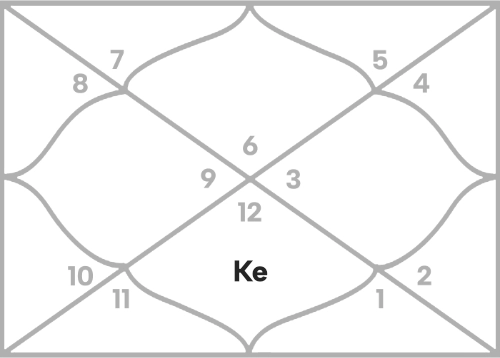
For Virgo Ascendant, Ketu in the 7th house occupies Pisces, a sign ruled by Jupiter. The 7th house signifies marriage, spouse, business partnerships, contracts, clients, and public dealings. Ketu is associated with detachment, introspection, and the questioning of attachments that ordinarily provide a sense of identity or fulfilment. Its placement in the 7th house can create a complex approach to relationships, in which the native values companionship but may also require considerable personal space. The person may be selective about emotional involvement or find that conventional expectations surrounding marriage and partnership do not fully reflect their needs. Pisces adds themes of compassion, idealism, imagination, and spiritual sensitivity, potentially drawing the native towards partners who are reflective, unconventional, or interested in philosophical and spiritual subjects. However, Ketu’s detachment can also make expectations difficult to articulate, particularly when the native assumes that a meaningful relationship should be understood intuitively rather than through open communication. For Virgo Ascendant, Jupiter rules both the 4th house of domestic happiness and the 7th house of marriage and partnerships. As the dispositor of Ketu in Pisces, Jupiter is especially important in determining the quality of relationships and the ability to establish a stable domestic life. Jupiter is a natural benefic, but its 7th-house lordship also gives it Maraka significance, so its functional role must be assessed carefully. A strong and well-supported Jupiter can help channel Ketu’s detachment into mature understanding, compassion, and a realistic appreciation of partnership. If Jupiter is afflicted, idealised expectations, uncertainty about commitment, or difficulty reconciling emotional and practical needs may become more prominent. Ketu in the 7th house does not automatically indicate an unhappy marriage, separation, or an emotionally distant spouse. The condition of Jupiter, Venus as the natural significator of relationships, the 7th house, and the overall configuration of the Kundali must all be considered.
Ketu in the 7th house can influence the native’s approach to marriage, romance, business alliances, and public interactions. The person may prefer relationships that provide intellectual or spiritual meaning rather than those based solely on social status, material comfort, or conventional expectations. There may be attraction towards partners who have a distinctive outlook or whose experiences encourage the native to reconsider established assumptions about intimacy and commitment. At the same time, the native may occasionally struggle to identify what feels missing in a relationship, particularly if practical compatibility is present but emotional communication remains limited. These experiences are not inevitable and should not be interpreted as proof of a karmic problem or an inability to sustain commitment. The 7th house also governs business partnerships and dealings with clients. Ketu may make the native more comfortable working independently or less interested in partnerships that involve excessive dependence, but this does not necessarily prevent successful collaboration. Clear agreements, defined responsibilities, and regular communication can help the native maintain professional relationships without feeling constrained. Rahu’s placement opposite Ketu is particularly relevant because the nodal axis connects the 1st and 7th houses in this configuration. With Rahu in Virgo in the 1st house, the native may experience a contrast between developing a distinct personal identity and accommodating another person’s needs. The desire for independence may coexist with a strong interest in relationships, creating a need to balance self-direction with cooperation. Ketu’s traditional 7th aspect falls on Virgo, the 1st house of personality and self-understanding. Its 5th and 9th aspects are recognised in several Jyotish traditions, although their use varies by lineage. Under this approach, Ketu also aspects Scorpio, the 3rd house of communication and initiative, and Cancer, the 11th house of gains, friendships, and social networks. These connections can make communication, shared ambitions, and social expectations relevant to relationship experiences. Mercury, as the Ascendant lord, is important for self-understanding and communication, while the Moon, the 11th lord, and Mars, the 3rd lord, contribute to the assessment of social and interpersonal dynamics.
The constructive expression of Ketu in the 7th house lies in learning to participate in relationships without becoming excessively dependent on them or withdrawing when emotional complexity arises. The native may gradually recognise that healthy partnership requires more than practical compatibility, shared interests, or an idealised sense of connection. Emotional presence, honest communication, and a willingness to understand another person’s perspective are equally important. Virgo’s analytical nature can help identify practical issues and improve relationship routines, but excessive analysis may prevent feelings from being expressed or acknowledged. Ketu’s influence can encourage the native to move beyond rigid expectations, provided detachment does not become an excuse to avoid difficult conversations or responsibilities. In marriage, it is helpful to communicate expectations about personal space, family obligations, finances, and long-term goals rather than assuming that both partners naturally share the same understanding. In business, independence can be an asset, but collaboration still requires trust, transparency, and accountability. The native should also distinguish genuine incompatibility from the temporary discomfort that can arise when a relationship demands emotional growth. A strong Jupiter can support generosity, perspective, and mature commitment, while Venus contributes to affection, attraction, and relationship harmony. The condition of Mercury, the 7th house, relevant planetary associations, and the operating Dasha will influence how these themes unfold. Ketu in the 7th house does not independently establish marital dissatisfaction, separation, or success through solitary work. Ultimately, this placement encourages the native to understand relationships as a meeting between two distinct individuals rather than as a source of constant validation or complete fulfilment. Its central lesson is to balance independence with commitment, practical understanding with emotional awareness, and personal detachment with genuine participation in the lives of others.
Ketu in 8th House for Virgo Ascendant
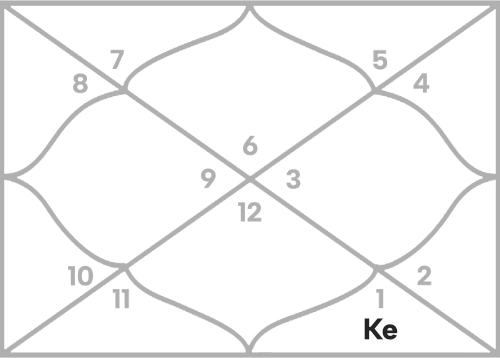
For Virgo Ascendant, Ketu in the 8th house occupies Aries, a sign ruled by Mars. The 8th house signifies longevity, sudden changes, inheritance, shared assets, confidential matters, occult knowledge, and profound transformations. Ketu is associated with detachment, introspection, and the inclination to look beyond surface appearances. Its placement in the 8th house can create a strong interest in hidden knowledge, research, astrology, tantra, psychology, and subjects concerned with the deeper mechanisms of life. The native may prefer investigating complex questions independently rather than accepting explanations without examination. Aries adds initiative, directness, and a willingness to confront difficult subjects, potentially encouraging the person to explore unfamiliar territory with determination. Ketu’s influence can also produce a relatively detached response to uncertainty, allowing the native to examine difficult circumstances without becoming entirely consumed by fear. However, this composure is not guaranteed, and sudden changes can still require considerable adjustment. For Virgo Ascendant, Mars rules both the 3rd house of initiative and the 8th house itself, making it a functional malefic and the dispositor of Ketu in Aries. Mars’s condition is therefore crucial in determining how the native responds to transformation, investigation, and risk. A strong and well-supported Mars can help channel Ketu’s inward focus into disciplined research, decisive action, and the practical application of specialised knowledge. If Mars is afflicted, impulsive decisions, concealed frustration, or difficulty managing unexpected developments may become more prominent. Ketu in the 8th house does not automatically guarantee occult abilities, exceptional intuition, or protection from sudden difficulties. Its results depend on Mars’s strength, the condition of the 8th house, planetary associations, and the overall configuration of the Kundali.
Ketu in the 8th house can influence the native’s approach to shared finances, inheritance, intimate relationships, and circumstances that require adjustment. The person may be less attached to material arrangements than others expect or may prefer to understand financial and personal obligations independently. However, detachment does not remove the need for careful management of joint resources. Matters involving a spouse’s finances, inheritance, insurance, taxation, or shared liabilities should be handled transparently and with appropriate documentation. The 8th house is also associated with longevity, but Ketu’s placement alone cannot establish lifespan or predict a particular health outcome. Such judgements require careful consideration of the complete Kundali and should not be inferred from a single placement. Rahu’s placement opposite Ketu is particularly relevant because the nodal axis connects the 8th and 2nd houses in this configuration. With Rahu in Libra in the 2nd house, the native may experience a contrast between the desire to accumulate personal wealth and a more detached attitude towards shared resources or sudden financial changes. This axis encourages a balanced approach to savings, joint obligations, and family responsibilities. Ketu’s traditional 7th aspect falls on Libra, the 2nd house of accumulated wealth, family, speech, and values. Its 5th and 9th aspects are recognised in several traditions of Jyotish, although their use varies by lineage. Under this approach, Ketu also aspects Leo, the 12th house of expenditure, foreign lands, isolation, and spiritual retreat, and Sagittarius, the 4th house of home, property, education, and emotional foundations. These connections can link inner transformation with domestic circumstances, expenditure, and an interest in spiritual study. Venus, as the 2nd and 9th lord, and Jupiter, as the 4th lord, are important in assessing these areas. Mercury, the Ascendant and 10th lord, also contributes to the native’s ability to analyse complicated situations and make sound practical decisions.
The constructive expression of Ketu in the 8th house lies in developing the ability to face uncertainty without becoming preoccupied with controlling every outcome. The native may gradually learn to approach change with greater composure, investigate difficult subjects with discipline, and distinguish what can be managed from what must be accepted. Ketu’s association with introspection can support serious engagement with astrology, philosophy, psychology, or other specialised fields, provided curiosity is balanced with evidence, ethical judgement, and a willingness to acknowledge uncertainty. A strong Mars can help translate investigation into purposeful action, while Mercury can contribute analytical precision and the ability to communicate complex findings. The native should nevertheless avoid confusing detachment with indifference to practical responsibilities. Financial records, legal arrangements, insurance, and shared obligations still require attention, even when the person feels little attachment to material outcomes. Similarly, a desire to explore hidden knowledge is most constructive when it leads to greater understanding rather than suspicion, fear, or an obsession with predicting every possible event. The 8th house is associated with transformation, but this does not mean that personal growth must come through crisis or loss. Reflection, study, supportive relationships, and deliberate changes in behaviour can also deepen understanding. The condition of Mars, the 8th house, Mercury, Venus, and relevant planetary associations, together with the operating Dasha, will influence how these themes unfold. Ketu in the 8th house does not independently guarantee spiritual advancement, sudden financial changes, or freedom from fear. Ultimately, this placement encourages the native to investigate life’s deeper questions while accepting that some outcomes remain uncertain. Its central lesson is to combine courage with discernment, manage shared responsibilities carefully, and cultivate inner resilience without becoming detached from the practical realities of life.
Ketu in 9th House for Virgo Ascendant

For Virgo Ascendant, Ketu in the 9th house occupies Taurus, a sign ruled by Venus. The 9th house signifies Dharma, higher education, philosophy, religious traditions, teachers, father, fortune, long-distance journeys, and the pursuit of wisdom. Ketu is associated with detachment, introspection, and the questioning of established forms of knowledge and belief. Its placement in the 9th house can make the native less inclined to accept religious doctrines, philosophical systems, or traditional teachings without personal examination. The person may seek to understand the principles underlying a belief rather than follow its external rituals or social conventions. Taurus adds a practical and experience-oriented dimension to this process, potentially encouraging the native to judge teachings by their relevance, consistency, and application in everyday life. The person may respect tradition while remaining unconvinced by explanations that lack substance or fail to align with direct experience. This can support independent philosophical thought, but it may also create periods of uncertainty when inherited beliefs no longer provide satisfactory answers. For Virgo Ascendant, Venus rules both the 2nd house of accumulated wealth and family values and the 9th house of Dharma and fortune. Venus is a significant functional benefic for this Ascendant and serves as the dispositor of Ketu in Taurus. Its condition is therefore central to understanding the native’s relationship with higher knowledge, teachers, fortune, and ethical principles. A strong and well-supported Venus can help the native develop a balanced philosophy that combines independent judgement with appreciation for valuable traditions. If Venus is afflicted, the person may become overly selective about teachings, dismiss useful guidance prematurely, or struggle to reconcile personal convictions with established frameworks. Ketu in the 9th house does not automatically indicate rejection of religion, conflict with the father, or exceptional spiritual wisdom. Its results depend on Venus’s strength, the condition of the 9th house, planetary associations, and the wider Kundali.
Ketu in the 9th house can influence the native’s relationship with teachers, mentors, formal education, and long-distance travel. The person may prefer independent study or direct investigation over unquestioning reliance on an authority figure. Teachers may be respected for their actual understanding and conduct rather than their position or reputation. This can encourage intellectual independence, but excessive scepticism may make it difficult to benefit from guidance that requires patience, trust, and sustained study. Differences in religious or philosophical outlook may arise between the native and the father, mentors, or family traditions, although such disagreements are not inevitable. The Sun, Jupiter, Venus, and relevant influences on the 9th house must be examined before assessing these relationships. Ketu’s placement may also encourage an unconventional educational path or a preference for specialised subjects that allow the native to investigate ideas independently. However, it does not guarantee academic disruption or success outside formal education. Rahu’s placement opposite Ketu is important because the nodal axis connects the 9th and 3rd houses in this configuration. With Rahu in Scorpio in the 3rd house, there may be a strong contrast between established knowledge and personal investigation. The native may prefer to test ideas through observation, research, writing, or practical experience rather than accepting them solely because they are traditional. Ketu’s traditional 7th aspect falls on Scorpio, the 3rd house of communication, initiative, writing, and practical skills. Its 5th and 9th aspects are recognised in several Jyotish traditions, although their use varies by lineage. Under this approach, Ketu also aspects Virgo, the 1st house of identity and self-direction, and Capricorn, the 5th house of intelligence, creativity, education, and mantra. These connections can reinforce independent thinking and a preference for knowledge that has been examined personally. Mercury, as the Ascendant and 10th lord, is important for analytical reasoning and communication, while Saturn, the 5th lord, contributes to disciplined study and intellectual development. Jupiter’s natural significations of wisdom, teachers, and higher knowledge also deserve consideration.
The constructive expression of Ketu in the 9th house lies in developing an independent understanding of truth without rejecting the value of disciplined learning. The native may gradually move beyond inherited assumptions and build a personal philosophy informed by study, reflection, and lived experience. This process can support a thoughtful approach to religion, philosophy, ethics, and spiritual practice, particularly when the person is willing to investigate unfamiliar perspectives without accepting them uncritically. Ketu’s detachment can help reduce dependence on external authority, but it should not become a belief that all established knowledge is inherently unreliable or that personal intuition is always correct. Genuine discernment requires the ability to question one’s own conclusions as carefully as one questions the conclusions of others. A strong Venus can help integrate personal values with practical wisdom, while Mercury contributes analysis and the ability to articulate ideas clearly. Saturn’s condition can indicate how effectively the native sustains the study and practice needed to develop expertise. Relationships with teachers and mentors may become more constructive when respect is based on openness and genuine learning rather than blind obedience or automatic opposition. Similarly, long-distance travel or exposure to different cultures can broaden the native’s outlook when experiences are approached with curiosity and reflection. The condition of Venus, the 9th house, Jupiter, and other relevant planets, together with the operating Dasha, will influence how these themes unfold. Ketu in the 9th house does not independently guarantee spiritual attainment, estrangement from tradition, or conflict with authority figures. Ultimately, this placement encourages the native to move from inherited belief towards personally examined understanding. Its central lesson is to balance independence with humility, intuition with reason, and freedom of thought with the discipline required for genuine wisdom.
Ketu in 10th House for Virgo Ascendant
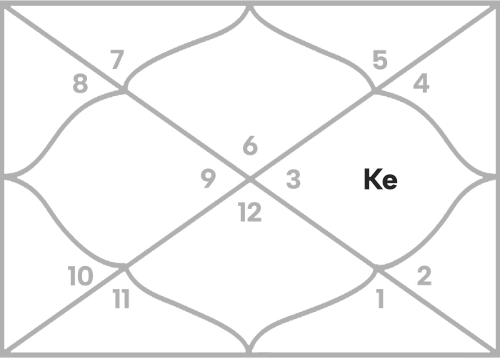
Ketu in the 10th house places the planet of detachment in the domain of profession, public reputation, authority, and karma. For Virgo Ascendant, Ketu occupies Gemini, a sign ruled by Mercury, who governs both the 1st and 10th houses. Consequently, the condition and placement of Mercury become particularly important in determining how this combination manifests. The native may approach professional responsibilities with precision, analytical ability, and a desire to understand how things work, yet feel surprisingly detached from titles, recognition, or conventional measures of achievement. Career interests may change over time, especially when a role becomes repetitive or offers status without intellectual engagement. The native may also feel uncomfortable with rigid hierarchies or positions that require constant self-promotion. However, Ketu does not necessarily deny professional success. It can instead make the native less attached to the outward rewards of work, allowing specialised knowledge and practical competence to take precedence over public recognition.
This placement can favour research, investigation, analysis, writing, technical work, consulting, and specialised roles in which the native can apply knowledge without remaining constantly in the public eye. There may be an inclination towards unconventional career paths or periods of reassessment regarding professional direction. At times, the native may struggle to identify a lasting sense of fulfilment through conventional achievements, even after reaching important milestones. Ketu’s influence can reduce attachment to authority, but its expression depends significantly on Mercury’s strength, the condition of the 10th house, and the influence of other planets. The nodal axis also deserves attention because Rahu occupies the 4th house in Sagittarius, creating a contrast between professional responsibilities and the desire for domestic stability, property, or inner security. Ketu’s 7th aspect towards the 4th house, according to traditions that recognise the nodes’ special aspects, may further emphasise the need to balance professional duties with personal foundations. The native may periodically reconsider how much time and energy should be devoted to career in relation to home and family.
Ketu in the 10th house ultimately encourages the native to distinguish meaningful work from the pursuit of status for its own sake. Its influence can help reduce excessive identification with professional identity, making room for independent judgement, quiet competence, and work that serves a larger purpose. Nevertheless, detachment should not become indifference towards responsibilities, inconsistency in career decisions, or disregard for the practical benefits of reputation and professional relationships. For Virgo Ascendant, Mercury’s dual rulership of the 1st and 10th houses connects personal development directly with professional conduct. When Mercury is strong and well supported, Ketu’s analytical and nonconventional qualities may be channelled into specialised expertise and purposeful work. When Mercury is afflicted or poorly placed, uncertainty about direction or dissatisfaction with achievements may become more pronounced. The deeper lesson of this placement is that professional excellence and inner fulfilment need not depend entirely on external validation. The native can pursue work with discipline and integrity while remaining free from the belief that titles, recognition, or career milestones alone define personal worth.
Ketu in 11th House for Virgo Ascendant
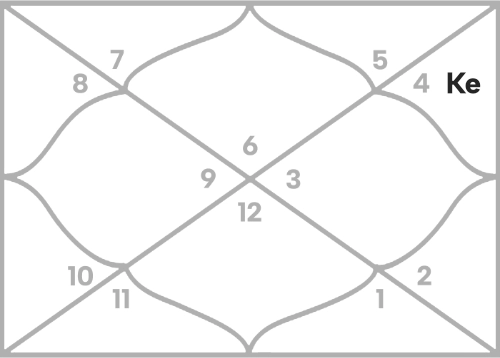
Ketu in the 11th house places the planet of detachment in the domain of income, gains, ambitions, social networks, elder siblings, and the fulfilment of desires. For Virgo Ascendant, Ketu occupies Cancer, ruled by the Moon, which governs the 11th house itself. The Moon is therefore the dispositor of Ketu and becomes especially important in determining the results of this placement. The 11th house is an Upachaya house, associated with growth through time, effort, experience, and sustained engagement with worldly pursuits. Ketu’s presence here may reduce the native’s attachment to accumulating wealth, expanding social circles, or achieving ambitions merely for recognition. The native may maintain a relatively small network, preferring meaningful associations over large groups or superficial connections. Gains and opportunities can still arise, but they may not produce lasting satisfaction, particularly when the goals pursued do not align with the native’s deeper priorities. This placement can also create a tendency to reassess ambitions periodically, leaving behind desires that once seemed important.
For Virgo Ascendant, the 11th house is ruled by the Moon, which is also the natural significator of the mind, emotions, nourishment, and public connection. Its condition can influence how Ketu’s detachment manifests in friendships, financial expectations, and the fulfilment of desires. If the Moon is well placed and supported, the native may develop a balanced relationship with material gains and social obligations, benefiting from networks without becoming dependent on them. If the Moon is afflicted, however, the native may experience inconsistency in friendships, dissatisfaction with achievements, or difficulty feeling emotionally connected to groups and communities. Ketu’s 7th aspect falls on the 5th house in Capricorn, occupied by Saturn’s sign, bringing attention to intelligence, education, creativity, romance, and children. According to traditions that recognise the nodes’ 5th and 9th aspects, Ketu also influences the 3rd house in Scorpio and the 7th house in Pisces. These connections may encourage independent thinking and selective communication while prompting the native to reconsider the relationship between personal desires, creative expression, and social expectations. The actual results depend on the Moon’s strength, Saturn’s condition, and the broader planetary configuration.
Ketu in the 11th house ultimately teaches the native to distinguish genuine fulfilment from the endless pursuit of new desires. Virgo Ascendant naturally seeks improvement, measurable progress, and well-defined goals, but Ketu can make the native question whether every ambition deserves continued effort. This may support a more selective approach to professional networks, friendships, financial growth, and long-term objectives. The placement does not necessarily deny wealth, income, or social success. Rather, it can change the native’s relationship with these outcomes, making external achievements less satisfying when they lack deeper meaning. The challenge is to avoid becoming indifferent towards beneficial relationships, practical opportunities, or legitimate financial goals simply because attachment is reduced. When the Moon and other relevant planets are well supported, the native may learn to participate in society without becoming dependent on approval, maintain relationships without excessive expectations, and pursue prosperity without allowing accumulation to become the central purpose of life. The deeper lesson is that ambitions can provide direction, but lasting contentment comes from understanding which desires are genuinely worth pursuing and which can be released.
Ketu in 12th House for Virgo Ascendant
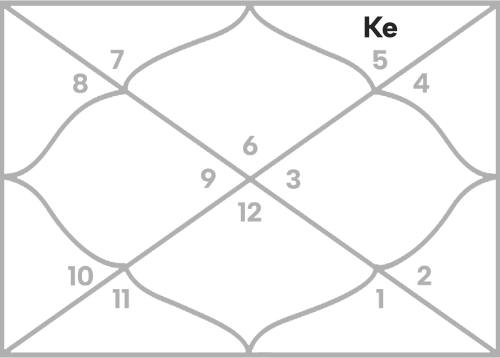
Ketu in the 12th house places the planet of detachment in the domain of expenditure, isolation, foreign lands, sleep, subconscious impressions, spiritual retreat, and moksha. For Virgo Ascendant, Ketu occupies Leo, a sign ruled by the Sun, who governs the 12th house itself. The Sun therefore becomes the dispositor of Ketu and plays an important role in determining how this placement manifests. The 12th house is associated with withdrawal from worldly involvement and the gradual release of attachments, making Ketu’s presence here particularly significant from a spiritual perspective. The native may feel drawn towards meditation, contemplative study, solitude, retreats, or practices intended to deepen awareness beyond ordinary mental activity. There may be less interest in displaying achievements or accumulating possessions purely for social recognition. Virgo’s analytical and discriminating nature may initially approach spirituality through study, observation, and systematic practice, while Ketu encourages a gradual movement beyond excessive analysis towards direct experience. Nevertheless, this placement does not automatically guarantee spiritual attainment or liberation. Its results depend on the condition of the Sun, the strength of the 12th house, and the wider planetary configuration in the Kundali.
Ketu in the 12th house may also influence expenditure, sleep, private life, and experiences in foreign environments. The native may prefer periods of solitude or work in settings that offer privacy and freedom from constant external demands. Interest in spiritual traditions, sacred literature, meditation, or renunciation may develop over time, particularly when supported by Jupiter and other relevant planetary influences. However, detachment can also manifest as withdrawal from responsibilities, difficulty expressing personal needs, irregular sleep, or expenses that lack clear direction. Since the Sun rules the 12th house, its placement and dignity help determine whether the native’s withdrawal becomes purposeful and restorative or creates avoidable difficulties. Ketu’s 7th aspect falls on the 6th house in Aquarius, bringing a connection between spiritual detachment and everyday duties, service, discipline, and the handling of conflicts. According to traditions that recognise the nodes’ special 5th and 9th aspects, Ketu also influences the 4th house in Sagittarius and the 8th house in Aries. These connections can further emphasise inner inquiry, emotional foundations, and interest in hidden or transformative subjects. The results should be assessed alongside the condition of the relevant house lords rather than attributed to Ketu alone.
At its higher expression, Ketu in the 12th house encourages the native to recognise the limitations of excessive control, analysis, and identification with material outcomes. Virgo Ascendant often seeks clarity through classification, reasoning, and the correction of imperfections, but Ketu can reveal that not every experience can be resolved through intellectual understanding. Meditation, disciplined solitude, charitable service, and sincere spiritual practice may help the native cultivate acceptance without abandoning discernment. The 12th house is associated with moksha in Vedic astrology, so this placement can support an interest in liberation and the release of attachments, particularly when the broader Kundali reinforces spiritual inclinations. However, genuine spiritual maturity is not the same as rejecting worldly life indiscriminately. The native must learn to balance solitude with healthy relationships, detachment with responsibility, and inner inquiry with practical stability. When the Sun is well placed and Ketu’s influence is constructively supported, this combination may help the native find peace without depending excessively on external validation. Its deeper lesson is that freedom comes not merely from withdrawing from the world, but from reducing the inner compulsions that make peace dependent on circumstances.
Conclusion
For Virgo Ascendant, Ketu creates a journey of surrender within a sign that seeks control and perfection. It challenges the native to move beyond over-analysis and discover deeper awareness. While Virgo organizes and refines, Ketu dissolves and simplifies.
When understood consciously, Ketu becomes a guide that transforms logic into wisdom and perfectionism into acceptance. It teaches the Virgo native to act without overthinking, serve without attachment, and find clarity not just through analysis but through inner stillness.
Curious to know how Ketu is influencing your life?
Ask Astrologer | Book Astrology Consultation | Get Kundali Report