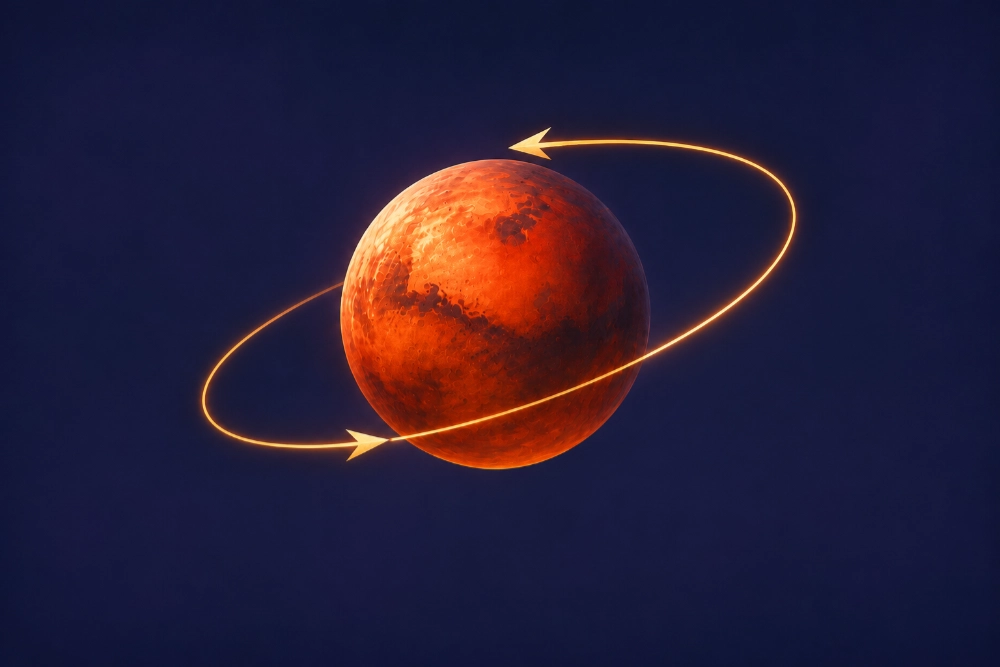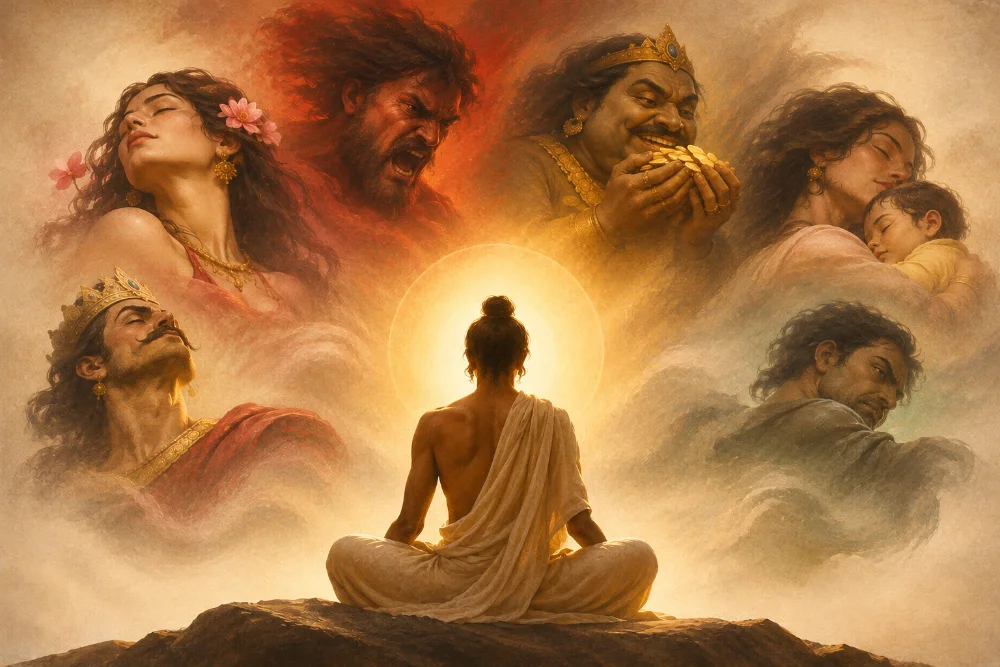

Mars Mahadasha, also known as Mangal or Kuja Mahadasha, lasts seven years in the Vimshottari system. Governed by Mangala, this period brings prominence to matters involving courage, initiative, physical energy, land, property, competition, siblings and the capacity to overcome resistance.
Mars represents the principle of action. It signifies the ability to initiate, defend, confront and execute. Its influence is associated with military authority, weapons, engineering, land, warfare, physical strength and decisive action.
However, Mars Mahadasha is not necessarily a period of aggression, conflict or professional struggle. Brihat Parashara Hora Shastra describes substantial prosperity during the period of a strong Mars, including acquisition of land, wealth, vehicles, recognition, authority and happiness through family. It also describes difficulties involving relatives, health, reputation and material resources when Mars is weak or afflicted.
The seven-year period must therefore be judged through the complete condition of Mars in the birth chart. Its house ownership, placement, dignity, strength, associations and relationship with other planets determine how its indications manifest.
1. The Nature and Significations of Mars
In Vedic astrology, Mars is known as Mangala, Kuja, Bhauma or Angaraka. Its traditional identity is associated with the element of fire, courage, physical strength and the capacity to act.
Parashara describes Mars as a naturally cruel planet. Its significations extend across several important dimensions.
Courage and initiative: Mars represents physical courage, determination, enterprise, competitive spirit and the willingness to confront difficulties. It signifies the capacity to take action rather than remain passive.
Land and property: Mars is associated with land, agricultural resources, buildings and territorial matters. Its connection with the earth is reflected in its name Bhauma, meaning born of the Earth.
Siblings: Mars is an important natural significator of younger siblings, particularly brothers. Its condition becomes relevant when examining sibling relationships and related circumstances.
Weapons and military affairs: Weapons, warfare, soldiers, military authority, defence and physical confrontation fall within the traditional domain of Mars.
Engineering and technical ability: Mars signifies mechanical work, construction, technical execution, tools and activities requiring physical precision. Its association with fire and machinery also informs its traditional connection with manufacturing and related occupations.
Blood and physical vitality: Mars is associated with blood, muscular strength, heat and physical energy. Its condition is relevant when examining injuries, inflammation and other health-related indications.
Competition and conflict: Mars represents enemies, disputes, rivalry, confrontation and the capacity to overcome opposition.
These significations explain why Mars Mahadasha can coincide with developments involving professional responsibilities, property, competition, physical activity and the exercise of authority.
2. General Results of Mars Mahadasha According to Parashara
Brihat Parashara Hora Shastra, Chapter 47, verses 27 to 33, provides the principal description of Mars Mahadasha.
Parashara first distinguishes the results of Mars according to its dignity and strength.
When Mars occupies its exaltation sign, Moolatrikona, own sign, Kendra, Trikona, 11th or 2nd house, and possesses considerable strength, the text describes favourable results.
These include:
- Acquisition of land and property.
- Wealth, agricultural resources and material prosperity.
- Recognition and honour from rulers.
- Acquisition of vehicles, garments and ornaments.
- Gains through courage and personal effort.
- Victory over enemies and success in competition.
- Happiness involving spouse and children.
- Opportunities involving foreign lands and distant places.
Parashara specifically recognises the importance of benefic aspects and favourable divisional placements. A strong Mars supported by benefic influence can produce substantial gains in land, wealth and authority.
The text also gives particular importance to Mars in the 3rd house when strong, associating it with gains through courage and victory over opponents.
The adverse results are described when Mars is debilitated, placed in difficult houses, deprived of strength or associated with malefics and afflicted by their aspects.
Such conditions may bring financial loss, conflict, damage to reputation, difficulties involving siblings and family members, and physical ailments.
An interesting qualification appears in BPHS 47.32: Parashara describes happiness during the beginning of Mars Mahadasha and difficulties towards its end under the stated conditions.
This is a traditional timing indication rather than a compulsory sequence for every individual. The actual progression depends on Mars’s strength, placement, divisional dignity and the results of its Antardashas.
3. Mars’s Functional Role Across the Twelve Ascendants
Mars owns Aries and Scorpio. Consequently, its functional role changes according to the ascendant and the houses represented by these two signs.
Unlock this Pro Content
Access Advanced Astrology with Astro Assured Pro
5. The Nine Antardashas of Mars Mahadasha
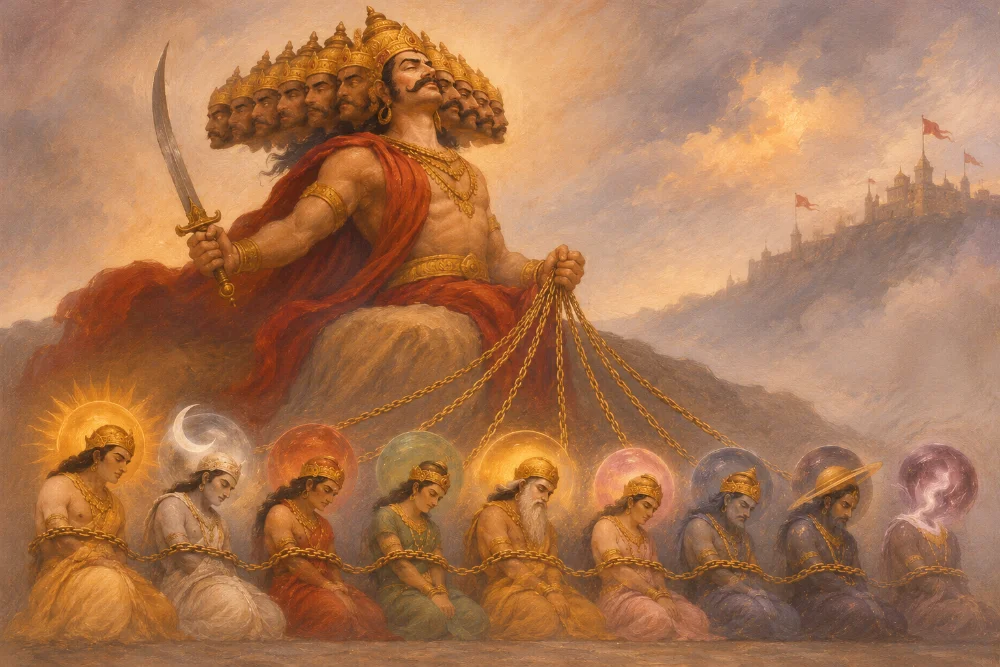
Mars Mahadasha lasts seven years and contains nine Antardashas. The sequence begins with Mars itself, followed by Rahu, Jupiter, Saturn, Mercury, Ketu, Venus, Sun and Moon.
| Antardasha | Approximate Duration |
|---|---|
| Mars | 4 months, 27 days |
| Rahu | 1 year, 18 days |
| Jupiter | 11 months, 6 days |
| Saturn | 1 year, 1 month, 9 days |
| Mercury | 11 months, 27 days |
| Ketu | 4 months, 27 days |
| Venus | 1 year, 2 months |
| Sun | 4 months, 6 days |
| Moon | 7 months |
| Total | 7 years |
The durations follow the traditional 360-day Dasha year. Actual calendar dates may vary according to the calculation convention used.
The following are the principal considerations for each sub-period, drawing on BPHS Chapter 54.
Mars Antardasha
The opening sub-period activates Mars’s own significations. When Mars is strong, exalted, in its own sign or favourably placed, Parashara describes gains involving property, land, authority, wealth and victory.
A weak or afflicted Mars may bring conflict, physical difficulties, financial loss and disputes involving siblings or relatives. Its functional lordship and associations are particularly important during this phase.
Rahu Antardasha
Rahu introduces unusual circumstances, unfamiliar associations and unexpected developments into the Mars period.
A well-supported Rahu may contribute to professional gains, material acquisitions and opportunities through influential associations. When weak or placed in difficult houses, the period may bring fear, financial loss, disputes and difficulties involving authority.
Its dispositor and associations must be examined alongside Mars.
Jupiter Antardasha
Jupiter activates knowledge, teachers, children, Dharma, wealth and auspicious activities.
When strong and favourably placed, Parashara describes gains involving recognition, property, family happiness, children and professional advancement. A weak or afflicted Jupiter may instead bring financial difficulties, disputes and obstacles involving family responsibilities.
Saturn Antardasha
Saturn introduces work, discipline, responsibilities, service and long-term obligations.
A well-supported Saturn may support professional responsibilities, property-related developments and material consolidation. An afflicted Saturn may bring loss of position, physical strain, disputes and difficulties involving siblings and relatives.
The natural enmity between Mars and Saturn makes their relationship particularly important during this sub-period.
Mercury Antardasha
Mercury activates education, communication, commerce, business, intellect and analytical pursuits.
A strong Mercury may support financial gains, professional development, learning and favourable associations. An afflicted Mercury may bring disputes, business losses and difficulties involving relatives.
Its functional lordship and relationship with Mars determine the quality of results.
Ketu Antardasha
Ketu introduces separation, discontinuity and unusual circumstances.
Parashara describes possible difficulties involving health, family members and personal circumstances when Ketu is weak or afflicted. A well-placed Ketu connected with benefics or favourable house lords can produce more constructive results.
Its dispositor and planetary associations are particularly important.
Venus Antardasha
Venus brings marriage, relationships, comforts, property, vehicles and material enjoyment into prominence.
A strong Venus may support acquisition of wealth, land, ornaments, family happiness and favourable professional circumstances. Affliction may bring disputes involving relationships, expenditure and family matters.
The functional relationship between Venus and Mars must be considered, rather than assuming that their natural planetary relationship alone determines the outcome.
Sun Antardasha
The Sun activates authority, father, government, reputation and leadership.
A well-supported Sun may contribute to recognition, property, professional advancement and favourable relationships with influential people. A weak or afflicted Sun may bring conflict with authorities, financial difficulties and family disputes.
Moon Antardasha
The Moon introduces the mind, mother, family, residence, nourishment and domestic circumstances.
A strong Moon may support family happiness, property, marriage-related celebrations, recognition and material gains. A weak or afflicted Moon may bring mental distress, difficulties involving the mother and financial instability.
These descriptions are conditional. Each Antardasha lord must be judged through its own house ownership, dignity, placement and relationship with Mars.
6. Mars Mahadasha and Profession
Mars has a particularly important relationship with professions requiring courage, execution, technical ability, competition and the exercise of authority.
Its Mahadasha may bring opportunities to assume responsibility, initiate projects, manage challenging situations or establish an independent professional position.
A strong Mars connected with the 10th house, its lord or favourable Raja Yogas can support leadership, administrative responsibility and professional advancement.
Its natural significations also make it relevant to occupations involving engineering, construction, military service, defence, machinery, surgery, manufacturing, land and technical execution.
However, Mars alone cannot determine one’s profession. The 10th house, its lord, Saturn, relevant planetary combinations and Dashamsa must be examined together.
A weak or afflicted Mars may instead bring professional conflicts, disputes with colleagues, impulsive decisions or difficulties involving superiors.
The important distinction is between the capacity to act and the ability to direct that action constructively. A strong Mars provides considerable initiative, but its functional role and associations determine how that energy is expressed.
7. Mars Mahadasha and Land, Property and Wealth
Land and property are among the most prominent natural significations of Mars. Its association with the Earth is reflected in the traditional name Bhauma.
Parashara’s description of a strong Mars specifically includes gains involving land, wealth, agricultural resources, conveyances and material possessions.
Its period can become significant for purchasing property, construction, land-related business, agricultural activities and other matters involving immovable assets when the relevant houses and planetary combinations support such developments.
The 4th house, its lord, Mars, the 2nd and 11th houses and the relevant divisional indications must be examined.
Mars may also contribute to financial gains through courage, competition, technical work and independent initiatives. BPHS specifically recognises the possibility of acquiring wealth through personal effort when Mars is strong in the 3rd or occupies a favourable Kendra.
However, the same Mars can bring disputes over property, financial loss through impulsive decisions and conflicts involving relatives when poorly placed or afflicted.
Property-related outcomes should therefore be judged through the complete configuration rather than Mars alone.
8. Mars Mahadasha and Marriage and Family
Mars is a natural significator of siblings and is associated with confrontation, competition and assertive action. Its Mahadasha can bring important developments involving family responsibilities and interpersonal relationships.
A strong and well-supported Mars may contribute to property acquisition, family growth and increased responsibilities. Parashara includes happiness involving spouse and children among the favourable indications of a strong Mars.
However, Phaladeepika, Chapter 19, verse 9, describes difficulties involving spouse, children, relatives and elders during Mars Mahadasha under its general account of the period.
This contrast highlights why the condition of Mars must be examined carefully.
The 7th house, its lord, Venus, the 4th house, the 5th house and relevant divisional charts should be considered when assessing marriage and family matters.
For marriage timing, Mars Mahadasha alone is insufficient. The operating Antardasha, relevant marriage combinations and the overall promise of the Kundali must support the event.
9. Mars Mahadasha and Health
Mars represents physical energy, blood, heat, muscular strength and the capacity for physical action.
Its condition is therefore relevant when examining injuries, inflammation, fever, physical strain and other health-related matters.
Phaladeepika, Chapter 19, verse 9, associates an adverse Mars period with disturbances involving Pitta, blood and fever. These descriptions reflect the traditional Ayurvedic framework and should not be interpreted as modern medical diagnoses.
A strong Mars may support physical courage, stamina and the capacity to handle demanding activities. An afflicted Mars may indicate a need to exercise greater care regarding impulsive actions, injuries and physical exertion.
The Lagna, Lagna lord, 6th, 8th and 12th houses, their lords and relevant divisional indications must all be considered before making health-related assessments.
Astrological indications should never replace medical evaluation or professional treatment.
10. Classical Remedies During Mars Mahadasha
Brihat Parashara Hora Shastra Chapter 54 prescribes specific remedial measures for difficult Antardashas within Mars Mahadasha.
The text gives different prescriptions according to the sub-period lord and the nature of the affliction. These include forms of recitation, worship, charity and Shanti measures.
They should not be combined into a universal prescription for everyone undergoing Mars Mahadasha.
The condition of Mars, the nature of its affliction and the operating Antardasha must first be established. A gemstone or ritual should not be recommended merely because Mars is placed in a particular house.
Classical remedies are best understood as responses to specific planetary conditions rather than generic prescriptions for an entire seven-year period.
Conclusion
Mars Mahadasha is a seven-year period in which courage, initiative, physical energy, property, competition and the exercise of authority may become particularly significant.
Classical Jyotisha describes the potential for land, wealth, professional advancement, recognition and victory when Mars is strong and favourably placed. It also recognises difficulties involving conflict, family relationships, reputation and physical health when Mars is weak or afflicted.
Its functional lordship changes considerably across the twelve ascendants. Its placement, dignity, strength, aspects and associations further determine the quality of its results.
The nine Antardashas introduce additional planetary influences, creating different phases within the seven-year period. Their results depend on the relationship between each sub-period lord and Mars, as well as the promises contained in the birth chart.
Ultimately, Mars Mahadasha is not simply a period of aggression or struggle. It is a period in which the capacity for action, assertion and execution becomes significant, bringing both opportunities and responsibilities in accordance with the condition of Mars in the Kundali.
Frequently Asked Questions About Mars Mahadasha
What is Mars Mahadasha in Vedic astrology and how long does it last?
Mars Mahadasha (Mangal Mahadasha) is a 7-year major planetary period in the Vimshottari Dasha system ruled by Mars. As the karaka of courage (Parakrama), physical vitality, willpower, land, and younger siblings, this period shifts focus from the emotional receptivity of Moon Mahadasha toward decisive action, ambition, and bold initiative.
What are the positive effects of a well-placed Mars Mahadasha?
When Mars is strong in Capricorn (exalted), Aries or Scorpio (own signs), or placed in Upachaya, Kendra, or Trikona houses, these seven years bring tremendous drive, career breakthroughs, and victory over rivals. Natives frequently acquire land or property, excel in technical or leadership roles, and demonstrate fearless determination.
How does Mars Mahadasha affect career, property, and ambition?
Because Mars governs engineering, strategy, defense, and physical energy, this Mahadasha favors rapid progress in real estate, construction, surgery, sports, military, law enforcement, and entrepreneurship. It rewards calculated risk-taking and hands-on execution over passive planning.
Can Mars Mahadasha cause anger, accidents, or relationship conflicts?
Yes, if Mars is debilitated in Cancer, placed in Dusthana houses (6th, 8th, or 12th), or afflicted by Rahu, Ketu, or Saturn, its fiery nature can manifest as impatience, impulsiveness, domestic arguments, or litigation. Physically, excess Pitta heat may increase vulnerability to inflammation, blood pressure spikes, cuts, or minor injuries.
How can one channel Mars Mahadasha productively?
Harnessing Mangal’s intense energy requires regular physical exercise, disciplined focus, and conscious restraint before reacting in heated moments. Practicing cooling Pranayama, resolving property or legal matters methodically, and supporting younger siblings or physical causes helps turn Mars Mahadasha into a period of lasting strength and achievement.
Classical References
- Brihat Parashara Hora Shastra: Chapter 46, Vimshottari Dasha; Chapter 47, verses 27-33, results of Mars Mahadasha; Chapter 54, results of the nine Antardashas within Mars Mahadasha; Chapter 34, functional lordship; Chapter 3, natural planetary characteristics.
- Phaladeepika by Mantreswara: Chapter 2, natural significations of Mars; Chapter 19, verse 9, results of Mars Mahadasha; Chapter 21, Mars-related Antardasha results.
- Jataka Parijata by Vaidyanatha Dikshita: Chapter 18, verses 84-94, results of Mars Mahadasha and its subordinate periods.
- Saravali by Kalyana Varma: Planetary characteristics, house placements, strength and Dasha-related considerations.
Note: Chapter and verse numbering may vary between editions and recensions. References above follow the editions consulted for this article.