For Virgo Ascendants, Jupiter rules the fourth and seventh houses. The fourth house represents home, mother, emotional peace, property, and inner happiness, while the seventh house signifies marriage, partnerships, business alliances, and public interactions. Jupiter becomes a neutral planet for Virgo Ascendants, but its natural benefic nature still brings blessings of wisdom, stability, and harmony wherever it is placed. However, its expansive influence can sometimes create delays or dissatisfaction in relationships and domestic matters.
Let’s explore the effects of Jupiter in all twelve houses for Virgo Ascendants.
Jupiter in 1st House for Virgo Ascendant
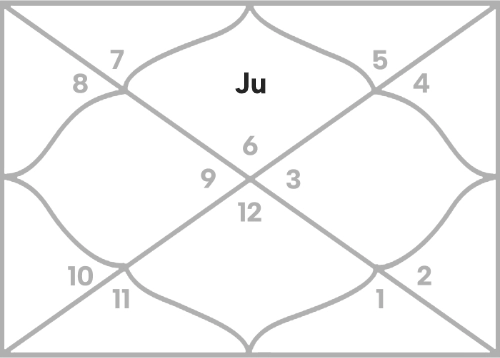
For Virgo Ascendant, Jupiter rules the 4th house of home, mother, education, property, and emotional security, as well as the 7th house of marriage, partnerships, and public dealings. Its placement in the 1st house brings these significations directly into the native’s personality, outlook, and life direction. Jupiter is a natural significator of wisdom, knowledge, ethics, and spiritual understanding, and its presence in the Ascendant can give the native a thoughtful, philosophical, and principled disposition. However, Jupiter is functionally mixed for Virgo Ascendant because it rules the Kendra houses of the 4th and 7th, with the 7th house also carrying Maraka significance. Its placement in the 1st house should therefore not automatically be interpreted as uniformly auspicious. Jupiter occupies Virgo, a sign ruled by Mercury, with whom Jupiter has a natural relationship of enmity from Jupiter’s perspective. This can create a contrast between Jupiter’s broad, principle-oriented outlook and Virgo’s analytical, detail-conscious approach. The native may possess a strong interest in learning, teaching, philosophy, or spiritual subjects, while also wanting to examine ideas critically before accepting them. They may be seen as helpful, knowledgeable, or dependable, particularly when they use their understanding to guide others. However, they may sometimes become overly focused on correcting people or defending their own interpretation of what is right. Their ability to inspire respect depends not only on knowledge but also on humility, consistency, and practical judgement.
Jupiter in Virgo combines the planet’s inclination towards wisdom and broader understanding with Mercury’s emphasis on analysis, discrimination, and practical application. The native may be interested in education, counselling, philosophy, traditional knowledge, or service-oriented activities that allow them to share what they have learned. Since Jupiter rules the 4th house, its placement in the Ascendant connects domestic upbringing, education, and emotional foundations with the development of personality. Family values or early educational experiences may significantly influence the native’s worldview, although the actual quality of these experiences depends on other factors in the Kundali. As the 7th lord in the 1st house, Jupiter also makes marriage and partnerships important influences on personal development. The native may seek an educated, principled, or intellectually engaging partner, but relationships can also challenge their assumptions and require them to reconsider established habits. The 7th lord in the Ascendant does not by itself indicate delayed marriage or a dominant spouse. Such outcomes depend on Jupiter’s strength, the condition of the 7th house and Venus, relevant planetary aspects, and the operating Dashas. The native may sometimes place high expectations on a partner or assume that shared values should naturally produce agreement. Developing flexibility and recognising that a healthy relationship accommodates differences can help them build more balanced partnerships. When Jupiter is well-supported, its placement can encourage thoughtful decision-making, a genuine interest in learning, and a desire to contribute meaningfully to family and society.
Jupiter casts its special 5th, 7th, and 9th aspects on the 5th, 7th, and 9th houses respectively. From Virgo, these aspects fall on Capricorn, Pisces, and Taurus. Its 5th aspect on the 5th house influences intelligence, education, creativity, children, and mantra, potentially encouraging serious study and the application of knowledge to intellectual or spiritual pursuits. However, Capricorn is ruled by Saturn, and the condition of Saturn is important when assessing education, children, and the development of judgement. Jupiter’s 7th aspect falls on Pisces, its own sign and the 7th house, directly influencing marriage, partnerships, and public relationships. This strengthens the connection between Jupiter and partnership matters, although it does not guarantee a particular marital outcome. Its 9th aspect on the 9th house of higher learning, dharma, teachers, and long-distance travel can support an interest in philosophy, traditional knowledge, and the search for a coherent personal worldview. Venus, the ruler of Taurus and the 9th house, becomes relevant in assessing these themes. Since Mercury rules the Ascendant and the sign occupied by Jupiter, Mercury’s strength also plays an important role in determining how Jupiter’s broad principles translate into practical decisions. When Jupiter is well-supported, the native may combine knowledge with discernment and become a valued source of guidance. When afflicted, excessive idealism, overconfidence in personal judgement, or unrealistic expectations in relationships may become more prominent. Patience, self-discipline, and a willingness to learn from others help the native express Jupiter’s wisdom constructively.
Jupiter in 2nd House for Virgo Ascendant
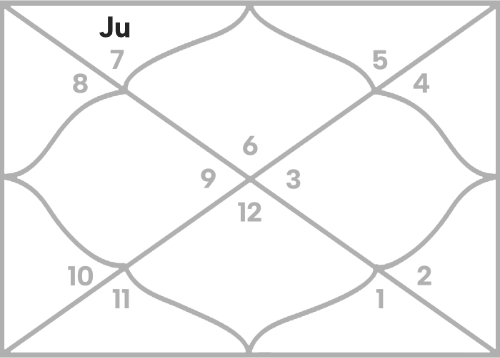
For Virgo Ascendant, Jupiter rules the 4th house of home, mother, education, property, and emotional security, as well as the 7th house of marriage, partnerships, and public dealings. Its placement in the 2nd house connects these significations with accumulated wealth, family, speech, food habits, and personal values. Jupiter is a natural significator of wisdom, knowledge, ethics, and prosperity, so its presence in the 2nd house can encourage an interest in education, traditional knowledge, philosophy, and the responsible use of resources. However, Jupiter is functionally mixed for Virgo Ascendant because it rules the 4th and 7th houses, with the 7th house also carrying Maraka significance. It occupies Libra, a sign ruled by Venus, the 2nd and 9th lord and an important functional benefic for this Ascendant. This can connect Jupiter’s significations with financial management, family values, and the pursuit of material stability. The native may value education and cultured communication, and may prefer to build wealth through respectable, established, or knowledge-based activities. Jupiter’s influence can also encourage generosity and a desire to support family members, although actual financial outcomes depend on its strength and associations. Since the 7th lord occupies the 2nd house, marriage and business partnerships may influence family life and accumulated wealth. Shared financial responsibilities can be beneficial when handled wisely, but disagreements may arise if expectations about spending, saving, or family obligations are not clearly discussed.
Jupiter in Libra combines the planet’s inclination towards wisdom and generosity with Venusian qualities of diplomacy, balance, and social refinement. The native may have a pleasant manner of speaking and an interest in literature, philosophy, scriptures, or subjects that explore ethics and human relationships. They may prefer to resolve family disagreements through discussion and may value harmony within the household. The 4th lord in the 2nd house connects education, domestic upbringing, and property matters with family resources, potentially supporting the use of knowledge or family assets to establish material security. It may also indicate that education or property becomes an important consideration in the family’s financial planning. As the 7th lord in the 2nd house, Jupiter links marriage with family values and accumulated wealth. A spouse or business partner may contribute to financial planning or influence decisions about savings and expenditure, but the quality of these outcomes depends on the condition of Jupiter, Venus, and the 7th house. Jupiter’s natural generosity can sometimes encourage excessive giving, optimistic financial commitments, or lending money without sufficient consideration of repayment. The native should avoid assuming that goodwill alone will protect financial interests. Clear agreements, realistic budgeting, and careful evaluation of shared obligations help preserve both wealth and relationships. Venus, as the dispositor of Jupiter and the 2nd lord, is especially important in determining whether this placement produces stable resources and constructive family relationships.
Jupiter casts its special 5th, 7th, and 9th aspects on the 6th, 8th, and 10th houses respectively. From Libra, these aspects fall on Aquarius, Aries, and Gemini. Its 5th aspect on the 6th house influences employment, service, debts, disputes, and daily responsibilities. This may encourage a principled approach to resolving disagreements and managing obligations, although generosity should not lead the native to take on more responsibilities or debt than they can reasonably sustain. Its 7th aspect on the 8th house connects family wealth and partnerships with shared assets, inheritance, taxation, and financial changes. This makes transparency in joint finances and careful handling of legal or financial commitments particularly important. Its 9th aspect on the 10th house connects accumulated resources and family values with career, reputation, and professional responsibilities. The native may seek work that reflects their ethical principles or uses knowledge, communication, negotiation, or advisory skills. Mercury, which rules Gemini and the 10th house, becomes relevant in determining how effectively these professional possibilities develop. When Jupiter is well-supported, this placement can encourage thoughtful financial decisions, constructive family values, and a generous but balanced approach to wealth. When afflicted, excessive optimism, financial commitments through partnerships, or disagreements over family resources may become more prominent. The condition of Venus, Jupiter’s associations, and the overall state of the 2nd, 7th, and 11th houses should be considered before judging financial prosperity or marital outcomes. Long-term stability is best supported by combining generosity with sound judgement, clear financial boundaries, and responsible planning.
Jupiter in 3rd House for Virgo Ascendant
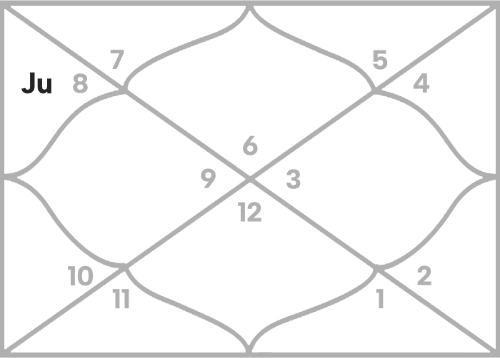
For Virgo Ascendant, Jupiter rules the 4th house of home, mother, education, property, and emotional security, as well as the 7th house of marriage, partnerships, and public dealings. Its placement in the 3rd house connects these significations with courage, communication, writing, siblings, short-distance travel, and self-effort. Jupiter is a natural significator of wisdom, higher knowledge, ethics, and teaching, so its presence here can encourage an interest in learning, philosophy, scriptures, and the exchange of ideas. However, Jupiter is functionally mixed for Virgo Ascendant because it rules the 4th and 7th houses, with the 7th house also carrying Maraka significance. It occupies Scorpio, a sign ruled by Mars, the 3rd and 8th lord for Virgo Ascendant. This combination can give the native a curious and investigative mind, with an inclination to explore the deeper meaning of subjects rather than remain satisfied with superficial explanations. The native may enjoy writing, teaching, research, spiritual discussions, or sharing knowledge through communication-based activities. As the 4th lord in the 3rd house, Jupiter connects education and domestic foundations with personal initiative, potentially encouraging independent learning or the development of practical skills from an early age. Its 7th lordship also brings partnerships into the sphere of communication and self-effort. However, the native should avoid assuming that good intentions alone prevent misunderstandings. Clear expression and thoughtful listening are important when dealing with siblings, colleagues, and business partners.
Jupiter in Scorpio combines its inclination towards wisdom and broad understanding with Mars’s intensity, determination, and investigative nature. The native may be interested in subjects involving hidden knowledge, psychology, traditional sciences, philosophy, or spiritual inquiry. They may prefer discussions that explore difficult questions and can be effective at explaining complex ideas when they have studied a subject thoroughly. The 3rd house is an Upachaya, where the results of personal effort can improve through practice and experience. Jupiter’s placement here can encourage the native to develop confidence through writing, teaching, communication, and the steady accumulation of knowledge. However, Scorpio’s fixed and penetrating qualities can sometimes make the native strongly attached to their interpretations or reluctant to accept opposing views. They may also assume that others understand their intentions without providing enough explanation, leading to avoidable disagreements. Relationships with siblings can involve the exchange of knowledge or shared interests, but Jupiter in the 3rd house alone does not guarantee support from siblings or establish conflict. The 4th lord’s placement may connect education and domestic circumstances with self-directed learning, while the 7th lord’s placement can make communication a central factor in marriage and business partnerships. Mars, as the dispositor of Jupiter, plays an important role in determining how constructively these themes develop. A well-supported Mars can help the native turn intellectual curiosity into sustained effort, while affliction may increase impatience or argumentative tendencies. Consistent study, reflective writing, and a willingness to examine different perspectives can help strengthen communication and mental clarity.
Jupiter casts its special 5th, 7th, and 9th aspects on the 7th, 9th, and 11th houses respectively. From Scorpio, these aspects fall on Pisces, Taurus, and Cancer. Its 5th aspect on the 7th house, Pisces, its own sign, directly influences marriage, business partnerships, contracts, and public dealings. This can encourage a preference for thoughtful and meaningful partnerships, although the quality and stability of relationships depend on Jupiter’s strength and the broader condition of the 7th house. Its 7th aspect on the 9th house connects communication and self-effort with higher education, philosophy, teachers, and long-distance travel. The native may benefit from writing, publishing, teaching, or independent study that expands their knowledge and worldview. Its 9th aspect on the 11th house connects these efforts with income, ambitions, friendships, and professional networks, potentially supporting gains through knowledge-sharing, communication, or collaborative activities. The Moon, which rules Cancer and the 11th house, becomes important in assessing how these efforts translate into gains and social opportunities. When Jupiter is well-supported, this placement can encourage intellectual growth, purposeful communication, and progress through consistent self-effort. When afflicted, misunderstandings, rigid opinions, or inconsistent follow-through may become more prominent. The condition of Mars, Jupiter’s associations, and the overall strength of the 3rd, 7th, and 11th houses will shape the final results. The native benefits most when knowledge is combined with disciplined effort, clear communication, and a genuine willingness to learn from others.
Jupiter in 4th House for Virgo Ascendant
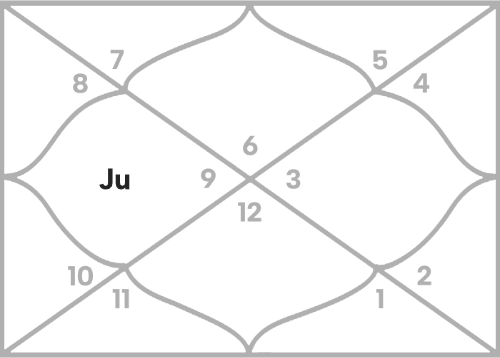
For Virgo Ascendant, Jupiter rules the 4th house of home, mother, education, property, and emotional security, as well as the 7th house of marriage, partnerships, and public dealings. Its placement in the 4th house, Sagittarius, its own sign, gives Jupiter considerable strength in matters related to domestic life, education, and property. The 4th house is a Kendra associated with foundational happiness and inner stability, and its lord occupying its own house can support the development of a stable home environment and a strong connection with education or family traditions. Jupiter is a natural significator of wisdom, ethics, and higher knowledge, so this placement may encourage a generous, principled approach to family life and an interest in philosophy, scriptures, or spiritual practices. The native may value a home that provides both material comfort and opportunities for learning. As the 7th lord in the 4th house, Jupiter connects marriage and partnerships with domestic happiness, property, and family responsibilities. A spouse may play an important role in decisions about residence, education, or the establishment of a household. However, Jupiter is functionally mixed for Virgo Ascendant because it rules the 4th and 7th houses, with the 7th house also carrying Maraka significance. Its strength in its own sign can support the matters of the 4th house, but it does not make every area of life uniformly favourable. Outcomes concerning marriage, property, and family prosperity must be assessed through the broader Kundali.
Jupiter in Sagittarius combines its natural significations of wisdom, generosity, and moral understanding with the sign’s association with philosophy, learning, and expansive thinking. The native may appreciate education, enjoy discussing ideas at home, or seek to create a family environment guided by meaningful principles. The placement can support academic pursuits and may favour professions connected with education, counselling, property, administration, or knowledge-based work, depending on the condition of the 10th house and its lord. As the 4th lord in its own 4th house, Jupiter can strengthen the connection between the native’s emotional foundations and their home environment. It may support an interest in acquiring property or improving domestic conditions, although inheritance or substantial wealth cannot be concluded from this placement alone. The Moon, as a natural significator of the mind and emotional experience, and the condition of the 4th house should also be considered when assessing domestic happiness. Since Jupiter also rules the 7th house, relationships may become closely connected with home and family decisions. The native may seek a partner who shares their principles and desire for a stable household, but differences can arise if one person’s beliefs or expectations dominate domestic choices. Jupiter’s broad outlook may encourage forgiveness and understanding, yet it can also produce excessive idealism or the assumption that good intentions will resolve every disagreement. A willingness to discuss practical concerns openly helps preserve harmony and prevents philosophical differences from becoming personal conflicts.
Jupiter casts its special 5th, 7th, and 9th aspects on the 8th, 10th, and 12th houses respectively. From Sagittarius, these aspects fall on Aries, Gemini, and Leo. Its 5th aspect on the 8th house connects domestic resources and foundational security with inheritance, shared assets, research, and major life changes. This may encourage a thoughtful approach to family wealth or an interest in understanding complex financial and traditional matters, although inheritance and sudden gains are not guaranteed. Its 7th aspect on the 10th house influences profession, authority, reputation, and public responsibilities. This creates a connection between home and career, potentially supporting work related to education, property, advisory roles, or professions guided by ethical principles. Mercury, which rules Gemini and the 10th house, becomes important in assessing professional outcomes. Jupiter’s 9th aspect on the 12th house connects domestic life with foreign lands, expenditure, retreats, and spiritual practices. The native may value creating a quiet space for contemplation or may spend on travel, education, charitable activities, or spiritual pursuits. However, frequent relocation or distance between partners should not be assumed from this aspect alone. When Jupiter is well-supported, its placement in its own 4th house can provide a strong foundation for learning, domestic responsibility, and thoughtful decision-making. The condition of Mercury, Jupiter’s associations, and the overall state of the 4th and 7th houses will determine the broader results. Maintaining mutual respect, discussing family decisions transparently, and cultivating a meaningful home environment help the native express the constructive potential of this placement.
Jupiter in 5th House for Virgo Ascendant
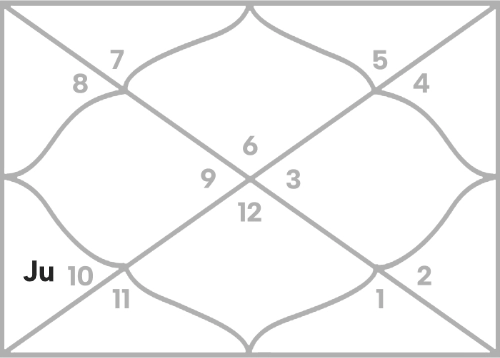
For Virgo Ascendant, Jupiter rules the 4th house of home, mother, education, property, and emotional security, as well as the 7th house of marriage, partnerships, and public dealings. Its placement in the 5th house connects these significations with intelligence, higher learning, creativity, children, romance, mantra, and purva punya. Jupiter is a natural significator of wisdom, knowledge, ethics, and spiritual understanding, so its presence in the 5th house can encourage a genuine interest in education, philosophy, scriptures, astrology, and other traditional disciplines. However, Jupiter is functionally mixed for Virgo Ascendant because it rules the 4th and 7th houses, with the 7th house also carrying Maraka significance. It occupies Capricorn, where it is debilitated, making its strength an important consideration in interpreting the results. The 5th house is a Trikona associated with intelligence and accumulated merit, but Jupiter’s debilitation may make its significations less consistent or require greater effort to express constructively. The native may enjoy learning, teaching, or analysing philosophical subjects, yet need to work deliberately to translate knowledge into sound judgement. As the 4th lord in the 5th house, Jupiter connects education and domestic foundations with intellectual development and creative pursuits. Its 7th lordship also links marriage and partnerships with romance, children, and shared interests. However, neither delays in childbirth nor difficulties in romantic relationships should be concluded from this placement alone. The condition of Jupiter, the 5th lord Saturn, Venus, and other relevant factors must be considered.
Jupiter in Capricorn combines the planet’s broad outlook and inclination towards wisdom with Saturn’s qualities of discipline, structure, realism, and responsibility. The native may approach education and spiritual learning seriously, preferring knowledge that can be studied systematically and applied in practical life. They may be drawn towards teaching, research, philosophy, traditional astrology, mantra practices, or subjects that require patience and sustained study. As the 4th lord in the 5th house, Jupiter can connect educational experiences with family values, while its placement may also encourage the native to guide younger people or take a thoughtful approach to children’s education. However, Jupiter’s debilitation can sometimes manifest as uncertainty in judgement, excessive reliance on established authorities, or difficulty maintaining confidence in one’s own understanding. The native may have to develop wisdom through experience rather than assuming that knowledge alone guarantees correct decisions. The 7th lord in the 5th house can connect romantic relationships with shared intellectual interests and may encourage the desire for a partner who supports learning or spiritual growth. Yet romantic expectations may become idealistic, or the native may approach emotional matters too cautiously. The condition of Saturn, which rules Capricorn and the 5th house, is particularly important in determining the results. Any cancellation of Jupiter’s debilitation must also be assessed through the complete Kundali. The native benefits from combining humility with consistent learning and allowing practical experience to refine philosophical understanding.
Jupiter casts its special 5th, 7th, and 9th aspects on the 9th, 11th, and 1st houses respectively. From Capricorn, these aspects fall on Taurus, Cancer, and Virgo. Its 5th aspect on the 9th house connects intelligence, education, and spiritual interests with higher learning, teachers, philosophy, and dharma. This may encourage the native to pursue traditional knowledge or develop their beliefs through study, although the strength of Venus, the 9th lord, influences how these interests develop. Its 7th aspect on the 11th house connects the 5th house with income, ambitions, social networks, and the fulfilment of desires. Gains may come through teaching, education, intellectual work, or creative activities, but financial outcomes depend on the wider planetary combinations. Its 9th aspect on the Ascendant directly influences personality and life direction, potentially encouraging a thoughtful, reflective, or knowledge-oriented approach to life. Mercury, the Ascendant lord, is important in determining how effectively the native applies Jupiter’s teachings in everyday decisions. Saturn, as the dispositor of Jupiter and the 5th lord, also plays a central role in education, children, and creative development. When Jupiter is well-supported, including through any applicable cancellation of debilitation, this placement can encourage disciplined learning, spiritual inquiry, and responsible guidance of others. When afflicted, uncertainty, excessive idealism, or difficulties in balancing romantic expectations with practical realities may become more prominent. Devotion, sustained study, charitable conduct, and a willingness to learn from experience help the native develop the constructive potential of this placement.
Jupiter in 6th House for Virgo Ascendant
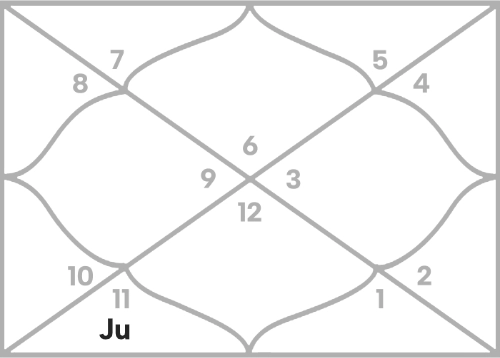
For Virgo Ascendant, Jupiter rules the 4th house of home, mother, education, property, and emotional security, as well as the 7th house of marriage, partnerships, and public dealings. Its placement in the 6th house connects these significations with employment, service, debts, disputes, disease, and the effort required to overcome obstacles. Jupiter is a natural significator of wisdom, ethics, and higher knowledge, but it is functionally mixed for Virgo Ascendant because it rules the 4th and 7th houses, with the 7th house also carrying Maraka significance. It occupies Aquarius, a sign ruled by Saturn, the 5th and 6th lord for this Ascendant. The 6th house is both a Dusthana and an Upachaya, associated with challenges that may be managed more effectively through discipline, experience, and sustained effort. Jupiter here can encourage the native to approach problems through knowledge, fairness, and a desire to find constructive solutions. They may be drawn to healthcare, law, counselling, education, social service, administration, or other fields involving service and the resolution of disputes. As the 4th lord in the 6th house, Jupiter connects domestic concerns and education with work, service, and practical responsibilities. The native may need to balance family obligations with professional demands or may use their education to address the needs of others. However, Jupiter’s natural benevolence does not eliminate the challenges of the 6th house. Excessive generosity, misplaced trust, or reluctance to confront problems directly may complicate matters that require firm boundaries and practical judgement.
Jupiter in Aquarius combines its inclination towards wisdom and ethical conduct with Saturnian themes of structure, responsibility, social systems, and collective welfare. The native may be interested in improving institutions, helping people navigate difficult circumstances, or applying knowledge to practical social problems. They may have a compassionate attitude towards people facing hardship and prefer resolving disagreements through reasoned discussion rather than hostility. The placement can support work in hospitals, educational institutions, charitable organisations, legal services, or large administrative systems, depending on the broader planetary combinations. As the 7th lord in the 6th house, Jupiter connects marriage and business partnerships with responsibilities, disagreements, and the need to resolve practical problems. Differences over daily routines, financial obligations, or the division of responsibilities may require attention, but this placement alone does not establish marital conflict or separation. The quality of partnerships depends on Jupiter’s strength, the condition of the 7th house and its other significators, and the overall Kundali. The native may sometimes attempt to preserve harmony by forgiving others too readily or overlooking recurring problems in the hope that goodwill will resolve them. Jupiter’s ethical nature is most constructive when compassion is accompanied by discernment. Clear agreements, fair expectations, and the willingness to address disagreements directly can help protect both personal and professional relationships. Saturn, as the dispositor of Jupiter and the 6th lord, becomes particularly important in determining how consistently the native handles responsibilities and overcomes obstacles.
Jupiter casts its special 5th, 7th, and 9th aspects on the 10th, 12th, and 2nd houses respectively. From Aquarius, these aspects fall on Gemini, Leo, and Libra. Its 5th aspect on the 10th house connects service, problem-solving, and ethical conduct with career, authority, reputation, and professional achievements. This may support professions involving education, legal work, administration, counselling, or institutional service, although career outcomes also depend on Mercury, the 10th lord. Its 7th aspect on the 12th house connects employment and service with foreign lands, hospitals, secluded institutions, expenditure, and spiritual retreat. The native may find meaningful work in institutions that serve vulnerable populations, but should manage professional commitments and expenditure realistically. Its 9th aspect on the 2nd house connects service and responsibility with accumulated wealth, family values, and speech. This can encourage ethical financial conduct and a generous approach to family members, though excessive lending or taking on others’ financial burdens should be avoided. Venus, which rules Libra and the 2nd house, becomes relevant when assessing finances and family matters. When Jupiter is well-supported, this placement can help the native meet challenges through knowledge, patience, and principled action. When afflicted, excessive idealism, unresolved disputes, or difficulty maintaining boundaries may become more prominent. A balanced routine, appropriate physical activity, and responsible attention to health can support general well-being, while meditation and constructive service may help maintain perspective. The strongest expression of this placement combines compassion with practical discipline and the willingness to resolve problems rather than simply endure them.
Jupiter in 7th House for Virgo Ascendant
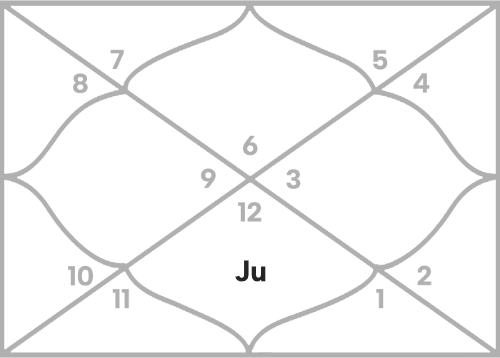
For Virgo Ascendant, Jupiter rules the 4th house of home, mother, education, property, and emotional security, as well as the 7th house of marriage, partnerships, and public dealings. Its placement in the 7th house, Pisces, its own sign, gives Jupiter considerable strength in matters related to marriage and partnerships. The 7th house is a Kendra and a Maraka house, so despite Jupiter’s natural beneficence and strong dignity, its results must be assessed in light of its functional lordship for Virgo Ascendant. Jupiter represents wisdom, ethics, guidance, and higher knowledge, and its placement in its own 7th house can encourage the native to seek meaningful, principled, and emotionally fulfilling partnerships. They may value a spouse who is compassionate, educated, philosophical, or spiritually inclined, and marriage may become an important source of learning and personal development. As the 4th lord in the 7th house, Jupiter connects domestic happiness, property, and emotional security with marriage and the establishment of a household. A spouse may play a significant role in decisions about residence, education, or family life. Jupiter’s strength can support the capacity to resolve disagreements through understanding and a shared sense of purpose. However, this placement does not guarantee a perfect marriage or financial gains through a spouse. The native may idealise their partner or expect a relationship to provide a level of wisdom, harmony, or emotional reassurance that no individual can consistently offer. Realistic expectations and mutual responsibility remain essential.
Jupiter in Pisces expresses its qualities of wisdom, compassion, generosity, and spiritual understanding in a sign it rules. The native may be attracted to partners who are empathetic, imaginative, principled, or interested in philosophy and spiritual practice. They may value a relationship that extends beyond practical companionship and includes shared ideals, meaningful conversation, or a common interest in learning. Since Jupiter is also the 4th lord, marriage may be closely connected with the desire to establish a peaceful home and create a supportive domestic environment. The native may place importance on kindness, hospitality, and maintaining harmony within the household. Jupiter’s natural beneficence can encourage forgiveness and a willingness to see another person’s perspective, but it can also produce excessive tolerance when boundaries are needed. The native may overlook recurring disagreements because they believe that patience or goodwill will eventually resolve them. Alternatively, they may become disappointed when a partner does not fulfil their idealised expectations. The 7th lord in its own house strengthens the significance of partnership in the native’s life, but the actual quality of marriage depends on Jupiter’s associations, aspects, the condition of Venus, and other factors in the Kundali. In business partnerships, this placement can favour ethical agreements and collaborative ventures built on trust, provided responsibilities and financial expectations are clearly defined. Shared spiritual interests, travel, or educational pursuits may enrich a relationship, but they are most constructive when both partners genuinely value them rather than treating them as remedies for unresolved problems.
Jupiter casts its special 5th, 7th, and 9th aspects on the 11th, 1st, and 3rd houses respectively. From Pisces, these aspects fall on Cancer, Virgo, and Scorpio. Its 5th aspect on the 11th house connects marriage and partnerships with income, ambitions, friendships, and the fulfilment of desires. This may support gains through collaborative efforts or beneficial professional associations, although financial outcomes depend on the condition of the 11th lord Moon and the wider Kundali. Its 7th aspect falls on Virgo, the Ascendant, directly influencing personality, self-expression, and the native’s approach to life. This can encourage a more reflective and relationship-conscious outlook, although Jupiter’s influence may also amplify idealism or the tendency to rely heavily on a partner’s guidance. Its 9th aspect on the 3rd house connects partnerships with communication, courage, self-effort, and short-distance travel. Open discussion and shared learning can therefore become important resources in maintaining a relationship, while differences of opinion should be handled without excessive moral judgement. Mercury, the Ascendant lord and the dispositor of Virgo, remains important in assessing how the native balances personal needs with partnership commitments. When Jupiter is well-supported, its placement in its own 7th house can encourage meaningful alliances, principled conduct, and a constructive approach to marriage. When afflicted, excessive idealism, weak boundaries, or disappointment arising from unrealistic expectations may become more prominent. The overall condition of the 7th house, Venus, Mercury, and relevant planetary periods must be considered before drawing firm conclusions about marital happiness or business success. A lasting partnership is best supported by combining compassion and shared values with honest communication, realistic expectations, and mutual accountability.
Jupiter in 8th House for Virgo Ascendant
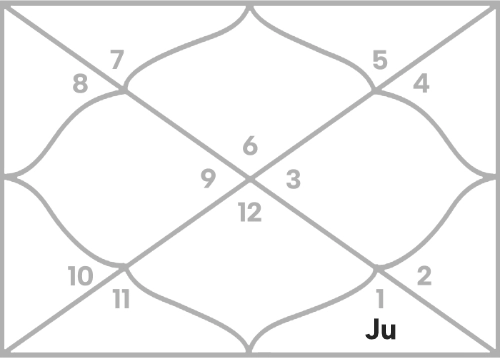
For Virgo Ascendant, Jupiter rules the 4th house of domestic happiness, mother, education, and property, as well as the 7th house of marriage, partnerships, and public relationships. Its placement in the 8th house, Aries, connects these significations with transformation, longevity, inheritance, joint assets, hidden matters, and esoteric knowledge. The 8th house is a Dusthana associated with sudden changes, vulnerability, and experiences that compel a person to look beyond the visible dimensions of life. Jupiter is a natural benefic, but as the 7th lord for Virgo Ascendant, it also carries Maraka potential, making its placement here more complex than a purely benefic interpretation would suggest. The native may develop a strong interest in occult sciences, Jyotisha, philosophy, or spiritual traditions that explore the deeper causes of human experience. Difficult transitions may encourage them to question established beliefs and seek a more profound understanding of existence. As the 4th lord in the 8th house, Jupiter can connect domestic circumstances with significant changes, including relocation, alterations in family responsibilities, or developments concerning property and inherited assets. Emotional security may undergo periodic reassessment, particularly when unexpected events challenge the native’s established sense of stability. Jupiter’s natural association with wisdom can help the native approach such experiences with perspective and a desire to learn from them. However, Jupiter occupies Aries, a sign ruled by Mars, which is the 3rd and 8th lord for Virgo Ascendant and therefore functionally malefic. Jupiter is not in its own or exaltation sign here, so its capacity to deliver constructive results depends considerably on Mars, its dispositor, and the overall condition of the 8th house.
This placement can bring an inclination towards investigating matters that are concealed, complex, or difficult to understand through ordinary observation. The native may be drawn to Jyotisha, mantra shastra, spiritual philosophy, psychology, research, or the study of ancient knowledge, particularly when these subjects offer a structured way to examine uncertainty and transformation. Jupiter’s 5th aspect falls on Sagittarius, the 4th house, which it rules. This creates a connection between the 8th and 4th houses and may help the native seek inner stability through learning, reflection, spiritual study, or a deeper understanding of family and ancestral influences. It can also support the acquisition of knowledge that helps the native navigate domestic or property-related complications, although favourable outcomes depend on the strength of Jupiter and other relevant factors. Jupiter’s 7th aspect falls on Libra, the 2nd house of accumulated wealth, family, and speech. This links 8th-house matters with family resources, savings, and joint finances, potentially making inheritances, insurance, settlements, or assets received through a spouse relevant themes in the native’s life. Such gains are possible rather than assured, and they should not be inferred from Jupiter’s placement alone. The aspect may also encourage thoughtful speech during family disputes or financial negotiations. Jupiter’s 9th aspect falls on Sagittarius’s 12th-house counterpart, Leo, the 12th house of expenditure, isolation, foreign residence, and spiritual retreat. This can strengthen interest in meditation, charitable activities, contemplative study, and spiritual environments. Expenditure may also be directed towards education, travel, or spiritual pursuits. The native benefits from distinguishing genuine spiritual discipline from escapism and from approaching financial and family obligations with transparency.
The 8th house is also associated with longevity, chronic vulnerabilities, sudden disruptions, and the management of uncertainty. Jupiter’s placement here should not, by itself, be interpreted as a definite indication of illness, shortened longevity, or secret enemies. Its results must be judged alongside the Ascendant, the 8th lord Mars, relevant significators, planetary aspects, and the operating Dasha. Nevertheless, the native may find it useful to maintain consistent health routines, address concerns promptly, and avoid neglecting practical responsibilities while pursuing spiritual or intellectual interests. In matters of marriage, Jupiter as the 7th lord in the 8th house connects partnership with shared finances, intimacy, trust, and major life transitions. Marriage may bring profound personal change, but misunderstandings can arise if sensitive matters are concealed or expectations regarding money and family responsibilities remain unspoken. Clear communication and mutual accountability help build stability through changing circumstances. The native may also benefit from studying spiritual texts systematically rather than relying solely on intuition or isolated experiences. Jupiter’s natural significations favour the search for meaning, but Aries adds an assertive and action-oriented quality through its dispositor Mars. Consequently, spiritual growth is likely to be more constructive when insight is accompanied by restraint, discernment, and sustained practice. Meditation, mantra practice, and the study of traditional spiritual or occult literature may provide useful disciplines, provided they complement rather than replace practical action. Ultimately, this placement can encourage the native to transform uncertainty into understanding, develop greater maturity in handling shared responsibilities, and cultivate wisdom through the careful examination of life’s less visible dimensions.
Jupiter in 9th House for Virgo Ascendant
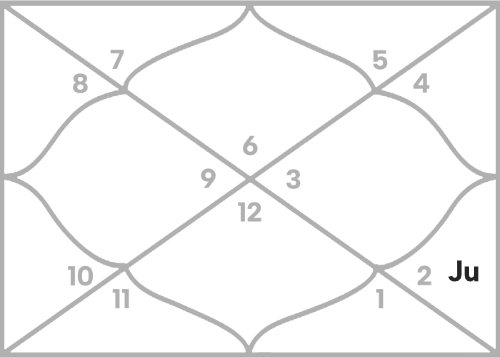
For Virgo Ascendant, Jupiter rules the 4th house of home, mother, education, and domestic happiness, as well as the 7th house of marriage, partnerships, and public relationships. Its placement in the 9th house, Taurus, connects these significations with Dharma, higher learning, fortune, teachers, father, religious traditions, long-distance journeys, and spiritual principles. The 9th house is a Trikona and one of the most auspicious houses in Vedic astrology, associated with blessings earned through past merits, ethical conduct, and the pursuit of higher knowledge. Jupiter is a natural benefic and significator of wisdom, teachers, and religious learning, making this placement supportive of philosophical inquiry, higher education, and spiritual development. However, Jupiter is not the functional lord of a Trikona for Virgo Ascendant, and its rulership of the 7th house gives it a mixed functional role. It occupies Taurus, a sign ruled by Venus, which is a natural enemy of Jupiter, so Jupiter does not enjoy particularly favourable sign dignity here. The results of this placement therefore depend on the strength of Venus, Jupiter’s dispositor, as well as the condition of the 9th house and other relevant factors. The native may be drawn to philosophy, religious traditions, classical learning, or the systematic study of subjects that explain the principles governing life. Support from teachers and mentors can play an important role, and long-distance journeys may provide opportunities for learning or spiritual exploration. The native may also develop a strong interest in preserving family traditions and understanding the ethical principles that guide society. However, genuine wisdom develops most constructively when inherited beliefs are examined thoughtfully rather than accepted without question.
Jupiter’s placement in the 9th house also connects the 4th house of education, property, mother, and domestic happiness with higher learning and fortune. Formal education may benefit from supportive teachers, philosophical interests, or opportunities to study subjects beyond the immediate curriculum. The native may find satisfaction in visiting sacred places, engaging with spiritual communities, or travelling for educational and religious purposes. Jupiter’s 5th aspect falls on Capricorn, the 1st house from Taurus’s 9th-house position? More precisely, Jupiter in Taurus casts its 5th aspect on Virgo, the 1st house; its 7th aspect on Scorpio, the 3rd house; and its 9th aspect on Capricorn, the 5th house. Its 5th aspect on Virgo directly influences the Ascendant, linking Jupiter’s wisdom-oriented significations with the native’s personality, judgement, conduct, and approach to life. This can encourage an interest in learning, ethical reflection, and the guidance of others, although the quality of these results depends on Jupiter’s strength and its association with other planets. The 7th aspect on Scorpio, the 3rd house, can connect higher knowledge with communication, writing, self-effort, short journeys, and relationships with younger siblings. The native may be inclined to communicate philosophical ideas, study spiritual literature, or pursue knowledge through independent effort. Jupiter’s 9th aspect on Capricorn, the 5th house, brings its influence to education, intelligence, children, creativity, and Purva Punya. Saturn, the lord of Capricorn and the 5th house, becomes important in judging these outcomes. This aspect may support disciplined study and the practical application of knowledge, though it does not independently guarantee academic success or specific outcomes concerning children. As the 7th lord placed in the 9th house, Jupiter can also connect marriage and partnerships with education, travel, differing cultural backgrounds, or shared philosophical interests. A spouse may contribute to the native’s intellectual or spiritual development, but compatibility must be assessed through the complete Kundali.
The 9th house is traditionally associated with the father, gurus, blessings, religious principles, and fortune, so Jupiter’s placement here can make these themes particularly significant in the native’s life. Relationships with teachers or father figures may shape the native’s worldview, though differences can arise when personal beliefs, family traditions, or expectations of authority do not align. Jupiter’s 7th-house lordship also brings partnerships into this area of life and can sometimes indicate that marriage or business relationships involve questions of ethics, legal agreements, travel, or cultural differences. Such matters are not necessarily problematic, and the placement alone cannot establish conflicts with the father, legal difficulties, or complications abroad. The native should approach religious and philosophical convictions with humility, remaining willing to learn from traditions other than their own and to revise conclusions when experience or sound reasoning warrants it. Taurus is a fixed earth sign ruled by Venus, adding a practical, steady, and value-conscious dimension to Jupiter’s search for meaning. This can help the native translate philosophical principles into daily conduct, provided attachment to established views does not become rigidity. Charity, respectful treatment of teachers, sincere spiritual practice, and responsible use of knowledge can help express the constructive potential of this placement. The native may benefit from combining study with lived experience, using travel and encounters with different communities to broaden rather than merely reinforce existing beliefs. Ultimately, Jupiter in the 9th house can support a life enriched by higher learning, meaningful guidance, and the pursuit of Dharma. Its most beneficial expression emerges when faith is balanced with discernment, tradition with open-mindedness, and spiritual aspiration with ethical action.
Jupiter in 10th House for Virgo Ascendant
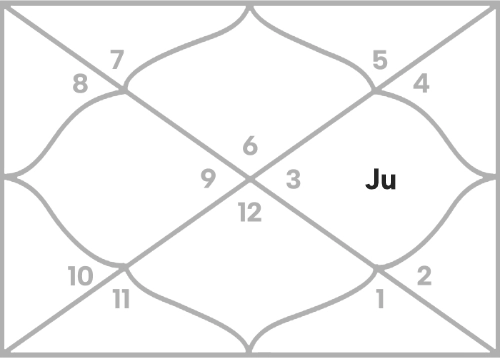
For Virgo Ascendant, Jupiter rules the 4th house of home, mother, education, and domestic happiness, as well as the 7th house of marriage, partnerships, and public relationships. Its placement in the 10th house, Gemini, connects these significations with profession, authority, reputation, responsibilities, and karma in the public sphere. The 10th house is a Kendra and an Upachaya, associated with professional development, recognition, and the visible results of one’s actions. Jupiter is a natural benefic and signifies wisdom, teaching, counsel, law, and ethical principles, so its presence here can encourage the native to pursue work that involves knowledge, guidance, negotiation, or responsibility towards others. Potential fields include education, consulting, law, advisory services, administration, and spiritual or philosophical instruction, depending on the overall strength of the Kundali and the nature of other planetary influences. However, Jupiter rules the 7th house for Virgo Ascendant, giving it Maraka potential and a mixed functional role, while its placement in Gemini, a sign ruled by Mercury, places it in the sign of a natural planetary neutral. Mercury is also the Lagna and 10th lord, making its condition particularly important in determining professional outcomes. Jupiter in the 10th house may bring opportunities through clients, business partnerships, public dealings, or influential professional contacts. The native may develop a reputation for knowledge, fairness, or the ability to understand different perspectives. Yet success is not automatic, and the placement must be assessed alongside Mercury, the 10th house, its lord, and the relevant Dasha. The native’s professional standing is likely to benefit when knowledge is applied practically and advice is supported by sound judgement rather than assumptions of authority.
Jupiter casts its 5th aspect on Libra, the 2nd house of accumulated wealth, family, speech, and values. This connects professional activity with earnings, financial stability, and the ability to communicate persuasively. The native may earn through teaching, consulting, advisory roles, or work that depends on explaining complex ideas, although actual income depends on the strength of the 2nd house and its lord Venus. Jupiter’s 7th aspect falls on Sagittarius, the 4th house, which Jupiter itself rules. This creates a direct relationship between career and domestic life, education, property, and the mother’s circumstances. Professional responsibilities may influence where the native lives or how much time they devote to family, while education or support from the family may contribute to career development. The aspect can also connect professional success with public service, teaching, property-related activities, or institutions associated with learning, though these possibilities require confirmation from the rest of the Kundali. Jupiter’s 9th aspect falls on Aquarius, the 6th house of service, employment, competition, disputes, debts, and disease. This can support a principled approach to work, problem-solving, and responsibilities that require judgement or the resolution of conflicts. It may also help the native approach workplace challenges through knowledge and reason. However, the 6th house involves competition and practical obligations, so professional progress still requires sustained effort, discipline, and the ability to manage disagreements. As the 7th lord in the 10th house, Jupiter can make business partnerships, clients, contracts, and public relationships especially relevant to career. Collaborations may open important doors, but unclear expectations or disagreements over authority can create difficulties if roles and responsibilities are not defined carefully.
The placement of Jupiter in the 10th house can make professional reputation and ethical conduct important themes in the native’s life. The native may aspire to work that carries social value or offers opportunities to share knowledge, guide others, or contribute to institutions. Recognition from senior colleagues, mentors, clients, or influential people is possible when professional competence is accompanied by integrity and consistent performance. Nevertheless, Jupiter’s natural association with wisdom should not be mistaken for a guarantee of authority, wealth, or public acclaim. Its results depend on Mercury as the 10th lord, Jupiter’s strength, the condition of the 6th and 7th houses, planetary associations, and the operating Dasha. Since Jupiter occupies Mercury’s sign, the ability to combine broad principles with precise communication becomes especially important. Gemini favours adaptability, information, and the exchange of ideas, while Jupiter seeks coherence and meaning. When these tendencies work constructively, the native may excel at translating complex knowledge into practical guidance. When poorly managed, they may overextend themselves, become inconsistent in their professional direction, or assume that good intentions are sufficient to resolve practical problems. Partnerships may also bring occasional disagreements over strategy, leadership, or shared responsibilities, particularly if professional and personal interests become entangled. Maintaining transparent agreements, remaining open to feedback, and avoiding excessive pride can help protect both reputation and working relationships. Humble service does not require the native to undervalue their abilities; rather, it means applying those abilities responsibly and continuing to learn. Ultimately, Jupiter in the 10th house can support a career shaped by knowledge, sound judgement, and meaningful public contribution, with lasting progress depending on disciplined effort and ethical conduct.
Jupiter in 11th House for Virgo Ascendant
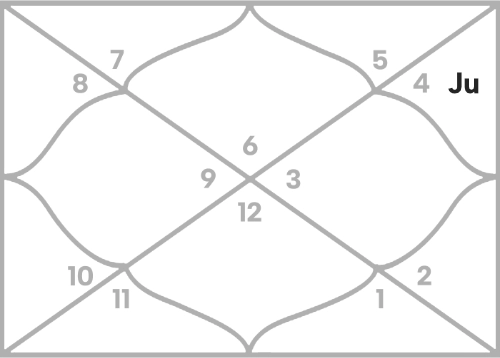
For Virgo Ascendant, Jupiter rules the 4th house of home, mother, education, and domestic happiness, as well as the 7th house of marriage, partnerships, and public relationships. Its placement in the 11th house, Cancer, connects these significations with income, gains, fulfilment of desires, social networks, elder siblings, and associations with influential people. The 11th house is an Upachaya and a principal house of material gains, representing the rewards that arise from professional activity, social participation, and the fulfilment of ambitions. Jupiter is exalted in Cancer, giving it strong natural dignity and enhancing its capacity to express its significations of wisdom, guidance, generosity, and expansion. However, for Virgo Ascendant, Jupiter remains functionally mixed because of its 7th-house lordship and associated Maraka potential. Its exaltation should therefore be considered alongside its functional role, the condition of the Moon as Cancer’s dispositor, and the overall strength of the Kundali. This placement can support financial growth, useful social connections, and opportunities arising through communities, professional networks, or collective endeavours. The native may attract people who offer guidance, practical assistance, or access to opportunities, particularly when relationships are built on mutual respect and shared values. Jupiter’s association with knowledge and ethical principles may also draw the native towards educational institutions, spiritual communities, charitable organisations, or social initiatives. As the 4th lord in the 11th house, Jupiter connects education, property, domestic resources, and the mother’s circumstances with gains and long-term aspirations. Education may help the native expand their professional network, while property or family-related matters may become relevant to financial goals. These are possible expressions of the placement rather than guaranteed outcomes, as actual gains depend on the strength of the 11th house, its lord Moon, and other wealth-related factors.
Jupiter’s 5th aspect falls on Scorpio, the 3rd house of communication, initiative, courage, skills, and younger siblings. This connection can support the development of practical abilities and the use of communication, writing, teaching, or advisory skills to pursue ambitions. The native may benefit from combining knowledge with personal effort rather than relying solely on social connections or favourable circumstances. Jupiter’s 7th aspect falls on Capricorn, the 5th house of intelligence, education, creativity, children, and Purva Punya. Jupiter is debilitated in Capricorn, so its aspect on this sign does not carry the same strength as Jupiter’s exalted placement in Cancer, and Saturn, the 5th lord, becomes important in judging the results. Nevertheless, Jupiter’s aspect may encourage the application of learning and experience to long-term plans, creative projects, and decisions involving children or education. It can also connect ambitions with intellectual development, although delays or the need for sustained discipline may arise depending on Saturn’s condition. Jupiter’s 9th aspect falls on Pisces, the 7th house, which Jupiter itself rules. This creates a direct relationship between gains, social networks, marriage, business partnerships, and public dealings. A spouse or business partner may contribute to the native’s ambitions, while professional collaborations can expand their reach and opportunities. Jupiter’s exalted position may support constructive partnerships when the rest of the Kundali is favourable. However, the 11th house also represents the fulfilment of desires, and excessive expectations from friends, partners, or social groups can create disappointment. The native should distinguish genuine support from relationships maintained primarily for personal advantage. As the 7th lord in the 11th house, Jupiter can connect marriage and partnerships with shared aspirations, financial growth, and social participation, but the quality of these outcomes depends on the condition of the 7th house and its associated significators.
Jupiter in the 11th house can encourage an expansive outlook towards wealth, networks, and collective achievement. The native may value friendships with knowledgeable, principled, or experienced people and may find opportunities through groups that share educational, philosophical, charitable, or spiritual interests. Generosity can become a defining quality, particularly when the native uses financial resources, professional influence, or specialised knowledge to support others. At the same time, generosity should be balanced with sound financial judgement, since the desire to help people or participate in worthy causes can lead to commitments that exceed available resources. Jupiter’s exaltation can strengthen its natural inclination towards guidance and benevolence, but it does not independently guarantee wealth, popularity, or the fulfilment of every ambition. The Moon, as the lord of Cancer and the 11th house, is especially important in determining how consistently gains and social opportunities materialise. The strength of the 2nd and 10th houses, relevant planetary associations, and the operating Dasha must also be considered. Because Jupiter rules the 7th house, changes in partnerships or the expectations attached to friendships and professional associations may influence the native’s progress. Some goals may take time to achieve, requiring patience, realistic planning, and consistent effort. The native benefits from associating with people whose values and conduct deserve respect, while avoiding the assumption that status or influence necessarily indicates wisdom. Charity and service can provide meaningful expression for Jupiter’s benefic nature when undertaken with sincerity and discernment. Ultimately, this placement can support the expansion of income, networks, and long-term aspirations, especially when opportunities are matched by practical effort, responsible financial choices, and relationships grounded in mutual trust.
Jupiter in 12th House for Virgo Ascendant
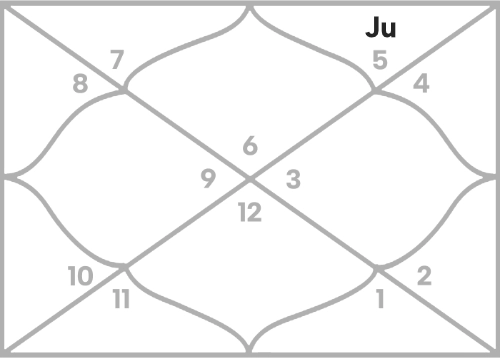
For Virgo Ascendant, Jupiter rules the 4th house of home, mother, education, and domestic happiness, as well as the 7th house of marriage, partnerships, and public relationships. Its placement in the 12th house, Leo, connects these significations with expenditure, isolation, foreign lands, charitable service, sleep, spiritual retreat, and liberation. The 12th house is a Dusthana and a Moksha house, associated with withdrawal from worldly involvement, the release of attachments, and experiences that turn attention towards subtler dimensions of life. Jupiter is a natural benefic and significator of wisdom, teachers, philosophy, and religious knowledge, so its placement here can encourage meditation, spiritual study, charity, and service to those in need. The native may seek meaning beyond material achievement and find fulfilment in contemplative practices or work that benefits people without necessarily bringing public recognition. However, Jupiter has a mixed functional role for Virgo Ascendant because it rules the 7th house, which also carries Maraka significance. Its placement in Leo, a sign ruled by the Sun, must therefore be judged through the Sun’s condition, Jupiter’s strength, and the overall configuration of the Kundali. As the 4th lord in the 12th house, Jupiter connects domestic happiness, property, education, and the mother with expenditure, separation, or foreign environments. The native may live away from their birthplace, spend on education or property in distant locations, or seek peace through a quieter domestic environment. These outcomes are possibilities rather than certainties. The placement may also support learning in institutions associated with spiritual study, charitable service, or international connections. Its constructive expression emerges when the native uses solitude for reflection and growth rather than allowing withdrawal to become avoidance of ordinary responsibilities.
Jupiter’s 5th aspect falls on Sagittarius, the 4th house, which it rules. This is an important connection because the 4th lord aspects its own house from the 12th, linking spiritual retreat, foreign lands, and expenditure with domestic security, education, property, and the mother’s welfare. It may support an interest in creating a peaceful home, studying philosophy, or establishing a personal environment conducive to reflection and learning. Foreign residence or travel may also influence the native’s domestic arrangements, though the outcome depends on the strength of Jupiter and other relevant factors. Jupiter’s 7th aspect falls on Aquarius, the 6th house of service, employment, debts, disputes, and health. This aspect can encourage the native to approach work and practical difficulties with patience, ethical judgement, and a willingness to help others. It may be useful in professions involving service, institutions, education, charitable work, or support for vulnerable groups. Nevertheless, the 6th house concerns everyday obligations and competition, so spiritual inclinations should not replace careful management of work, finances, and health. Jupiter’s 9th aspect falls on Aries, the 8th house of longevity, transformation, shared assets, inheritance, and hidden knowledge. This can connect spiritual inquiry with the study of occult subjects, Jyotisha, philosophy, or traditions concerned with life’s deeper mysteries. The native may find that periods of uncertainty prompt serious reflection and a reassessment of priorities. As the 7th lord in the 12th house, Jupiter also connects marriage and partnerships with foreign places, expenditure, privacy, and periods of physical or emotional distance. A spouse may come from a different region or cultural background, or the couple may spend on travel and shared experiences. However, the placement alone does not establish marital isolation, hidden relationships, or secret enemies. The condition of the 7th house, Venus as the relationship significator, and other relevant planetary factors must also be examined.
Jupiter in the 12th house can give the native an appreciation for compassion, generosity, and the spiritual value of letting go. Interest in meditation, pilgrimage, charitable service, or philosophical traditions may grow through personal experience, particularly when the native learns to balance solitude with meaningful participation in everyday life. Jupiter’s natural beneficence is traditionally associated with protection and guidance, but it should not be interpreted as a guarantee that difficulties will be avoided or that every loss will turn into a blessing. Its influence is more constructively expressed when the native responds to challenges with discernment, patience, and responsible action. Financially, the 12th house governs expenditure as well as charitable giving, foreign-related costs, and investment in retreat or education. The native may willingly spend on spiritual pursuits, travel, learning, or helping others, but should maintain clear financial boundaries and avoid assuming that every generous act will produce a material return. Since Jupiter rules the 4th house, expenses connected with property, domestic responsibilities, education, or the mother’s needs may also become relevant. Since it rules the 7th house, transparency over shared finances and relationship expectations is particularly important. The Sun, as the dispositor of Jupiter in Leo, becomes a key factor in assessing the final results, alongside the strength of Jupiter, planetary associations, and the operating Dasha. Regular meditation, study of traditional spiritual texts, acts of kindness, and sincere service may help the native cultivate inner steadiness, provided these practices are accompanied by practical responsibility. Ultimately, this placement can support spiritual growth, compassion, and a broader understanding of life beyond material pursuits. Its deeper promise lies not in escaping the world, but in engaging with it thoughtfully while developing the wisdom to recognise what should be pursued, what should be given, and what should be released.
Final Thoughts
For Virgo Ascendants, Jupiter plays a dual role of blessing both material and spiritual aspects of life. Its placement influences the native’s wisdom, relationships, wealth, and inner happiness. By maintaining ethical conduct, serving others, and engaging in spiritual practices, the native can harness Jupiter’s blessings for both worldly success and inner peace.
Curious to know how Jupiter is influencing your life?